
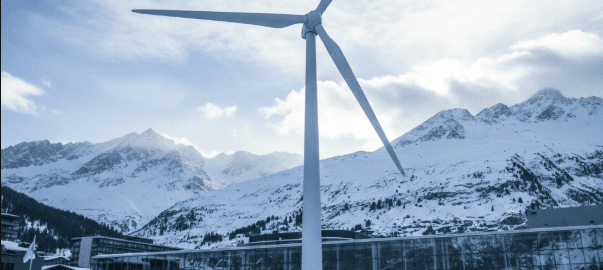
Jan. 21, 2026 /Mpelembe Media/ — The trending comparison of Donald Trump to Don Quixote stems from his keynote address at the 2026 World Economic Forum (WEF) on January 21. In a speech that has rattled global markets, the President targeted European green energy as a “Green New Scam,” specifically mocking wind turbines as “losers” and “bird graveyards.” He alleged that China is “selling windmills to stupid people in Europe” while secretly avoiding their use at home—a claim that fact-checkers and European leaders have characterized as a “Quixotic” battle against imaginary giants.
The comparison between Donald Trump and Don Quixote is trending due to his keynote speech at the 2026 World Economic Forum (WEF) in Davos on January 21, 2026.
Social media users and political commentators have drawn parallels to the famous literary character who “tilted at windmills,” perceiving them as giants, because of Trump’s sharp and renewed rhetorical attacks on European wind energy.
The “Don Quixote” comparison has gone viral for several specific reasons:
The “Green New Scam” Label: During his speech, Trump branded the Green New Deal and European green energy policies as the “Green New Scam.” He specifically targeted wind turbines, calling them “losers” and “those damn things” that “ruin the landscapes.”
The China Connection: Trump claimed that China manufactures most of the world’s windmills and sells them to “stupid people in Europe” to make a fortune, while China itself supposedly avoids using them.2 This framing of windmills as a foreign tool of economic subversion fueled the “tilting at windmills” metaphor.
The Ecological Argument: He repeated his long-standing grievance that wind turbines are “bird graveyards,” specifically mentioning the death of bald eagles. Critics on social media used the Quixote comparison to suggest he is fighting an imaginary or exaggerated monster while ignoring larger climate realities.
Contrasting Policies: The speech occurred against a backdrop of extreme tension over his proposal to annex Greenland and his criticism of European NATO allies.3 To many observers, attacking wind turbines while simultaneously trying to redraw the map of Europe felt like a “Quixotic” pursuit of 19th-century territorial and industrial goals in a 21st-century world.
The Literary Parallel
In Miguel de Cervantes’ Don Quixote, the protagonist attacks windmills because he believes they are malevolent giants. In the modern social media trend:
The “Giants”: Are represented by the “Globalist” green energy movement and European environmental regulations.
The “Knight”: Is portrayed by Trump, who views himself as defending traditional industrial and national interests against these “scams.”
Summary of the Speech’s Impact
| Topic | Trump’s Position | Reaction at Davos |
| Wind Energy | “Losers” sold by China to “stupid” Europeans. | Labeled “denialist” and “Quixotic” by critics. |
| Greenland | Seeking “immediate negotiations” to acquire it. | European Parliament suspended trade deal talks in response. |
| Inflation | Claimed it has been “virtually eliminated” in one year. | Met with skepticism by economists citing high housing costs. |
European leaders at Davos 2026 have responded to Trump’s “Green New Scam” speech with a mix of defiance, mockery, and strategic pivot toward “European Independence.”
While Trump’s attacks on wind energy were a major part of his speech on January 21, 2026, the reaction from leaders has been framed by a broader conflict over his threatened 10% tariffs and his demand for the annexation of Greenland.
Key Rebuttals from European Leaders
| Leader | Key Response / Quote | Core Message |
| Ursula von der Leyen (EU Commission) | “Nostalgia will not bring back the old order.” | Dismissed Trump’s preference for coal and oil as outdated. She announced a “massive investment surge” in green energy for Greenland and the EU. |
| Emmanuel Macron (France) | “We prefer respect to bullies.” | Called Trump’s ideas “crazy” and urged Europe not to waste time on “new colonialism,” referring to both Greenland and the fossil-fuel-first energy policy. |
| Olaf Scholz (Germany) | Warned against “denying and ignoring” climate facts. | Emphasized that “cool heads” are needed, but insisted that renewable energy is a “necessity,” not a luxury or a “scam.” |
| Bart De Wever (Belgium) | “So many red lines have been crossed.” | Argued that Europe must choose between being a “happy vassal” or an independent power, explicitly rejecting Trump’s “Green New Scam” framing. |
Core Points of Contention
The friction at Davos centers on three primary arguments used by European leaders to debunk Trump’s “Quixotic” view of windmills:
Energy Sovereignty: While Trump claimed windmills make Europe “slaves” to Chinese manufacturing, Ursula von der Leyen countered that renewables are actually the path to “homegrown” energy independence, reducing reliance on foreign gas and oil (including U.S. exports).
Economic Reality: European leaders pointed out that wind and solar are now the cheapest energy options available. They argued that Trump’s push for a return to coal is an attempt to “subordinate Europe” to American fossil fuel interests.
The “Trade Bazooka”: In direct response to Trump’s rhetoric and his tariff threats, the European Parliament moved to freeze existing trade deals with the U.S. Macron and Von der Leyen warned of “unflinching and proportional” retaliation if the U.S. uses energy policy or Greenland as leverage for trade wars.
The “Anti-Coercion” Shift
The most significant outcome of this clash is the EU’s formal shift toward an “urgency mindset.” Leaders are no longer attempting to “whisper” or “flatter” Trump (as they did in 2017–2020); instead, they are using Davos 2026 to launch a “True Energy Union” intended to decouple European infrastructure from U.S. influence.