Tag Archives: London

13Jul/26

Andy Burnham Moves Number 10 North


The Manchester Coup: 5 Ways the “King of the North” is About to Rewire Britain

British politics didn’t just shift on July 20, 2026; it suffered a structural fracture. When Andy Burnham walked into Buckingham Palace to “kiss hands” with the King, he completed a takeover that began in the post-industrial terraces of Makerfield. The “Manchester Coup” was triggered a month earlier, following the dramatic June 19 by-election where Burnham returned to Parliament after the resignation of Josh Simons.That victory, secured with a decisive 55% of the vote, turned a local result into a national ultimatum. As Keir Starmer’s leadership collapsed following a disastrous set of local elections, the “King of the North” didn’t just fill a vacuum; he brought an entire regional philosophy with him. We are now entering the era of “Manchesterism”—a place-rooted, business-friendly socialism designed to dismantle the centuries-old hegemony of the Southern establishment from the inside out.

1. The “No. 10 North” Circuit Breaker

Burnham’s first move is a radical act of spatial defiance: the establishment of a secondary Downing Street in Manchester. Located at a digital campus currently rising near Manchester Piccadilly station, “No. 10 North” is more than a satellite office. It is a “devolution circuit breaker” intended to physically separate long-term strategic planning from the reactionary, Westminster-centric crisis management that typically paralyzes the state.To lead this charge, Burnham is expected to tap Caroline Simpson, the formidable CEO of the Greater Manchester Combined Authority (GMCA). By moving the executive’s strategic heart to the North, Burnham aims to shift economic expertise away from the centralized gravity of HM Treasury. The goal is to create a command center for a new, interventionist state.Burnham wants it to have a leading role in imposing greater state control over water, energy and transport, and to oversee what Burnham intends to be the biggest council house building programme since the 1950s.

2. International Manchesterism: Foreign Policy for the High Street

For decades, British foreign policy has been a distant theater played out in the oak-paneled rooms of the Foreign Office. Under “International Manchesterism,” the logic is inverted: global shocks are viewed as local crises that land first and hardest in the towns that forged Burnham’s politics. Whether it is an energy spike or a supply-chain failure, the fallout is felt in Wigan and Leigh long before it hits a Westminster briefing.This approach treats international diplomacy as a tool for domestic renewal. It judges the value of a trade deal not by abstract GDP figures, but by whether it lowers a household bill in a post-industrial terrace. According to the LSE framework, this rests on  The Four Pillars of Place-Rooted Internationalism :

  • Economic Security:  Protecting regional manufacturing clusters from the volatility of global supply-chain fragility.
  • Energy Resilience:  Judging energy diplomacy by its ability to create industrial opportunities in places like Ashton and Leigh.
  • Regional Investment Corridors:  Systematically showcasing regional assets to redirect foreign capital away from the saturated London market.
  • Global Skills Partnerships:  Opening international doors for workers through bilateral skills compacts and regional migration pathways similar to Canada’s Provincial Nominee Program.

3. Smashing the “Wordwell Wall”

To rewire Britain, Burnham must confront the “Wordwell Wall”—the institutional ceiling protecting the Southern “Golden Triangle” of London, Oxford, and Cambridge. The metaphor is rooted in deep geography: Wordwell is a tiny Suffolk parish, once held by St Edmundsbury Abbey in the 1086 Domesday Book. It represents the ancient, rural consolidation of Southern ecclesiastical and aristocratic wealth that has long treated the North as a provincial periphery.The data backing this divide is stark. According to the Harvard and King’s College London report,  Regional Growth Two Years In , the South East receives approximately £500 more per person in growth spending than the rest of the UK. Burnham views this “Southern Spending Premium” as a structural injustice that central Whitehall departments have historically refused to relinquish.The “Wordwell Wall” is an institutional ceiling… which has historically treated the North as a provincial periphery.

4. The Geographical Paradox of English Football

The most visible sign of the North’s rising power isn’t found in a policy paper, but on the manicured lawns of the Cheshire “Golden Triangle.” While administrative power—the FA and its rulebooks—remains stubbornly London-centric, the nation’s cultural and athletic capital has migrated North. The affluent enclaves of Alderley Edge, Prestbury, and Wilmslow have become the residential headquarters for the nation’s elite talent.The North now holds the prestige that the South only manages. A significant portion of the England National Team resides in this “Footballer Belt,” including:

  • Kyle Walker & Phil Foden  (residents of Prestbury)
  • John Stones & Jordan Pickford  (based in Knutsford)
  • Marcus Rashford  (with a custom estate in Mobberley)This concentration represents a complete inversion of traditional power dynamics. The North produces the talent and hosts the stars, leaving the Southern establishment holding nothing but the administrative bureaucracy of a game it no longer physically contains.

5. The “Mayor’s Dilemma”: The Need for a Deputy Heavyweight

The greatest risk to Burnham’s premiership is the “Mayor’s Dilemma”—the danger of trying to run a national government with a localized mayoral mindset. Burnham cannot manage the inevitable “turf and budget wars” of Whitehall while maintaining a strategic presence in Manchester. To survive the resistance of a centralizing civil service, he requires a political heavyweight to act as his enforcer in London.Whether styled as a Chief Secretary or a Deputy PM, this figure must broker the compromises needed to keep the machinery of state moving. They will be tasked with navigating the friction between a Northern No. 10 and the traditional departments in SW1. As Sir David Lidington warned, the office’s survival depends on its national legitimacy.The Manchester branch of No.10 must be seen to be working for the country as a whole, not just the North West.

Beyond the Honeymoon

Andy Burnham is attempting to “nationalize” a regional rebellion, betting that the politics of place can bridge the “Tees-Exe line.” This geological divide—separating the lowland, sedimentary South from the upland, igneous North—is written into the very rocks of Britain. Policy can be changed, but bridging a gap that has defined British life for millennia is a Herculean task.The stakes are immense. Burnham’s “Bee Network” in Manchester was a success, but it left behind a £750 million fiscal burden that a national government cannot easily absorb. If his brand of Manchesterism fails to deliver growth, he will be remembered as a regional curiosity swallowed by the very system he sought to reform.Can the man who capped fares at £2 successfully build a “Bee Network” for the British soul, or will the Wordwell Wall prove too thick to crack?

17Jun/26

Celebrating 30 Years of MOBO: The Visionary Legacy and Enduring Impact of Kanya King

The Architect of Cultural Justice: Remembering MOBO Awards Founder Kanya King CBE

Wed, Jun 17 2026 /Mpelembe Media/ — Kanya King CBE, the visionary founder and CEO of the MOBO (Music of Black Origin) Awards, passed away on June 3, 2026, at the age of 57 following a courageous battle with colon cancer. Remembered as a fearless champion and an “architect of cultural justice,” King fundamentally transformed the United Kingdom’s creative landscape by shifting Black British music from marginalized subcultures to the mainstream. Continue reading

07Jun/26

The Hidden History of the Cockney Accent

The Cockney Identity: A Cultural Heritage Profile

To the cultural historian, the “Cockney” represents one of the most enduring paradoxes of the London landscape. It is at once a  demonym —a fiercely localized geographic label—and a  linguistic marker  that has echoed through the city’s alleyways for over half a millennium. Unlike the class-bound tones of Received Pronunciation (RP) or the regionally distinct “Scouse” of Liverpool, the Cockney identity is a narrative of the soil, born from the laboring classes of the East End. It is a cultural stratigraphy that has survived the fires of 1666, the industrial soot of the Victorian age, and the high-explosive trauma of the Blitz. To truly understand the Cockney is to trace the evolution of the city itself, beginning with a medieval insult that grew into a badge of defiance. Continue reading

06Jun/26

Mind The Gap

Across the Pond: A Student’s Guide to British and American English

Sat, Jun 06 2026 /Mpelembe Media/ — The provided sources explore the multifaceted process of software localization, emphasizing that treating “English” as a single, monolithic language is a critical mistake that can lead to user alienation, SEO issues, and brand mistrust. Proper localization requires adapting to distinct linguistic, cultural, and technical differences between American (US) and British (UK) English. Continue reading

03Jun/26

CHISENGA’ s corporate shield for raw hip-hop

Tue, Jun 02 2026 /Mpelembe Media/ — The legacy of Diamond Chain Media is fundamentally tied to the pioneering two-decade career of its founder, Chisenga Katongo (historically known as C.R.I.S.I.S. or Crisis Mr. Swagger), who established the foundation of Zambian hip-hop by producing the country’s first-ever hip-hop album in 2005. This legacy is defined by a commitment to quality, authenticity, and elevating African narratives for an international audience. By challenging the historical marginalization of African media, the organization represents a deliberate convergence of artistic integrity and professional business structures. Continue reading

24May/26

The UBUNK Paradigm: Navigating Truth, Myth, and Endurance

Beyond Fact-Checking: How AI and Gamification are Creating a Resilient Digital Citizen

Sun, May 24 2026 /Mpelembe Media/ — The modern digital landscape is overwhelmed by a flood of algorithmic misinformation, historical hoaxes, and sensationalism designed to exploit human biases and emotional reactions. Because traditional, passive fact-checking is often too slow and tedious to compete with viral lies, researchers and technologists are pivoting toward active, gamified behavioral conditioning to build societal resistance against fake news. Continue reading

15May/26

Why British TV Laughs at Failure

Toast of London and Beyond: Your Guide to Top British Sitcoms

Fri, May 15 2026 /Mpelembe Media/ —Toast of London is a Channel 4 comedy series that follows the life of Steven Toast (played by Matt Berry), an eccentric, middle-aged actor whose bizarre off-stage problems consistently overshadow his actual performances. The series tracks his chaotic attempts to revive his career after being heavily criticized for a controversial play. Continue reading

04May/26

The Toxic Chemistry of 1980s Film

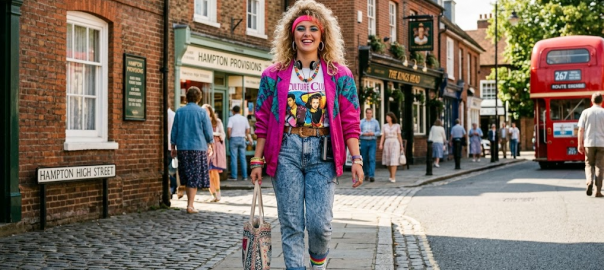
The 1980s: A Decade of Excess, Fashion, and Pop Culture

Mon, May 4 2026 /Mpelembe Media/ — This is a picture of the 1980s as a transformative era defined by conspicuous consumption, radical subcultures, and a highly performative visual aesthetic. Driven by shifting economic policies and the explosion of visual media, the decade’s culture was defined by several key themes:

Continue reading

26Apr/26

The Jazz Illusion Matching Your Budget to the Right Vibe

April 26, 2026 /Mpelembe Media/ — These sources provide a comprehensive look at the historical and contemporary jazz landscape across various global regions, with a primary focus on the United Kingdom and the United States. A detailed historical account documents the evolution of the jazz scene in Kingston-upon-Thames, tracing its roots from the 1950s through the rise of rhythm and blues. Modern event calendars highlight the active career of harpist Ben Creighton Griffiths, detailing his international performances and workshops through 2027. Additionally, the texts promote major American festivals like the Hampton Jazz & Music Festival in Virginia and the Hamptons JazzFest on Long Island. Venue-specific information also identifies local pubs and clubs in Middlesex that continue to host live jam sessions and resident artists. Together, these documents serve as both an archival record of jazz heritage and a practical guide for upcoming musical events. Continue reading

17Apr/26

Championing the Bhundu Boys: How Andy Kershaw Redefined British Radio

April 17, 2026 /Mpelembe Media/ — Andy Kershaw’s career as a pioneering radio broadcaster was defined by his relentless curiosity and rejection of Anglo-American rock hegemony in favor of global “roots” music. Beginning his BBC Radio 1 tenure in 1985 with the rare privilege of complete editorial freedom over his playlist, Kershaw mixed country, blues, reggae, folk, and a vast array of African, Caribbean, and Latin American dance music. His broadcasting philosophy was anchored in a Reithian motto he shared with his mentor, producer John Walters: “We’re not here to give the public what it wants. We’re here to give the public what it didn’t know it wanted”. Continue reading