Category Archives: Entertainment

11Sep/26

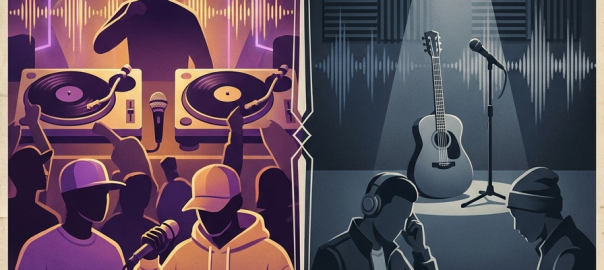
How Vinchenzo Mbale hacked the music algorithm

Inside Chakolwa Wa Nzeru: How Vinchenzo M’bale Built a Modern Cultural Movement

Thu Sep 10 2026 /Mpelembe Media/ — Vincent Daka, professionally known as Vinchenzo M’bale, is a prominent Zambian recording artist born on October 11, 1996. Raised across the Eastern Province and the industrial hub of Kitwe on the Copperbelt, he built a dual-regional perspective that deeply connects to his Chewa heritage. Despite being the son of a Reverend in the Reformed Church in Zambia, Daka adapted his early ecclesiastical choral arrangement training into secular music, using traditional call-and-response structures to address contemporary social conditions. Continue reading

10Sep/26

How African Filmmakers Reclaimed the Screen

Beyond the Colonial Shadow: The Financial Risk and Cultural Triumph of Love Brewed in the African Pot

From Objects to Authors: The Evolution of African Cinema

1. The Paternalistic Era: Cinema as a Colonial Tool (1900–1950s)

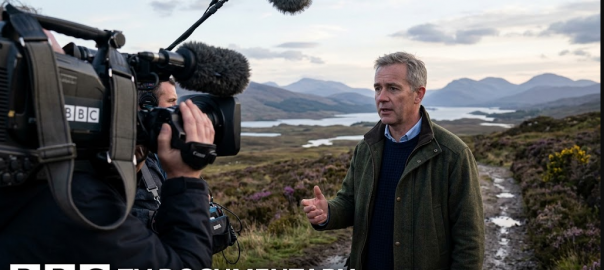
The history of cinema in Africa began not as an indigenous art form, but as a colonial novelty. In 1900, a French circus group projected the Lumière brothers’  L’arroseur arrosé  in a Dakar marketplace, a moment that marked the arrival of a medium that would be used for decades to document Europe’s “Other.” Early European cinema focused on newsreels and ethnographic studies that prioritized colonial solidarity, often erasing indigenous tensions to present a sanitized view of the continent.To control the African “gaze,” colonial administrations established dedicated film units. While their methods overlapped, their underlying motivations were distinct: Continue reading

10Sep/26

The hidden cost of The Bear finale

Beyond the Pass: Character Growth, Kitchen Politics, and Technical Craftsmanship in The Bear

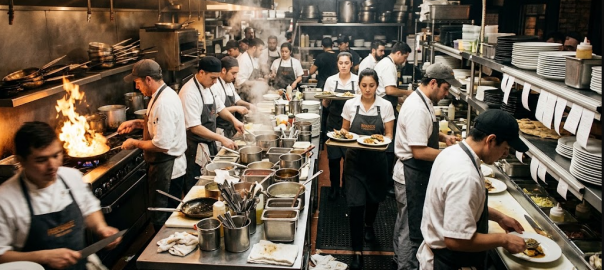
Wed Sep 09 2026 /Mpelembe Media/ — The Bear is confirmed to end with its fifth season. While FX and Hulu set an official premiere date for the final installment on June 25, the fourth season is highlighted as a critical return to form that balanced emotional depth with much-needed humor. Key narrative milestones include a significant wedding episode titled “Bears,” which utilized complex audio techniques to capture a pivotal group scene under a table. Audience reactions are mixed, with some viewers praising the character growth and performances while others feel the show has become repetitive or overly dramatic for its genre. Additionally, broader industry changes are noted, such as Disney+ implementing new terms to strictly prohibit password sharing outside of primary households. Continue reading

04Sep/26

The strategy behind Zone Fam’s 12-year comeback

Fri Sep 03 2026 /Mpelembe Media/ — Zone Fam, a pioneering Zambian hip-hop supergroup formed in Lusaka in 2009, established a massive regional presence by blending traditional “Zed beats” with Western hip-hop arrangements and multilingual lyrics in English, Nyanja, Bemba, and Zulu. Composed of Jackson Banda (Jay Rox), Sam Sakala (formerly Dope G), Reginald Lube (Yung Verbal), and Timbwama Chisenga (formerly Thugga, now known simply as Tim), the collective rose from a local mixtape group into prominent continental stars. They captured national bestseller status with their 2011 debut album, The Business: Foreign Exchange, and signed an international deal with Taurus Musik of Kenya in 2012, eventually winning Best Group at the Channel O Music Video Awards for their hit song “Contolola”. Following the release of their single “Two Things” in September 2014, the group entered a prolonged hiatus, which was formalized when Tim officially departed on April 1, 2015, to pursue Christian hip-hop. Continue reading

29Aug/26

Notting Hill Carnival’s Radical DIY Roots

Sixty Years of Resistance, Culture, and Celebration: Proposed Headlines

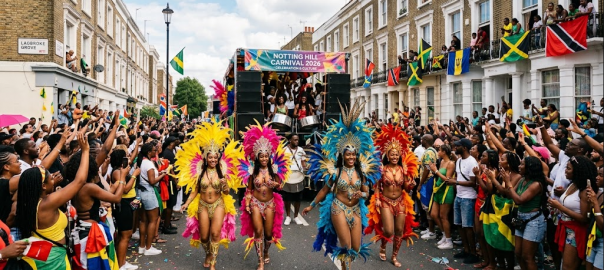
Sat Aug 29 2026 /Mpelembe Media/ — From Resistance to Revelry: How Racial Justice and the Windrush Generation Birthed Europe’s Greatest Street Festival The Sound of Sovereignty: Claudia Jones, Duke Vin, and the Radical Pioneers of Carnival Claiming the Streets: The Sixty-Year Journey and Diamond Jubilee of the Notting Hill Carnival

The Notting Hill Carnival was born out of a crucible of racial tension, discrimination, and active community resistance during the post-war Windrush era. Following the arrival of Caribbean migrants to West London, systemic prejudices such as the informal “colour bar” and housing exploitation in overcrowded slums created an increasingly hostile environment. In August 1958, these racial tensions erupted in violent riots across Notting Hill and Nottingham as white mobs attacked Black residents and their homes. The crisis deepened in May 1959 with the brutal, racially motivated murder of Kelso Cochrane, a thirty-two-year-old Antiguan carpenter. Cochrane’s death became a historic symbol of racial injustice, prompting over 1,200 people to march in solidarity at his funeral, which galvanized Black British civil rights activism across London. Continue reading

25Aug/26

The Strategic Armor of Dolly Parton

The Rhinestone Saint: Celebrating the Life, Art, and Enduring Kindness of Dolly Parton

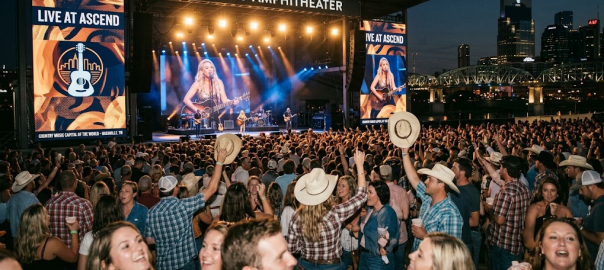
Tue, Aug 25 2026 /Mpelembe Media/ — Dolly Rebecca Parton was born on January 19, 1946, on a farm in Sevier County, Tennessee, where she grew up as the fourth of twelve children in an impoverished East Tennessee hills home. Blessed with a vivid imagination, she was composing her own songs even before she learned to read or write, eventually moving to Nashville the day after her high school graduation in 1964. Her musical career accelerated significantly in 1967 when she joined The Porter Wagoner Show, exposing her talent to over 45 million viewers and launching a highly successful duet partnership that earned her national recognition. Commemorating her emotional professional split from Wagoner in 1974, she wrote the classic “I Will Always Love You,” which topped the country charts that year and launched her into global solo superstardom as she went on to win the Country Music Association’s Entertainer of the Year award in 1978. Throughout her journey, her late husband of nearly sixty years, Carl Dean—whom she met on her first day in Nashville in 1964 and who passed away on March 3, 2025—remained her steadfast, private supporter who inspired her classic hit “Jolene” and other deeply personal tracks. Continue reading

24Aug/26

Why AI labels tank game sales

“AI Slop” Backlash: How Player Outrage is Forcing Developers to Put Human Artists First

Sun, Aug 23 2026 /Mpelembe Media/ — The video game industry is undergoing a swift legal and structural recalibration as “anti-AI” clauses rapidly transition from bespoke risk-mitigation measures into standard contract boilerplate. Corporate intellectual property lawyers, such as Haley MacLean of Voyer Law, report that nearly all of their game development and publishing clients now explicitly mandate strict bans on generative AI. This shift is primarily driven by massive intellectual property liability: under current U.S. copyright law, works must be the product of human authorship to receive IP protection. If a developer incorporates AI-generated assets like art, writing, or sound without substantial human editing, those elements fall into the public domain. Consequently, competitors could legally extract those identical assets and use them in their own games with no legal recourse for the original creator, rendering unedited AI assets a major commercial risk for publishers and investors alike. Continue reading

19Aug/26

Zambia’s Afronauts and the Modern Circus

From Cosmic Footnote to Global Stage: The Bold Legacy of Zambia’s First Afronauts

Wed, Aug 19 2026 /Mpelembe Media/ — In the early 1960s, the African continent was caught in a magnificent, swirling “Wind of Change,” as British Prime Minister Harold Macmillan famously described the inevitable end of colonial rule. For the people of Zambia, 1964 was not just the year of independence; it was a psychological rebirth. It was an era where the impossible suddenly seemed achievable. Amidst this atmosphere of newborn sovereignty, one man dared to suggest that African intellectual power should not just reclaim its land, but stake a claim in the cosmos itself.Edward Mukuka Nkoloso was more than just a dreamer; he was a veteran and an activist who understood that for Zambia to be truly free, it had to assert its scientific and intellectual sovereignty on the global stage.
Continue reading

09Aug/26

Mariah Carey’s Secret Daydream Rebellion

Sun, Aug 0& 2026 /Mpelembe Media/ —  Mariah Carey’s fifth studio album, Daydream, released in 1995, represented a monumental turning point in her career both musicSlly and personally. Moving away from the highly managed, traditional pop-balladeer image cultivated by Columbia Records, Carey sought to infuse her sound with contemporary R&B and hip-hop influences. This stylistic pivot led to intense creative friction with her record label and her then-husband, Sony Music head Tommy Mottola, who favored her established adult-contemporary formula. To bypass this corporate surveillance, Carey systematically established direct studio partnerships with innovative producers like Jermaine Dupri, Dave “Jam” Hall, and Kenneth “Babyface” Edmonds. Through these collaborations, she achieved immediate historic success; the Tom Tom Club-sampling lead single “Fantasy” became the first song by a female artist to debut at number one on the Billboard Hot 100, while her Boyz II Men duet “One Sweet Day” remained at the top of the charts for a record-breaking sixteen weeks. Ultimately, the album achieved a Diamond certification from the RIAA, selling over 11 million copies in the United States and cementing Carey’s status as a self-directed pop auteur. Continue reading

07Aug/26

From Zamrock to Internet Kill-Switches

The Rise of Zed Beats and the Digital Music Revolution

Fri , Aug 0& 2026 /Mpelembe Media/ — Zed Beats, which takes its name from the letter “Z” in Zambia, represents a dynamic hybrid music genre that emerged in the late 1980s. Young, self-taught producers began using affordable computer software to blend indigenous Zambian elements with popular global sounds like R&B, reggae, rap, hip-hop, Jamaican dancehall, Afrobeats, and amapiano. The rise of this digital movement was catalyzed by a major cultural void in the late 1980s and 1990s, when the devastating HIV/AIDS epidemic claimed the lives of a generation of veteran musicians who had anchored traditional live genres like Kalindula and Zamrock. To fill this void, which had left radio and television heavily dominated by foreign music, young enthusiasts utilized newly accessible computer technology to resurrect local music and forge a modern urban identity. Continue reading