Tag Archives: Hakainde Hichilema

07Nov/26

Zambia Mega Budget Triggers Taxpayer Backlash

Zambia’s K284.8 Billion Gamble: Self-Reliance Meets Tax Hikes Under the Grow Zambia Agenda”;Macroeconomic Framework and Domestic Funding Shift

Sat, Nov 07 2026 /Mpelembe Media/ — On November 6, 2026, Minister of Finance and National Planning Dr. Situmbeko Musokotwane presented Zambia’s record K284.8 billion 2027 National Budget to Parliament under the theme “Grow Zambia: From Stabilisation to Unlocking Opportunities, Creating Jobs and Improving Livelihoods for All”. The budget marks a structural transition from emergency post-drought crisis management toward domestic self-reliance, with domestic revenues projected to fund K233.7 billion, or 82.1% of total public expenditure. Under the medium-term macroeconomic framework, the government aims to accelerate real GDP growth to 4.9% while sharply narrowing the overall fiscal deficit to 3.0% of GDP, down from 5.9% in 2026. Sovereign debt obligations remain a significant factor in fiscal management, with debt servicing absorbing K67.6 billion (23.7% of the total budget), while net domestic borrowing is budgeted at K37.3 billion. Continue reading →
03Nov/26

How Zambia Recovered From Historic Drought

Moody’s Upgrade Marks Turning Point for Zambia, Yet Household Relief Remains Ahead

Tue 03 Sept 2026 /Mpelembe Media/ — On October 30, 2026, Moody’s upgraded Zambia’s sovereign credit rating from Caa2 to Caa1 with a positive outlook, citing substantial, sustained progress in government debt management following the nation’s 2020 default. This rating action follows earlier upgrades by S&P Global Ratings and Fitch Ratings, alongside a staff-level agreement reached on October 9, 2026, for a US$1.472 billion, 36-month IMF Extended Credit Facility. Over time, these improved assessments are expected to lower sovereign borrowing costs and help attract financing for major infrastructure initiatives such as the Lobito Corridor. Continue reading →

02Nov/26

How Zambia’s Democracy Collapsed

Disappearances, Detentions, and Silenced Courts: Human Rights Observers Sound Alarm Over Zambia’s Post-Vote Deterioration

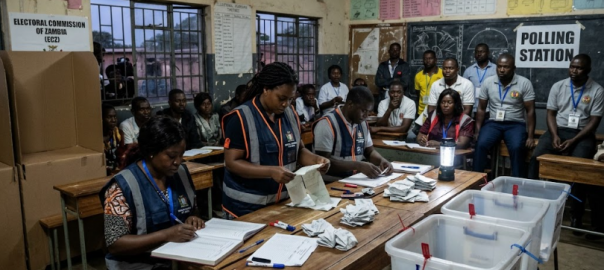
Sun, Nov 01 2026 /Mpelembe Media/ — Following the August 13, 2026 general elections, Zambia experienced an acute escalation of state repression and institutional erosion that reversed earlier commitments to democratic reform. While the Electoral Commission of Zambia (ECZ) officially declared incumbent President Hakainde Hichilema re-elected on August 18 with 60.7 percent of the vote against 38 percent for main opposition challenger Brian Mundubile of the Tonse Alliance (NRPUP), the electoral ecosystem was marred by significant structural controversies. Ahead of the polls, the pre-electoral environment had already contracted through the fast-tracked passage of the 2025 Cyber Security Act and Cyber Crimes Act, selective deployment of the colonial-era 1955 Public Order Act to disrupt opposition rallies, and the abrupt cancellation of the global RightsCon tech summit in Lusaka. International and regional observer missions from SADC, the African Union–COMESA, the EU, and the ICGLR highlighted that procedural fairness was compromised by state-backed intimidation, media curbs, and a temporary halt in vote tabulation. Continue reading →

28Oct/26

Zambia’s Gamble on Bigger Government

From 24 to Thirty Ministries: The Executive Restructuring Behind the Grow Zambia Agenda

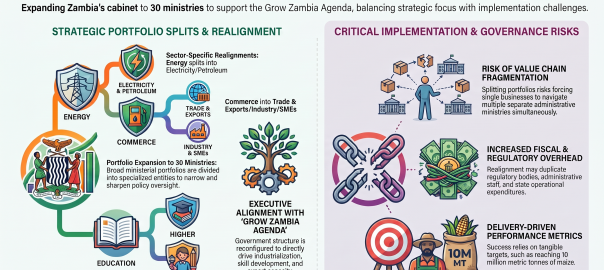
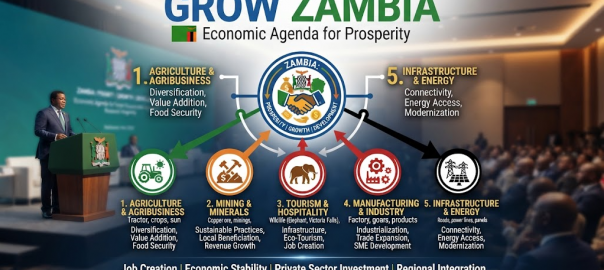
Wed, July 28 2026 /Mpelembe Media/ — President Hakainde Hichilema’s administration has proposed a major structural overhaul to expand Zambia’s cabinet from 24 to 30 ministries, presented to the National Assembly by Vice-President Dr. W.K. Mutale-Nalumango pursuant to Article 92(2)(d) of the Constitution of Zambia. According to official communications from State House, the restructuring is designed to eliminate administrative bottlenecks, enhance public service delivery, and align government operations directly with the country’s flagship economic blueprint, the Grow Zambia Agenda. The proposed changes unbundle large existing ministries into dedicated portfolios, which includes splitting Energy into separate ministries for Electricity and Petroleum; dividing Commerce, Trade and Industry into Trade and Exports, Industry, and Small and Medium Enterprise Development; separating basic education from Skills and Higher Education; and uncoupling Infrastructure and Urban Development from Housing. Proponents maintain that this heightened specialization is necessary to provide focused oversight over critical growth drivers, such as resolving power generation deficits, boosting non-traditional exports, accelerating industrialization, and meeting national production benchmarks.

Continue reading →

27Oct/26

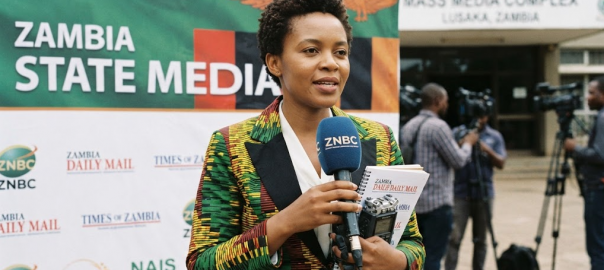
Political Erasure and the Case for Structural Reform in Zambian State Media

The Glass Cliff at Zambia Daily Mail: Historic Female Appointment Overshadowed by Newsroom Subversion

Mon, July 26 2026 /Mpelembe Media/ — The Zambia Daily Mail Independence Day publication scandal erupted on October 23, 2026, when a special commemorative feature chronicling Zambia’s political history and presidential lineage systematically excised the country’s sixth Republican President, Dr. Edgar Chagwa Lungu. While portraits and historical narratives for all other post-independence heads of state were published, Dr. Lungu’s complete omission sparked immediate national outcry, political backlash from opposition quarters, and severe displeasure from both State House and the Ministry of Information. Subsequent internal forensic investigations revealed that Chief Sub-Editor Jackson Sitengu unilaterally deleted Dr. Lungu’s portrait and textual references prior to transmitting press-ready files. Sitengu acted independently without approval from senior management, later explaining that he felt Dr. Lungu should be omitted due to ongoing political controversies surrounding his legacy and an unforced desire to align the publication with perceived state preferences. Continue reading →

24Oct/26

Zambia Erases Former President Edgar Lungu

Labour Activist Calls for Professionalism and National Unity Following Independence Day Controversy

Sat Oct. 24, 2026 /Mpelembe Media/ — Labour activist and salary wages advocate Trust Ngwira has questioned Permanent Secretary for Information Thabo Kawana and the Zambia Daily Mail regarding the omission of Zambia’s sixth President, Edgar Chagwa Lungu, from an Independence Day publication. Describing the incident as deeply unfortunate, Ngwira highlighted that Independence Day is a national occasion meant to symbolise love, peace, unity, and respect for the country’s history. He urged individuals in positions of responsibility to carefully weigh the consequences of their actions and statements to avoid creating unnecessary public controversy that could put Republican President Hakainde Hichilema in an embarrassing position. Continue reading →

27Sep/26

Can Hichilema Run Zambia Like a Startup

Decoding the 10-10-5-3-3-1-1-1 Formula: Zambia’s Quantifiable Economic Transformation

Sun 27 Sept 2026 /Mpelembe Media/ — The GROW ZAMBIA Agenda represents President Hakainde Hichilema’s strategic economic framework designed to transition the country from post-debt-restructuring macroeconomic stabilization toward rapid, production-led growth. Designed to translate national fiscal gains into visible, household-level economic improvements, the strategy sets out to double national GDP and triple the overall size of the Zambian economy over his second term. This shift moves public sector operations away from routine administration toward an output-oriented delivery model anchored in wealth creation, expanded formal employment, and export expansion across SADC, COMESA, and continental markets. Continue reading →

12Sep/26

How Military Generals Run Zambian Agribusiness

Thu Sep 10 2026 /Mpelembe Media/ — Brigadier General Laston Chabinga served as a flag officer in the Zambia Army, holding executive command of the 3 Infantry Brigade headquartered in Ndola, the administrative and industrial hub of the Copperbelt Province. As active Brigade Commander around March 2017, he directed the military’s strategic and operational envelope across critical regional defense and economic corridors. Continue reading →

05Sep/26

Emmanuel Mwamba from statecraft to sedition

Diplomacy, Dissidence, and Digital Resistance: The Life and Career of Emmanuel Mwamba

Sat Sep 05 2026 /Mpelembe Media/ — Emmanuel Mwamba was born on April 18, 1971, in the mining hub of Luanshya within the Copperbelt Province of Zambia. He completed his secondary education at Roan Antelope Secondary School and subsequently earned a Diploma in Journalism and Public Relations from Evelyn Hone College. He expanded his qualifications globally, obtaining a Master of Business Administration from Edith Cowan University in Australia and a Master in Peace Studies from the Institute of Peace & Security Studies at Addis Ababa University. After initial employment at the Zambia National Commercial Bank, he entered the political arena as the administrative secretary and spokesperson for Zambia’s second president, Frederick Chiluba. During this time, Mwamba aggressively defended Chiluba against state-directed corruption prosecutions. This loyalty caused friction with the administration of Levy Mwanawasa, resulting in the termination of Mwamba’s probationary contract in October 2004, though he continued serving Chiluba in a private capacity. Following the reconciliation of Chiluba and Michael Sata in 2005, Mwamba transitioned his allegiance to the Patriotic Front (PF). Continue reading →

28Aug/26

Your AI intern is managing your mind

Algorithmic Elenchus: Deconstructing Structural Incentives and Substantive Due Process in Comparative Law

Thu Aug 27 2026 /Mpelembe Media/ —  The 2026 Zambian presidential election was defined by major legal and structural changes that occurred shortly before the vote. Under Constitutional Amendment Act No. 13 of 2025 and the subsequent May 2026 Electoral Processes Act, the electoral boundary map was dramatically redrawn, expanding the constituency seats from 156 to 226 just three months prior to the election. Following the vote, tension escalated when the Electoral Commission of Zambia (ECZ) suspended vote counting for six hours on August 14 before declaring incumbent Hakainde Hichilema the victor with 60.49% of the vote. In response, opposition leader Brian Mundubile prepared to file a formal challenge in the Constitutional Court. However, on the final day of the mandatory seven-day filing window, police citing “security reasons” physically sealed the top courts, blockading access and forcing the opposition to resort to an unprecedented digital petition sent directly to the Chief Justice’s personal email. Continue reading →