Tag Archives: Lusaka

03Nov/26

How Zambia Recovered From Historic Drought

Moody’s Upgrade Marks Turning Point for Zambia, Yet Household Relief Remains Ahead

Tue 03 Sept 2026 /Mpelembe Media/ — On October 30, 2026, Moody’s upgraded Zambia’s sovereign credit rating from Caa2 to Caa1 with a positive outlook, citing substantial, sustained progress in government debt management following the nation’s 2020 default. This rating action follows earlier upgrades by S&P Global Ratings and Fitch Ratings, alongside a staff-level agreement reached on October 9, 2026, for a US$1.472 billion, 36-month IMF Extended Credit Facility. Over time, these improved assessments are expected to lower sovereign borrowing costs and help attract financing for major infrastructure initiatives such as the Lobito Corridor. Continue reading →

02Nov/26

How Zambia’s Democracy Collapsed

Disappearances, Detentions, and Silenced Courts: Human Rights Observers Sound Alarm Over Zambia’s Post-Vote Deterioration

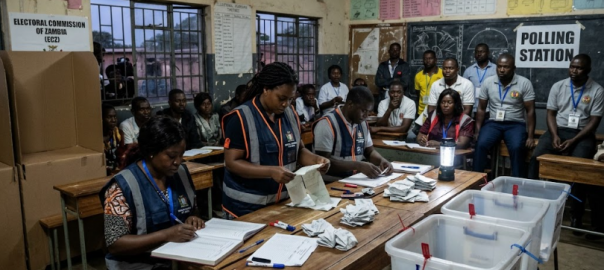
Sun, Nov 01 2026 /Mpelembe Media/ — Following the August 13, 2026 general elections, Zambia experienced an acute escalation of state repression and institutional erosion that reversed earlier commitments to democratic reform. While the Electoral Commission of Zambia (ECZ) officially declared incumbent President Hakainde Hichilema re-elected on August 18 with 60.7 percent of the vote against 38 percent for main opposition challenger Brian Mundubile of the Tonse Alliance (NRPUP), the electoral ecosystem was marred by significant structural controversies. Ahead of the polls, the pre-electoral environment had already contracted through the fast-tracked passage of the 2025 Cyber Security Act and Cyber Crimes Act, selective deployment of the colonial-era 1955 Public Order Act to disrupt opposition rallies, and the abrupt cancellation of the global RightsCon tech summit in Lusaka. International and regional observer missions from SADC, the African Union–COMESA, the EU, and the ICGLR highlighted that procedural fairness was compromised by state-backed intimidation, media curbs, and a temporary halt in vote tabulation. Continue reading →

01Nov/26

Zambia’s Space Race Hits the Stage

Beyond the Moon: Ryan Calais Cameron and Monique Touko on Ambition, Satire, and Zambia’s Space Dreams

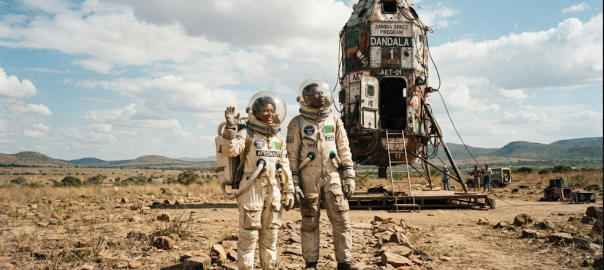
Sun, Nov 01 2026 /Mpelembe Media/ — In 1964, as Zambia emerged from British colonial rule, former schoolteacher and anti-colonial activist Edward Mukuka Nkoloso announced an audacious bid to beat the United States and the Soviet Union to the moon. Establishing the Zambia National Academy of Science, Space Research and Philosophy on an abandoned farm outside Lusaka, Nkoloso trained a cohort of aspiring astronauts—later known as the “Afronauts”—using unconventional methods such as rolling down hills in oil drums and swinging from ropes to simulate weightlessness. His plans included sending a 17-year-old girl named Matha Mwamba to Mars alongside two cats and a missionary. Although the programme never launched due to a lack of funding and institutional support, leaving Nkoloso vulnerable to public mockery, the venture endured as a contested, compelling fusion of sincere anti-colonial optimism and pointed satire. Continue reading →

01Nov/26

Ed Sheeran and Sampa Beat the System

Sampa the Great Reclaims Her Bloodline and Reinvents Zambian Rock on ‘Nu Zamrock’

Sun, Nov 01 2026 /Mpelembe Media/ — Sampa the Great (Sampa Tembo) released her third studio album, Nu Zamrock, on October 30, 2026, through Loma Vista Recordings. Spanning 16 tracks across 37 minutes, the record represents an autobiographical reclamation, an intergenerational dialogue, and a modern sonic expansion of Zambia’s foundational 1970s rock movement. Co-executive produced by Sampa alongside Grammy-winning producer Cadenza, the album was crafted across intensive writing sessions in Botswana, production work in Lusaka with Zambian producers Magnus Mando (Mag44) and Solomon Moyo, and finishing sessions in Los Angeles. Rather than treating the project as retro-nostalgia, Sampa describes the record as “the future remembering where it came from,” blending overdriven psychedelic rock guitars and kalindula polyrhythms with hard-hitting hip-hop, poetry, and soul. Continue reading →

28Oct/26

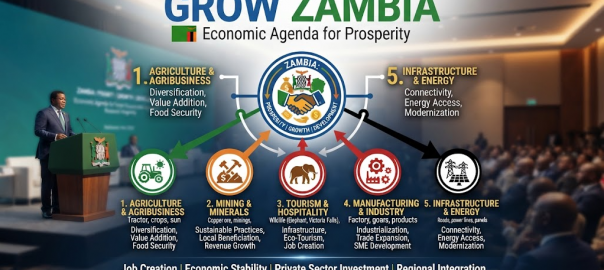
Zambia’s Gamble on Bigger Government

From 24 to Thirty Ministries: The Executive Restructuring Behind the Grow Zambia Agenda

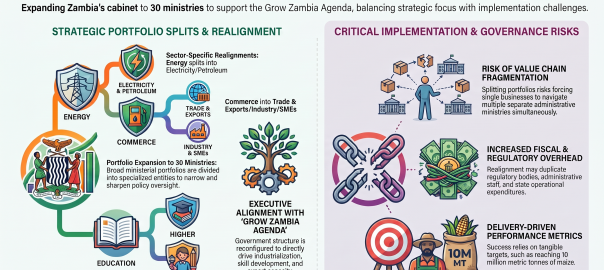
Wed, July 28 2026 /Mpelembe Media/ — President Hakainde Hichilema’s administration has proposed a major structural overhaul to expand Zambia’s cabinet from 24 to 30 ministries, presented to the National Assembly by Vice-President Dr. W.K. Mutale-Nalumango pursuant to Article 92(2)(d) of the Constitution of Zambia. According to official communications from State House, the restructuring is designed to eliminate administrative bottlenecks, enhance public service delivery, and align government operations directly with the country’s flagship economic blueprint, the Grow Zambia Agenda. The proposed changes unbundle large existing ministries into dedicated portfolios, which includes splitting Energy into separate ministries for Electricity and Petroleum; dividing Commerce, Trade and Industry into Trade and Exports, Industry, and Small and Medium Enterprise Development; separating basic education from Skills and Higher Education; and uncoupling Infrastructure and Urban Development from Housing. Proponents maintain that this heightened specialization is necessary to provide focused oversight over critical growth drivers, such as resolving power generation deficits, boosting non-traditional exports, accelerating industrialization, and meeting national production benchmarks.

Continue reading →

24Oct/26

How Foreign Investors Trade in Zambia

Investing in the Lusaka Securities Exchange: Comparative Pathways, Settlement Mechanics, and Treaty Tax Relief for UK Residents

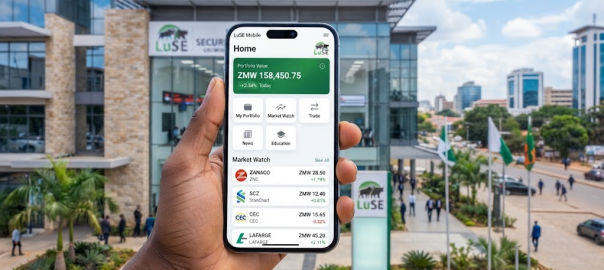
Sat Oct. 24, 2026 /Mpelembe Media/ — The Lusaka Securities Exchange (LuSE) operates under the regulatory supervision of the Securities and Exchange Commission (SEC) of Zambia pursuant to the Securities Act No. 41 of 2016, providing a centralized capital market with an equity market capitalization of approximately USD 2.30 billion. To prevent off-market fragmentation, Zambian law mandates that all public companies with 50 or more shareholders must register with the SEC and trade exclusively on a recognized stock exchange, effectively prohibiting Over-The-Counter (OTC) equity markets. The exchange functions across a two-tier market structure comprising the Main Board (Official List) for established public enterprises and the Quoted Tier for growth-phase entities. Zambia maintains a fully liberalized foreign exchange regime with no exchange controls, permitting up to 100% foreign ownership in private and listed assets—with narrow statutory exceptions, such as domestic cellular network operators required to float 10% of their shares on the exchange—and guaranteeing the repatriation of investment capital, dividends, and profits through the Bank of Zambia. Continue reading →

24Oct/26

Why AI Detectors Flag African Writers

Flawed Metrics and Market Tropes: The Paradox Facing Black Writers in the AI Era

Sat Oct. 24, 2026 /Mpelembe Media/ — The controversy surrounding Zimbabwean author Simbarashe Steyn Kundizeza’s 2026 Caine Prize win has ignited an international debate over artificial intelligence, literary authenticity, and algorithmic bias in publishing. On October 6, 2026, Kundizeza was awarded the £10,000 Caine Prize for African Writing for his short story “The Blue Fighter”. Five days later, journalist Vauhini Vara reported in The Atlantic that the commercial AI detection tool Pangram had flagged virtually the entire story as machine-generated text. Kundizeza forcefully rejected the accusation, asserting that the story drew directly from his personal life, lived experience, and a writing residency in Ghana. In response, the Caine Prize Foundation launched a human-centred review—interviewing the author and judges and examining manuscript draft histories rather than relying on automated software scores as dispositive proof of misconduct. Continue reading →

21Oct/26

A Strategic Guide to Diaspora Investment, Incentives, and Land Acquisition in Zambia

Bridging Homeland and Diaspora: Civic Engagement, Traditional Gastronomy, and Travel Formalities for Zambians in the UK

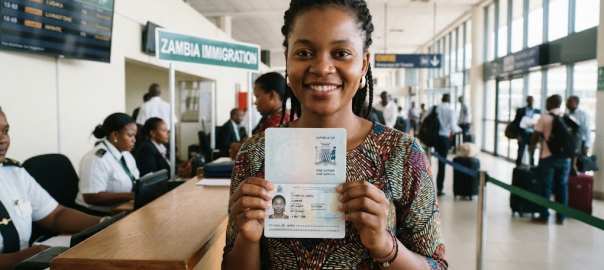
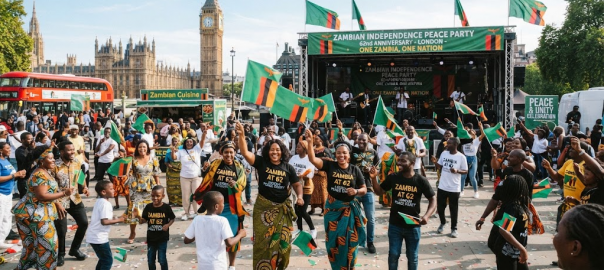
Wed Oct. 21, 2026 /Mpelembe Media/ — The transnational migration corridor connecting Zambia’s Copperbelt region to suburban centers across Greater London reflects a vital flow of skilled professionals, students, and families who maintain deep socio-economic, civic, and cultural ties. To support local community integration in the United Kingdom while driving social and economic development in Zambia, an extensive organizational ecosystem operates across multiple tiers. Grassroots groups like the London Association of Zambians (LazUK) deliver civic networking and localized peer support, while commercial promotion platforms such as UK Zambian Events Ltd host business expos and cultural festivals to celebrate heritage and facilitate cross-border trade. On a broader national scale, registered charities including the Zambia Society Trust (ZST) and the Scotland Zambia Partnership (SCOZAP) coordinate grassroots development—funding healthcare delivery at St Francis Mission Hospital, nurse sponsorships, community schooling through Kwasha Mukwenu, and poverty alleviation projects. Institutional engagement is anchored by the Ministry of Foreign Affairs and International Cooperation through its dedicated Diaspora Web Portal, which officially recognizes overseas citizens as the nation’s “Eleventh Province” and encourages active involvement in domestic land acquisition, agriculture, and climate resilience. Furthermore, international advocacy organizations like the Organization of Zambians Abroad (OZA) and professional bodies like the British Association of Social Workers (BASW) Diaspora Special Interest Group provide constitutional advocacy, trade joint ventures, and structured induction standards for overseas-qualified social workers and professionals. Continue reading →

19Oct/26

Why Zambia National Budget Needs Local Accounting

You Can’t Share Poverty: Reconciling Fiscal Discipline with Local Empowerment in Emerging Economies

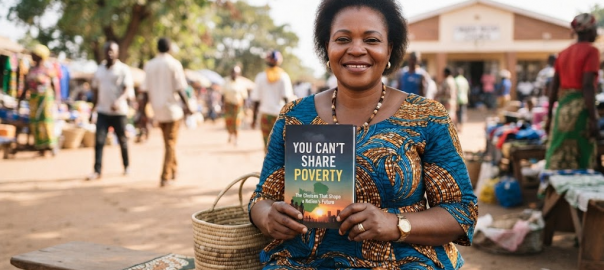
Mon Oct. 19, 2026 /Mpelembe Media/ — Hakainde Hichilema’s political memoir and reform playbook, You Can’t Share Poverty: The Choices That Shape a Nation’s Future, sets forth a structural growth doctrine that redefines the social contract in developing nations. The foundational premise argues that state-driven wealth redistribution in low-income or heavily indebted economies serves merely to socialize scarcity and dilute existing capital without building productive capacity. Sustainable poverty reduction and employment creation cannot be achieved through consumption subsidies or state patronage, but require expanding national output (GDP) by attracting foreign direct investment, expanding the industrial tax base, and establishing predictable regulatory frameworks where the state acts as a facilitator rather than a controller of commercial enterprise.
Continue reading →

18Oct/26

How Zambian Music Became the New Parliament

Sun Oct. 18, 2026 /Mpelembe Media/ — Maiko Zulu has used conscious reggae music, public demonstrations, institutional leadership, and independent political campaigns to challenge political authority and demand structural justice in Zambia. Continue reading →