Tag Archives: Lusaka

19Aug/26

Zambia’s Afronauts and the Modern Circus

From Cosmic Footnote to Global Stage: The Bold Legacy of Zambia’s First Afronauts

Wed, Aug 19 2026 /Mpelembe Media/ — In the early 1960s, the African continent was caught in a magnificent, swirling “Wind of Change,” as British Prime Minister Harold Macmillan famously described the inevitable end of colonial rule. For the people of Zambia, 1964 was not just the year of independence; it was a psychological rebirth. It was an era where the impossible suddenly seemed achievable. Amidst this atmosphere of newborn sovereignty, one man dared to suggest that African intellectual power should not just reclaim its land, but stake a claim in the cosmos itself.Edward Mukuka Nkoloso was more than just a dreamer; he was a veteran and an activist who understood that for Zambia to be truly free, it had to assert its scientific and intellectual sovereignty on the global stage.
Continue reading

17Aug/26

Zambia’s 2026 Election and 22-Hour Blackouts

The Defining Moments of Zambia’s 2026 Election

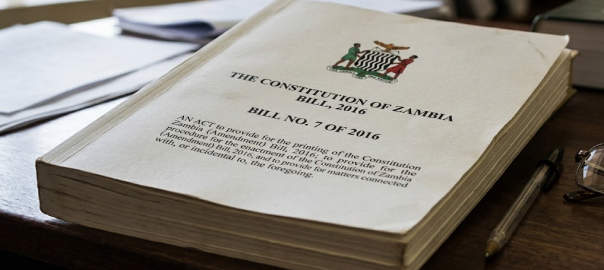
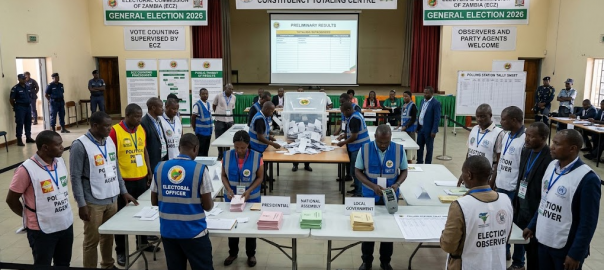
Mon, Aug 17 2026 /Mpelembe Media/ —  These sources provide a comprehensive look at the 2026 Zambian general election, covering the candidates, legal reforms, and shifting political alliances. Incumbent Hakainde Hichilema sought a second term against a fractured opposition, with Brian Mundubile emerging as his primary challenger representing the Tonse Alliance. The reports detail significant constitutional amendments that expanded the National Assembly and introduced a mixed-member proportional representation system. Analysts highlight concerns regarding legislative maneuvering, economic grievances like the high cost of living, and accusations of gerrymandering. Despite reports of isolated violence and a temporary pause in vote counting, the data indicates a high voter turnout among the nearly nine million registered citizens. Ultimately, the records illustrate a tense political landscape defined by regional voting blocks and the ongoing test of Zambia’s democratic institutions. Continue reading

07Aug/26

From Zamrock to Internet Kill-Switches

The Rise of Zed Beats and the Digital Music Revolution

Fri , Aug 0& 2026 /Mpelembe Media/ — Zed Beats, which takes its name from the letter “Z” in Zambia, represents a dynamic hybrid music genre that emerged in the late 1980s. Young, self-taught producers began using affordable computer software to blend indigenous Zambian elements with popular global sounds like R&B, reggae, rap, hip-hop, Jamaican dancehall, Afrobeats, and amapiano. The rise of this digital movement was catalyzed by a major cultural void in the late 1980s and 1990s, when the devastating HIV/AIDS epidemic claimed the lives of a generation of veteran musicians who had anchored traditional live genres like Kalindula and Zamrock. To fill this void, which had left radio and television heavily dominated by foreign music, young enthusiasts utilized newly accessible computer technology to resurrect local music and forge a modern urban identity. Continue reading

04Aug/26

Bond Rallies and Blackouts in Zambia

Zambia’s 2026 Election: A High-Stakes Two-Horse Race Decided by Economic Squeeze and Drought

Tue , Aug 04 2026 /Mpelembe Media/ — Zambia’s general election on August 13, 2026, represents a pivotal, alliance-driven contest that will test the country’s democratic resilience and economic direction. Although fourteen presidential candidates are officially cleared to run, the election is fundamentally a two-horse race between incumbent President Hakainde Hichilema of the United Party for National Development (UPND) and opposition challenger Brian Mundubile. Hichilema enters the race backed by an expanded 15-party UPND Alliance, leveraging the power of incumbency. His challenger, Mundubile—a 55-year-old lawyer, accountant, and former government chief whip—is running under the National Reconciliation Party for Unity and Prosperity (NRPUP) banner after unifying a highly fractured opposition under the Tonse–Pamodzi Alliance. Continue reading

03Aug/26

Zambia’s Debt Miracle and Democratic Backsliding

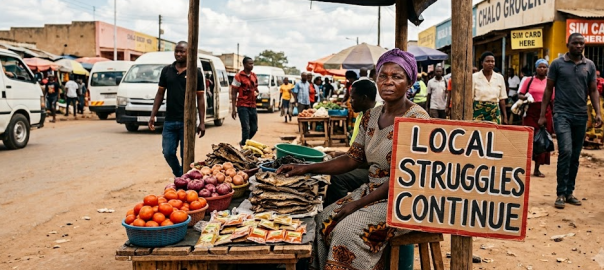
For Zambian voters, the 2026 election represents a critical choice balancing long-term macroeconomic recovery against immediate, severe household pressures. While President Hakainde Hichilema’s administration successfully restructured the nation’s default-era debt and introduced popular programs like universal free education, ordinary citizens are heavily squeezed by a high cost of living, rising food costs, and inflation exacerbated by a historic drought. A primary concern voters should watch out for is the post-election handling of the country’s structural electricity crisis. To avoid grueling 20-hour blackouts during the campaign cycle, the state utility ZESCO has relied on costly emergency regional power imports. Because this spending is fiscally unsustainable, voters face the high risk of a post-election fiscal correction, which will likely involve steep, inflation-inducing retail tariff hikes or a return to severe load-shedding. Furthermore, due to widespread grassroots dissatisfaction with local representation, there is a strong potential for split-ticket voting, meaning voters may back the incumbent president while actively rejecting sitting members of parliament and local councilors. Continue reading

03Aug/26

How Copper Debt Poisoned Zambian Democracy

From Reform to Repression: Zambia’s Authoritarian Turn Under the Shadow of Digital Neo-Colonialism

Mon, Aug 01 2026 /Mpelembe Media/ — The abrupt cancellation of RightsCon 2026 in Lusaka, Zambia, just days before its scheduled opening in May 2026, has exposed the profound intersection of foreign coercion and domestic democratic erosion. Although the Zambian government officially claimed the postponement was to ensure alignment with “national values,” organizers and independent reports revealed that the cancellation was directly triggered by immense pressure from the Chinese Communist Party. Chinese diplomats essentially leveraged their vast economic investments in the country to demand the exclusion of Taiwanese civil society delegates and the moderation of panels critical of Beijing’s digital authoritarianism. Because the conference was slated to be held in a facility donated by the Chinese government, and coincided with negotiations over critical development grants, the Zambian state capitulated to these extraterritorial censorship demands. Continue reading

02Aug/26

Building Industrial Giants in High Friction Zambia

From Power Cuts to Profit: How Zambian Food Processors are Innovating. Nutrition and Strategy

Sun, Aug 02 2026 /Mpelembe Media/ —  Here are a few suggested headlines for this summary: Navigating the Zambian Biscuit Maze: Strategies for Confectionery Startups. The High Cost of Baking in Zambia: Challenges and Triumphs in the FMCG Sector. From Power Cuts to Profit: How Zambian Food Processors are Innovating. Nutrition and Strategy: Overcoming Systemic Headwinds in Zambia’s Food Industry. Continue reading

03Jun/26

Reputation Capital: The Economic Engine Driving Mpelembe’s Autonomous Agents

Reputation Capital: The Economic Engine Driving Mpelembe’s Autonomou Agents

Tue, Jun 02 2026 /Mpelembe Media/ — The Mpelembe Agent Crypto Framework is a decentralized infrastructure platform designed to replace traditional, reactive dApps with Proactive Cryptographic Agency. This framework empowers software agents to autonomously manage assets, operate hardware compute clusters, stake capital, and sign atomic settlements while maintaining strict risk insulation. Continue reading

17May/26

Zambia’s pivot from copper to conservation

Zambia’s Tourism Renaissance: Record Arrivals, Open Borders, and Economic Revival

Sun, May 17 2026 /Mpelembe Media/ — Booming Tourism and Economic Growth Zambia is experiencing a tourism renaissance, recording a historic 2.19 million international arrivals in 2024—a 35.3% increase from the previous year. The government has strategically positioned tourism as a primary engine for economic diversification away from copper mining, increasing the sector’s budgetary allocation by 281% since 2021. Continue reading

27Mar/26

Zambia’s AI Leap from Mines to Classrooms

March 27, 2026 /Mpelembe Media/ —  Zambia’s integration of Artificial Intelligence (AI) into its educational and economic sectors is accelerating through strategic partnerships and new policy frameworks, though these advancements face significant governance and human rights challenges.

Zambia’s National Artificial Intelligence Strategy (2024-2026) outlines a comprehensive roadmap to transform higher education through sweeping changes to curricula, pedagogical practices, digital infrastructure, and research innovation.

Continue reading