Tag Archives: Tax

07Nov/26

Zambia Mega Budget Triggers Taxpayer Backlash

Zambia’s K284.8 Billion Gamble: Self-Reliance Meets Tax Hikes Under the Grow Zambia Agenda”;Macroeconomic Framework and Domestic Funding Shift

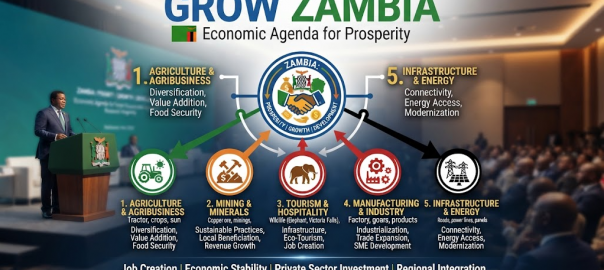
Sat, Nov 07 2026 /Mpelembe Media/ — On November 6, 2026, Minister of Finance and National Planning Dr. Situmbeko Musokotwane presented Zambia’s record K284.8 billion 2027 National Budget to Parliament under the theme “Grow Zambia: From Stabilisation to Unlocking Opportunities, Creating Jobs and Improving Livelihoods for All”. The budget marks a structural transition from emergency post-drought crisis management toward domestic self-reliance, with domestic revenues projected to fund K233.7 billion, or 82.1% of total public expenditure. Under the medium-term macroeconomic framework, the government aims to accelerate real GDP growth to 4.9% while sharply narrowing the overall fiscal deficit to 3.0% of GDP, down from 5.9% in 2026. Sovereign debt obligations remain a significant factor in fiscal management, with debt servicing absorbing K67.6 billion (23.7% of the total budget), while net domestic borrowing is budgeted at K37.3 billion. Continue reading →

24Oct/26

How Foreign Investors Trade in Zambia

Investing in the Lusaka Securities Exchange: Comparative Pathways, Settlement Mechanics, and Treaty Tax Relief for UK Residents

Sat Oct. 24, 2026 /Mpelembe Media/ — The Lusaka Securities Exchange (LuSE) operates under the regulatory supervision of the Securities and Exchange Commission (SEC) of Zambia pursuant to the Securities Act No. 41 of 2016, providing a centralized capital market with an equity market capitalization of approximately USD 2.30 billion. To prevent off-market fragmentation, Zambian law mandates that all public companies with 50 or more shareholders must register with the SEC and trade exclusively on a recognized stock exchange, effectively prohibiting Over-The-Counter (OTC) equity markets. The exchange functions across a two-tier market structure comprising the Main Board (Official List) for established public enterprises and the Quoted Tier for growth-phase entities. Zambia maintains a fully liberalized foreign exchange regime with no exchange controls, permitting up to 100% foreign ownership in private and listed assets—with narrow statutory exceptions, such as domestic cellular network operators required to float 10% of their shares on the exchange—and guaranteeing the repatriation of investment capital, dividends, and profits through the Bank of Zambia. Continue reading →

19Oct/26

Why Zambia National Budget Needs Local Accounting

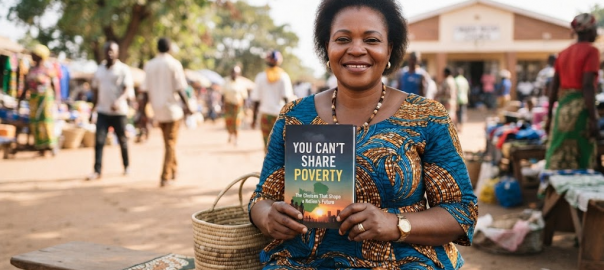
You Can’t Share Poverty: Reconciling Fiscal Discipline with Local Empowerment in Emerging Economies

Mon Oct. 19, 2026 /Mpelembe Media/ — Hakainde Hichilema’s political memoir and reform playbook, You Can’t Share Poverty: The Choices That Shape a Nation’s Future, sets forth a structural growth doctrine that redefines the social contract in developing nations. The foundational premise argues that state-driven wealth redistribution in low-income or heavily indebted economies serves merely to socialize scarcity and dilute existing capital without building productive capacity. Sustainable poverty reduction and employment creation cannot be achieved through consumption subsidies or state patronage, but require expanding national output (GDP) by attracting foreign direct investment, expanding the industrial tax base, and establishing predictable regulatory frameworks where the state acts as a facilitator rather than a controller of commercial enterprise.
Continue reading →

03Sep/26

Zambia’s High Stakes Digital Money Revolution

The Digital Economy at a Crossroads

Thu Sep 03 2026 /Mpelembe Media/ — Zambia’s developmental trajectory currently faces a paradoxical challenge: the imperative to widen the domestic tax base versus the mandate to achieve universal digital financial inclusion. As the primary engine for the nation’s 2027 digital economy vision, mobile money provides the “last mile” infrastructure necessary to transition the informal sector into the formal economy. However, the introduction of a dedicated transaction levy creates a friction point that threatens to bifurcate the ecosystem. While fiscal authorities view the levy as a mechanism for equity, it risks introducing a regressive cost layer that could stall the momentum of Zambia’s most successful financial inclusion tool.Strategic Dilemma:  Policymakers must reconcile the immediate need for revenue with the long-term macroeconomic benefits of digital liquidity. The core risk is that aggressive fiscal extraction at this nascent stage may drive users back to cash, thereby eroding the Bank of Zambia’s visibility into the economy and increasing the cost of cash management.The current tension is a byproduct of Zambia’s rapid evolution from fragmented banking silos to a sophisticated, shared payment infrastructure. Continue reading →

30Oct/25

Spain’s Tax Abuses and the Beckham Law Trap

The warning is based on a new white paper, “Hacienda vs. The People,” which exposes how the Spanish Tax Authority (Hacienda) allegedly uses the Impatriate tax regime, known as the “Beckham Law,” as a predatory scheme, enticing foreign talent with guaranteed favourable tax treatment only to retroactively deny the certificates and impose massive tax demands. Furthermore, Amsterdam & Partners has sent a letter to the U.S. Department of Treasury expressing concern that Hacienda’s use of Chinese state-owned Huawei servers risks compromising U.S. taxpayer data shared by the Internal Revenue Service. The report highlights that this systemic extortion is driven by an unethical bonus system that rewards tax inspectors based on revenue collection and sanctions. Continue reading

26Jun/23

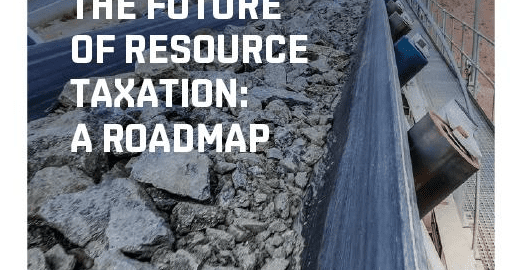
The Global Conference on the Future of Resource Taxation 2023

June 26 (Finance) — The Global Conference on the Future of Resource Taxation 2023 is being hosted by Zambia. The conference will take place from June 26 to 28, 2023 at the Mulungushi International Conference Centre in Lusaka, Zambia.

The Global Conference on the Future of Resource Taxation is a significant event that will bring together government officials, industry representatives, and civil society organizations to discuss the future of resource taxation. The conference will focus on the following key challenges: Continue reading →

12May/23

Tsunami of taxes

By Kim Harrisberg | South Africa correspondent

Kenyan influencers’ popularity may soon be costing them, with the government recently proposing new taxes targeting the digital economy, including for content creators.

Under the Finance Bill 2023, multiple amendments aim to grow the government’s tax base which has seen substantial deficits resulting in even government salaries being delayed. Continue reading →

14Mar/23

Budget 2023: government needs to show it can jack up growth to regain economic credibility

Steve Schifferes, City, University of London

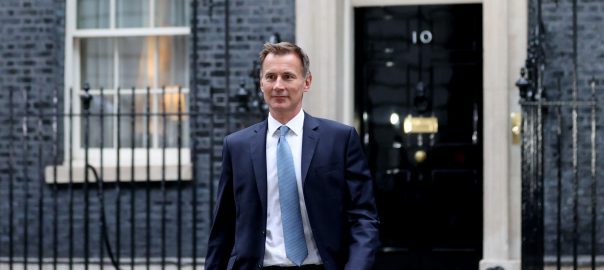
UK chancellor Jeremy Hunt’s spring budget is a tricky one in terms of timing. Having announced a set of steadying measures in the autumn statement after the Truss/Kwarteng debacle, this budget is likely to be the last but one before a 2024 general election. This makes it a little early for eye-catching tax cuts or business boosts.

Continue reading →

24Sep/22

Mini budget 2022: experts react to the new UK government’s spending and tax-cut plans

Phil Tomlinson, University of Bath; Andrew Burlinson, University of East Anglia; Catherine Waddams, University of East Anglia; Donald Hirsch, Loughborough University; Jean-Philippe Serbera, Sheffield Hallam University; Jim Watson, UCL; Jonquil Lowe, The Open University, and Steven McCabe, Birmingham City University

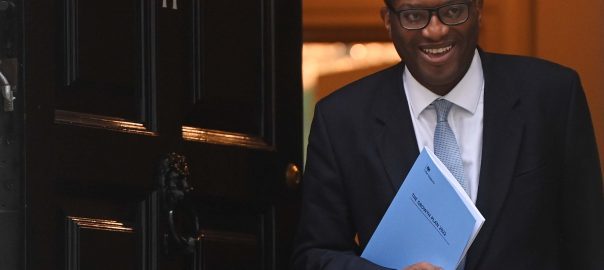
UK chancellor Kwasi Kwarteng has just launched the biggest package of tax cuts in half a century. This will involve around £45bn of reductions for people and businesses by 2027 – 50% more than anticipated before the mini-budget announcement.

Continue reading →

24Sep/22

Mini budget: will Kwasi Kwarteng’s plan deliver growth?

Steve Schifferes, City, University of London

The UK economy has been dogged by slow growth for a long time. Combined with even slower growth in productivity, it has meant virtually no increase in living standards for the average family over the past decade.

Continue reading →