
Tag Archives: .google

03Sep/26

The Multi-Trillion Dollar Machine Economy

Sentient Marketplace: How Mpelembe Network Pioneers Decentralized AI Identity and Sovereign Commerce in Zambia

Thu Sep 03 2026 /Mpelembe Media/ — The technology landscape has firmly transitioned from conversational artificial intelligence to autonomous, multi-agent AI networks, representing a major strategic shift where software agents autonomously reason, plan, allocate capital, and collaborate to execute complex workflows. Unlike traditional chatbots that passively wait for human inputs, these autonomous digital workers are increasingly integrated directly into corporate payrolls, with Gartner projecting that 33% of active enterprise software applications will incorporate agentic AI and 15% of day-to-day tasks will be handled autonomously by 2028. However, this rapid shift has exposed a critical trust and payments bottleneck, as traditional online payment networks were architected on the assumption that a human sits at the visual interface to verify intent and manually click “buy”. To bridge this gap, Google and over 60 partner organizations co-developed the Agent Payments Protocol (AP2) to establish an open, payments-agnostic framework that allows any compliant AI agent to transact securely with any compliant merchant globally. Continue reading

02Sep/26

Newsrooms fight for survival against AI

Ethics in Action: Preserving Human Judgment Amid the Rise of Generative News

Tue Sep 01 2026 /Mpelembe Media/ — The global expansion of artificial intelligence has created a landscape of digital hegemony where standard-setting and economic benefits are heavily concentrated in the Global North, establishing a form of digital extractivism that mirrors historical colonial dynamics. Large technology conglomerates utilize content harvested from global networks to train proprietary models and sell them back as subscriptions. This extraction is accompanied by a severe decline in search referral traffic, which has collapsed by 50% to 60% in critical emerging markets like Brazil, South Africa, and Indonesia. This occurs because conversational search engines summarize copyrighted reporting directly on results pages, bypassing clicks to the original publisher. In response, major nations in the Global South are reframing the AI debate, moving from historical strategies of diplomatic non-alignment directly into the digital realm. Media leaders and policymakers in these regions argue that AI must not be treated as an isolated technical novelty, but as a critical national sovereignty, labor, and industrial policy issue that fundamentally impacts the health of local information environments. Continue reading

02Sep/26

Vibe Coding and the Practical AI Pivot


The Economics of Acceleration: Why Gemini 3.8 Flash is Redefining Enterprise Cost-to-Performance

Tue Sep 01 2026 /Mpelembe Media/ — The integration of Gemini 3.8 Flash (internally codenamed “Skimaki”) into the enterprise software development lifecycle represents a tactical pivot toward rapid, high-frequency iteration and optimized tool execution. Technical leadership can leverage the model’s remarkable coding performance, which was first demonstrated on Google’s internal Jetski developer platform where engineers preferred its speed, tool integration, and code generation capabilities over premium flagship models like Anthropic’s Claude Opus. This qualitative preference is backed by strong quantitative gains on major developer benchmarks, including a 71.0% score on DeepSWE v1.1 for long-horizon software engineering [multimodal_5] and a 54.2% score on SWE-Bench Pro. This performance profile makes Gemini 3.8 Flash an ideal fit for “vibe coding” and multi-agent development loops, where distinct agents autonomously write, review, and compile code in sandbox environments. Continue reading

Million dollar solo startups through AI

The Million-Dollar Solopreneur: Building Full-Stack Software on the Limits of Vibe Coding

Mon Aug 31 2026 /Mpelembe Media/ — The transition of software from traditional SaaS to AI-native applications is driving a massive economic shift by turning “Services-as-Software.” Historically, software has struggled to penetrate the service-based sectors that make up nearly eighty percent of the modern economy due to complex reasoning and unstructured data bottlenecks. Today, early generative AI winners are disrupting these legacy industries by building compound AI systems that combine multiple model calls, retrieval-augmented generation (RAG), and external tool interfaces rather than relying on a single monolithic model. Pioneering applications like Co:Helm in healthcare prior authorizations, EvenUp in personal injury legal work, and Eleos Health in behavioral therapy scribe intelligence are actively capturing immense professional service budgets by automating high-value, pattern-based, or high-volume workflows. These companies are growing faster than any previous wave of SaaS startups, capturing valuable proprietary datasets and creating lasting moats through habitual daily usage and zero-marginal-cost content creation. Continue reading

29Aug/26

How AI tokens and pixels drain budgets

The $30,000 Loop: How Google’s 2026 Prepay Mandate is Forcing an AI FinOps Revolution

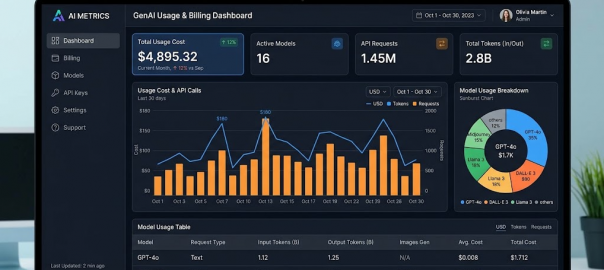
Sat Aug 29 2026 /Mpelembe Media/ — The financial landscape of generative AI development is undergoing a massive shift as cloud providers migrate developers from traditional postpay structures to strict prepay billing systems, with Google AI Studio setting a hard cutover deadline of September 14, 2026. This transition forces developers to upgrade to paid tiers by prepaying a minimum of $10 to establish a positive credit balance, moving them through dynamic usage tiers based on cumulative spend and account age to secure advanced rate limits and enterprise-grade data privacy. The operational challenge of this model is its absolute zero-tolerance policy: when the prepaid balance hits $0, all connected API keys in linked projects stop working simultaneously. This introduces significant downtime risk to production workflows, especially since the typical 10-minute latency in billing pipelines allows long-running batch processes and autonomous agent sessions to run up overages before the system can process the depletion and halt usage. Continue reading

Building bulletproof billing for AI

The Webhook and Metering Playbook: Scaling Gemini Applications with Resilient Stripe Architecture

Fri Aug 27 2026 /Mpelembe Media/ — Integrating Stripe into generative AI applications powered by Google Gemini requires a strict architectural separation between user-facing interfaces and backend payment pipelines to protect sensitive keys and prevent exploitation.

Storing Stripe secret keys, Gemini API credentials, or performing payment orchestrations directly on the client side introduces critical security vulnerabilities, allowing malicious actors to manipulate price details, bypass paywalls, or run unauthorized, high-volume model executions. To build a resilient defense, developers must funnel all checkout, subscription, and credential-heavy actions through a server-side intermediary, such as a FastAPI backend or a serverless environment like Firebase Cloud Functions. This intermediary securely handles Stripe Checkout Session creation with server-side price validation, returning a hosted, pre-built payment URL to redirect the customer safely. Continue reading

25Aug/26

Profitable Gemini AI Architecture with Stripe

The Idempotent Webhook: Securing Asynchronous Payment Ingestion with Stripe

Tue, Aug 25 2026 /Mpelembe Media/ — Transitioning to direct-to-consumer (DTC) web-based gaming allows developers to completely bypass Apple and Google’s restrictive 15% to 30% storefront commissions, enabling studios to retain up to 96% of checkout volume. By moving the registration and payment portals to the browser, developers establish a web-first onboarding strategy where credentials and purchased credit balances are consumed across cross-platform application wrappers. In this hybrid layout, a rendering engine such as Phaser manages the canvas, WebGL states, and low-level game inputs, while React manages HTML-native interface overlays, localized text, and transaction dialogs. Keeping the UI in React offers responsive CSS scaling, dynamic localization, and automated testability. Crucially, to prevent transactional manipulation, payment intent generation is decoupled from the client, forcing the React UI to dispatch authenticated requests to secure backend routes rather than declaring transactional costs directly to Stripe. Continue reading

23Aug/26

AI Ethics Dumping and 2Africa Cables

Countering AI Ethics Dumping: African Nations Mobilize for True Digital Autonomy

Sun, Aug 23 2026 /Mpelembe Media/ — Africa is undergoing a profound digital infrastructure revolution, shifting from historical neglect where international communications bypassed its coastlines to becoming a key hub of global data transit. This physical transformation is anchored by massive subsea cable projects driven by global technology giants. Foremost among these is Meta’s 2Africa cable system, the longest undersea telecommunications cable in the world at 45,000 kilometers, connecting 46 landing stations in 33 countries across Africa, Asia, and Europe. Boasting a design capacity of up to 180 Terabits per second, this project is expected to boost Africa’s cumulative GDP by $36.9 billion in its first few years of operation. Simultaneously, Google’s privately-funded Equiano cable runs along the western seaboard from Portugal to South South Africa, integrating space-division multiplexing to deliver 20 times the network capacity of previous regional cables. The economic impact of Equiano is massive, with projected GDP increases of $11.1 billion in Nigeria, $5.8 billion in South South Africa, and $290 million in Namibia. Continue reading

05Aug/26

Testing reality from hoaxes to AI

The UBUNK Paradigm: Building Mental Muscle Memory to Break the Chain of Fake News

Wed , Aug 05 2026 /Mpelembe Media/ — The UBUNK method is a gamified verification platform that reframes digital media literacy as an active discipline modeled after physical athletic conditioning. Rather than passively consuming information, the platform forces users to step into a digital “arena” where they must actively confront and dismantle highly contested claims. Continue reading

04Aug/26

The hidden tax of AI tech debt

The Jagged Technological Frontier: Why the AI Era Demands a Supreme Premium on Human Judgment

Tue , Aug 04 2026 /Mpelembe Media/ — The integration of generative artificial intelligence into highly skilled professional workflows has illuminated a “jagged technological frontier,” where AI dramatically enhances performance on tasks within its capability boundary but causes silent, severe performance degradation on tasks lying just beyond it. While early organizational studies celebrated substantial speed and quality gains on rote assignments, actual longitudinal production data has exposed a stark AI productivity paradox. In areas like software development, experienced developers frequently report feeling significantly faster while objectively measuring slower due to a massive increase in code churn, a surge in copy-pasted duplication, and a severe reduction in refactoring. These trends rapidly compound long-term technical debt and inject latent vulnerabilities into production systems, demonstrating that accelerating raw output without rigorous, expert validation ultimately introduces severe operational bottlenecks. Continue reading