
Tag Archives: SpaceX

03Aug/26

Private markets hit a physical bottleneck

From Hyperscaler Debt to Emerging Market Tailwinds: The Macroeconomics of the AI Supercycle.

Mon , Aug 03 2026 /Mpelembe Media/ —The current macroeconomic landscape is dominated by an unprecedented artificial intelligence capital expenditure boom, with hyperscalers projected to invest up to $1.4 trillion annually by 2027 to fund data centers, advanced packaging, and energy grids. This massive concentration of tech spending is currently masking broader economic weaknesses, prompting growing concerns among investors regarding an “expectations correction” or an AI bubble. While the underlying technology continues to advance rapidly, Wall Street is increasingly demanding tangible financial returns, as value capture currently lags behind widespread experimentation and massive cash burn. To sustain this infrastructure race, companies are heavily tapping into debt markets, with AI-linked firms and hyperscalers now dominating a significant portion of investment-grade and high-yield bond issuances. Concurrently, public markets are bracing for a wave of mega-IPOs from innovation-led giants like SpaceX, OpenAI, and Anthropic, which could represent trillions in market value and test the capital absorption limits of global equities. In the private sector, the focus on AI data centers and the broader energy transition has led to record fundraising for infrastructure assets, even as traditional private equity distributions remain sluggish. Globally, this AI supercycle is acting as a powerful structural tailwind for emerging markets, creating a historic wealth transfer as developed markets rely on emerging market suppliers for memory, silicon, and critical minerals, which is further fueling surges in mining mergers and acquisitions. Continue reading

31Jul/26

Why Philosophy Degrees Now Outperform Coding

From Syntax to Semantics: The Real Role of the Humanities in the Age of Generative AI

Fri, July 31 2026 /Mpelembe Media/ — he traditional belief that a computer science degree is a guaranteed golden ticket to lucrative employment is currently collapsing. Driven by macroeconomic tightening, the end of zero-interest-rate policies, and the rapid advancement of generative AI that automates entry-level coding tasks, tech companies have drastically reduced their hiring of new graduates. Tech leaders like Nvidia CEO Jensen Huang are even suggesting that the era of learning to code is over, advising future generations to focus on domain-specific expertise as natural language becomes the primary programming interface. Consequently, recent data from the Federal Reserve Bank of New York shows computer science and engineering graduates facing unemployment rates around 7%, which is noticeably higher than those in several humanities disciplines. Continue reading

30May/26

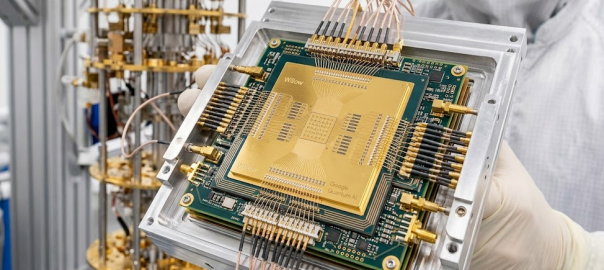
Semiconductor Chokepoints and Google Willow

King’s College London Pioneers UK Quantum Research with Access to Google’s 105-Qubit Processor

Sat, May 30 2026 /Mpelembe Media/ — Technical Breakthroughs and Error Correction: Google’s Willow is a 105-qubit processor that represents a major milestone in hardware stability. Its most significant achievement is in quantum error correction—demonstrating that as the system scales and adds more qubits, the error rate exponentially decreases. Leveraging a new algorithm called Quantum Echoes, Willow achieved “verifiable quantum advantage” by modeling complex physical experiments 13,000 times faster than the world’s best classical supercomputers. Continue reading

21May/26

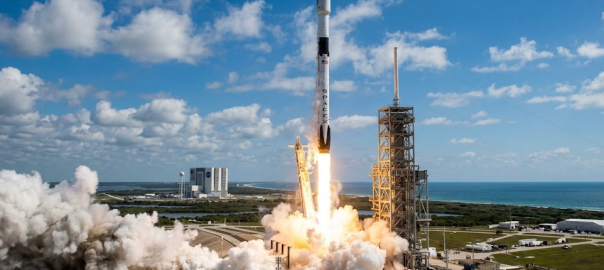
SpaceX’s Two Trillion Dollar Space AI IPO

Orbital Intelligence: How SpaceX and Google Are Moving AI Data Centers to Space

Thur, May 21 2026 /Mpelembe Media/ — The Mega-IPO and xAI Merger: SpaceX is preparing for a highly anticipated mid-2026 IPO, aiming to raise up to $75 billion at a target valuation between $1.75 trillion and $2 trillion. This historic offering follows a February 2026 merger with Elon Musk’s artificial intelligence firm, xAI, which initially established a combined private entity valued at $1.25 trillion. Continue reading

01Apr/26

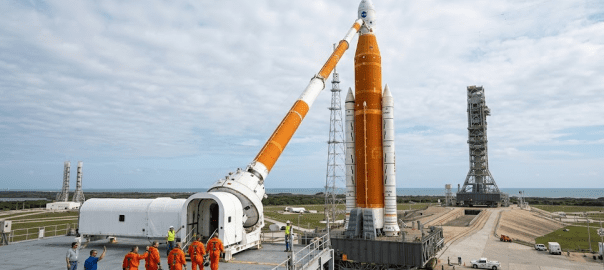
Artemis II: A 10-Day Journey Around the Moon

Artemis II Launch Day: NASA Ready to Send First Crew to the Moon in Over 50 Years

April 1, 2026 /Mpelembe Media/ — NASA is currently in the final countdown for the historic launch of the Artemis II mission, scheduled to lift off today, April 1, 2026, at 6:24 p.m. EDT from the Kennedy Space Center in Florida. This 10-day mission will send four astronauts around the Moon, marking the first time humans have left low-Earth orbit since the Apollo 17 mission in 1972. Continue reading

08Mar/26

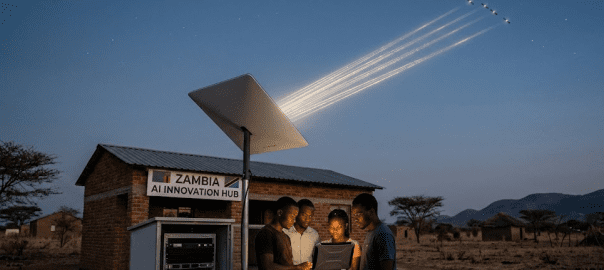
Starlink Direct-to-Cell: Global Deployment and Performance Analysis

Your Smartphone’s Next Roaming Partner is 350 Miles Up: 5 Surprising Realities of Starlink’s “Cell Towers in Space”

March 8, 2026 /Mpelembe Media/ — The provided sources examine the emergence and rapid expansion of Direct-to-Cell (D2C) technology, specifically focusing on Starlink’s efforts to provide Supplemental Coverage from Space (SCS). Research highlights that these satellite-based networks allow unmodified 4G LTE smartphones to connect directly to orbiting satellites, effectively eliminating terrestrial dead zones in remote areas like national parks. While initial commercial services in the United States and New Zealand focused on text messaging and emergency alerts, the technology is evolving to support voice, high-speed data, and IoT applications. Significant milestones include Airtel Africa and MTN Zambia partnering with SpaceX to launch services across the African continent, successfully piloting the first satellite-based fintech transactions. Despite technical hurdles like lower signal power and Doppler shifts, regulatory bodies worldwide are modernizing frameworks to accommodate this hybrid orbital-terrestrial model. Ultimately, these sources position D2C as a transformative tool for global digital inclusion, promising near-universal connectivity without the need for traditional ground infrastructure.

How does Starlink’s direct-to-cell technology work with unmodified smartphones?
What are the expected data speeds for satellite-to-mobile services?
How is this technology being used for emergency response and fintech?

Continue reading

12Feb/26

From Apartheid Enclaves to Global Influence: Elon Musk’s Enduring Impact on South African Policy

Feb 11, 2026 /Mpelembe media/ — In its August 2025 proposal to South African regulators, SpaceX offered a multi-billion rand investment package designed to meet the country’s empowerment requirements through infrastructure and connectivity projects.

The specific infrastructure and investments offered included: Continue reading

03Feb/26

French Prosecutors Escalate X Investigation with Police Raid and Summons for Elon Musk

03, Feb. 2026 /Mpelembe Media/ — The cybercrime division of the Paris prosecutor’s office has significantly escalated its yearlong investigation into the social media platform X. Originally opened following concerns from lawmaker Éric Bothorel regarding the platform’s algorithm, the inquiry expanded after X’s A.I. chatbot, Grok, was accused of spreading sexual deepfakes and Holocaust denial claims. Continue reading

02Feb/26

Epstein Files Release: DOJ Declares Mission Accomplished as 3.5 Million Pages Expose Elite Networks, Trigger Resignations, and Spark Privacy Outcry

02, Feb. 2026 /Mpelembe Media/ —  The Department of Justice (DOJ) released a final tranche of documents on January 30, 2026, totaling over 3.5 million pages, 2,000 videos, and 180,000 images. While the DOJ identified over 6 million potentially responsive pages, it released only about half, discarding duplicates and non-relevant materials, and has declared its review complete and its legal obligations met. This assertion has drawn bipartisan criticism from lawmakers like Rep. Ro Khanna and Rep. Thomas Massie, who question why millions of pages remain withheld and are demanding access to unredacted files. Continue reading

24Jan/26

Forged in Fire: The “Helmand Effect” and the 2026 Arctic Sentry Compromise

Jan. 22, 2026 /Mpelembe Media/ — In January 2026, President Trump sparked a significant international crisis by disparaging the frontline contributions of NATO allies in Afghanistan, leading to widespread diplomatic condemnation. Statistical evidence from nations like the UK, Canada, and Denmark refuted his claims, showing that these countries often suffered higher proportional casualties than the United States. This “honor crisis” coincided with a tense standoff over Greenland, where the President’s threats of annexation and tariffs were met with a unified European military and political response. To resolve the deadlock, a compromise known as the Arctic Sentry framework was established, shifting focus from American ownership to a collaborative NATO presence. Central to this agreement is the Golden Dome, a sophisticated missile defense shield that will now be developed as a multilateral security project rather than a unilateral American initiative. Ultimately, the ordeal forced a transition from transactional threats to a more cooperative strategy for securing the Arctic against global adversaries. Continue reading