Category Archives: Human Interest

08Jun/26

Nostalgia Is Your Hidden Survival Tool

How one scholarship redesigned Zambian Education

Sat, Jun 05 2026 /Mpelembe Media/ — Nostalgia can serve as a powerful coping mechanism to help individuals deal with current social threats. Research highlights its effectiveness particularly during periods of crisis, such as the COVID-19 pandemic, where prolonged lockdowns led to severe social isolation, anxiety, and a threatened sense of self Continue reading

07Jun/26

The Hidden History of the Cockney Accent

The Cockney Identity: A Cultural Heritage Profile

To the cultural historian, the “Cockney” represents one of the most enduring paradoxes of the London landscape. It is at once a  demonym —a fiercely localized geographic label—and a  linguistic marker  that has echoed through the city’s alleyways for over half a millennium. Unlike the class-bound tones of Received Pronunciation (RP) or the regionally distinct “Scouse” of Liverpool, the Cockney identity is a narrative of the soil, born from the laboring classes of the East End. It is a cultural stratigraphy that has survived the fires of 1666, the industrial soot of the Victorian age, and the high-explosive trauma of the Blitz. To truly understand the Cockney is to trace the evolution of the city itself, beginning with a medieval insult that grew into a badge of defiance. Continue reading

07Jun/26

Faith, Flesh, and Forbidden Love

Faith, Love, and the “Falling” Narrative: A Study in Narrative Subversion

Sun, Jun 07 2026 / -Falling is a six-part British romantic drama created by BAFTA-winning writer Jack Thorne that premiered on Channel 4 in May 2026. The series stars Keeley Hawes as Anna, a cloistered nun of 20 years, and Paapa Essiedu as David, a progressive, community-focused Catholic priest. Continue reading

01Jun/26

Why The Sunrise Reboots The Brain

The Healing Power of the Dawn: How Natural Light Wards off Depression and Resets Your Brain

Mon, Jun 01 2026 /Mpelembe Media/ — In our frantic modern age, many of us exist in a state of nocturnal chaos. We are severed from the rhythms of the earth by the relentless hum of digital noise and the intrusive glare of artificial light, leaving our internal clocks decoupled and drifting. We feel perpetually “out of sync,” wandering through days that lack a definitive beginning. Yet, the sunrise is far more than a mechanical rotation of the planet; it is a profound cosmological threshold and the ultimate “blank slate.”To the ancient eye, the dawn was the “unseen blush of the invisible,” a moment where the world was born anew. In the traditional monastic cycle, this is  Lauds , or “The Awakening Hour”—a sacred juncture where nature is seen to leap from the “tomb of sleep,” offering a daily invitation to a miniature resurrection. By reclaiming this hour, we transition from merely opening our eyes to the deeper process of truly waking up.
Continue reading

09Apr/26

How helping others saves your life

From Isolation to Inclusion: How Volunteering Helps Us Feel Connected Again

April 9, 2026 /Mpelembe Media/ —  The “Helper’s High” and Physical Health Volunteering produces a documented physiological response known as the “helper’s high”. When individuals engage in acts of altruism, the brain releases a cascade of neurochemicals, including endorphins (natural painkillers that elevate mood), dopamine (which creates a sense of pleasure and reward), and oxytocin (the “bonding hormone” that fosters trust and empathy). Because of this biological response, volunteering actively reduces stress and anxiety, combats depression, lowers mortality rates, and can even lessen symptoms of chronic pain and heart disease. Continue reading

09Apr/26

Between Invisible Loneliness and Suffocating Control

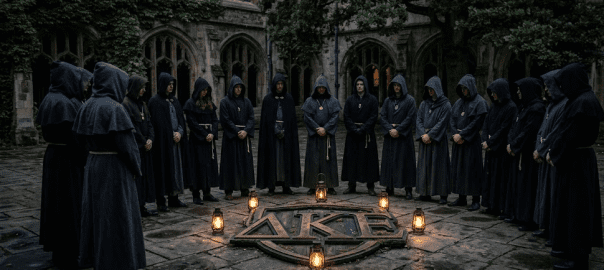
Invisible Prisons: Escaping High-Control Groups, Stalking, and Mental Abuse

April 9, 2026 /Mpelembe Media/ — Distinguishing loneliness from objective social isolation. This analysis highlights that you can experience profound loneliness even when surrounded by people. This often happens in environments like busy cities due to “stimulus overload,” where a constant barrage of noise and interactions causes people to emotionally withdraw to protect themselves. To combat this hollow feeling, humans rely on “shared reality”—the perception of having common feelings, beliefs, or attitudes with others about the world. Establishing a shared reality with even just one person helps reduce uncertainty and fosters a genuine sense of connection and meaning, which acts as a powerful buffer against the pain of loneliness.
Continue reading

26Mar/26

Why Socrates Says Regret Is Inevitable

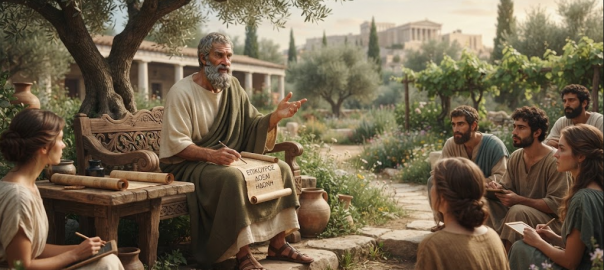
The Inevitability of Regret: Socratic Wisdom in a World of Binary Choices

March 26, 2026 /Mpelembe Media/ — According to the teachings of the ancient Greek philosopher Socrates, the relationship between human choice and inevitable regret is rooted in the fact that no life path is perfect, and every decision involves compromises. Using the choice between marriage and celibacy as an example, Socrates noted that “let a man take whichever course, he will be sure to regret it” because human desires and circumstances inevitably change over time.

Continue reading

01Mar/26

The Return of the Warriors: Inside Zambia’s Historic N’cwala Festival

28 Feb. 2026 /Mpelembe Media/ — The N’cwala (or Nc’wala) ceremony is a major annual cultural festival celebrated by the Ngoni people of Zambia’s Eastern Province. Held every year on the last Saturday of February at Mtenguleni village near Chipata, it primarily serves as a thanksgiving festival for the first fruits of the harvest and an occasion to pay homage to God, ancestral spirits, and the Paramount Chief Mpezeni. Continue reading

24Nov/25

Is racism becoming more acceptable in the UK?

Simon Goodman, De Montfort University and Rahul Sambaraju, University of Edinburgh

Keir Starmer has called on Nigel Farage to address allegations of racism in Reform UK, and antisemitic and xenophobic comments and bullying allegedly made by Farage while he was at school. Farage has denied the accusations.

Continue reading