
Tag Archives: Artificial general intelligence

27Mar/26

China Overtakes US in Global AI Usage

Intelligence Too Cheap to Meter: The Rise of Chinese AI Agents and the Flaws of the Token Economy

March 27, 2026 /Mpelembe Media/ — Chinese AI models have officially overtaken their US counterparts in global token consumption, marking a watershed moment in the global artificial intelligence race. This massive surge in usage is largely driven by a transition away from simple chatbots toward autonomous “agentic” workflows, which require millions of tokens to independently plan, code, and execute complex, multi-step tasks. Continue reading

27Mar/26

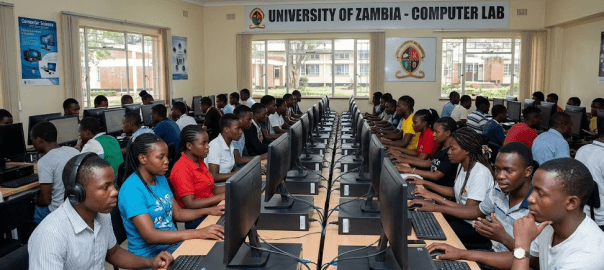
Zambia’s AI Leap from Mines to Classrooms

March 27, 2026 /Mpelembe Media/ —  Zambia’s integration of Artificial Intelligence (AI) into its educational and economic sectors is accelerating through strategic partnerships and new policy frameworks, though these advancements face significant governance and human rights challenges.

Zambia’s National Artificial Intelligence Strategy (2024-2026) outlines a comprehensive roadmap to transform higher education through sweeping changes to curricula, pedagogical practices, digital infrastructure, and research innovation.

Continue reading

27Mar/26

The Neuroscience of Doing Nothing: How Strategic Stillness Fuels Creative Genius

March 26, 2026 /Mpelembe Media/ — The Illusion of Busyness vs. The Power of Deep Work The modern workplace is plagued by “productivity theater” or “fauxductivity,” where employees prioritize visible activity over meaningful output. Research identifies this as “Dramaturgical Work Behavior” (DWB), where workers consciously perform tasks to look busy—such as sending late-night emails or constantly rearranging files—merely to signal compliance and protect their status. This is driven by organizations that reward “passive face time” and speed rather than actual results. To combat this, experts advocate for Deep Work: distraction-free concentration that pushes cognitive capabilities to their limit and produces true value. Transitioning away from shallow, performative tasks requires setting strict boundaries, implementing a “strategic no,” and embracing “career minimalism” or “slow business” to prioritize sustainable, high-quality output over frantic activity. Continue reading

22Mar/26

The Death of the Prompt and the Rise of the Solo Unicorn

Rise of the One-Person Unicorn: How Solo Founders are Leveraging AI Agents to Achieve Billion-Dollar Scale
March 23, 2026 /Mpelembe Media/ — By early 2026, the relatable curiosity of 2024’s chatbot experiments has curdled into a high-stakes operational necessity. We have crossed the “inflection point” where AI transitioned from a probabilistic engine—something we play with—to an operational workforce that performs revenue-generating labor.The numbers tell a story of total market saturation. The agentic AI sector has exploded from a $5.25 billion valuation in 2024 to a projected $52.6 billion by 2030. In 2024, Sam Altman’s prediction of a one-person billion-dollar company sounded like Silicon Valley hyperbole; today, it is the new baseline for capital efficiency. As institutions face the “math cliff” of 2026—a convergence of labor shortages and regulatory pressure—the shift from interactive tools to autonomous “digital colleagues” is no longer optional. It is the only way to stay solvent in a world where AI doesn’t just answer questions; it executes objectives.

Continue reading

12Mar/26

The Death of the Résumé in the AI Era

The Resume Is Dead (And Other Counter-Intuitive Truths About the 2026 Job Market)

March 10, 2026 /Mpelembe Media/ —  The traditional employment résumé is becoming increasingly obsolete as generative AI allows job seekers to flood the market with indistinguishable, buzzword-heavy applications. Because digital tools can now easily fabricate credentials and cover letters, hiring managers are frequently ignoring these documents in favor of more authentic evaluation methods. Many companies are shifting toward skills-based hiring, which prioritizes practical assessments and paid work trials over prestigious degrees or past job titles. Recruiters find that a candidate’s actual real-time abilities are far better predictors of success than a polished list of achievements that may have been written by a bot. Consequently, the modern job market is demanding more tangible proof of talent, as traditional paper applications fail to distinguish high-quality candidates from automated noise. Continue reading

11Mar/26

A Parrot by Any Other Name: The Case for Stripping Personality from Artificial Intelligence

Why Your AI Doesn’t Actually “Feel” You—And Why That’s a Good Thing

March 10, 2026 /Mpelembe Media/ —  Modern anxiety regarding AI largely stems from the psychological, societal, and security risks introduced by systems that convincingly mimic human emotion and cognition. Because human beings are biologically predisposed to anthropomorphize—projecting human intent and feelings onto non-human entities—the advanced capabilities of modern Large Language Models (LLMs) have created several unprecedented areas of concern: Continue reading

10Mar/26

Why AI Integration Depends on Zambian Copper

From Starlink to War Finance: Navigating the High-Stakes Paradox of the 2026 Economy

March 10, 2026 /Mpelembe Media/ —  The provided text serves as a digital business and technology analysis hub known as the Mpelembe Network, focusing specifically on the African market. This platform highlights current global trends ranging from the geopolitical impact of war and inflation to advancements in artificial intelligence and satellite communications. It organizes content through a diverse system of trending tags that cover various academic disciplines, specific geographic regions, and major tech corporations. By bridging the gap between economic theory and modern innovation, the source offers a comprehensive view of the interconnected global economy. This specific snapshot emphasizes the growing importance of secure AI applications and data science within the modern business landscape. Continue reading

09Mar/26

Inside ODSC 2026: The Ultimate Gathering of AI Builders and Visionaries

Beyond the Screen: 5 Surprising Realities Shaping the Future of AI and Robotics

March 9, 2026 /Mpelembe Media/ — For decades, the promise of the “robot age” has been stuck in an aggravating stalemate. We live in a world where an algorithm can compose a passable symphony or pass the bar exam, yet we still lack a machine that can reliably navigate a laundry room or patch a crumbling bridge. This is the “uncanny valley” of productivity: we have conquered the digital realm of symbols and logic, but the physical world—with its friction, gravity, and unpredictable messiness—remains stubbornly out of reach.But the screen is no longer a barrier; it is becoming a mirror. Recent breakthroughs presented by the world’s leading builders at ODSC 2026 and the Robotics and AI (RAI) Institute suggest we are finally witnessing the “tectonic shift” from artificial intelligence that merely thinks to intelligence that  does . We are moving beyond the era of chatbots and into the era of embodied partners. Here are the five surprising realities defining this new frontier. Continue reading

08Mar/26

Integrating AI Agents with Google Workspace via CLI and MCP

The AI Brain Meets the Real World: A Guide to Function Calling

March 8, 2026 /Mpelembe Media/ — The provided sources describe the emergence of AI agents designed to automate productivity tasks within the Google Workspace ecosystem. A central development is the release of gws, an open-source command-line interface that unifies various Google APIs into a single, machine-readable format. This tool allows large language models to interact directly with Gmail, Calendar, and Drive by providing structured JSON outputs and pre-built agent skills. Technical tutorials illustrate how developers can use the Vercel AI SDK and Model Context Protocol (MCP) to build assistants capable of managing schedules and conducting web searches. Furthermore, the integration of the Gemini CLI with tools like Google Sheets highlights a shift toward natural language data automation. Together, these resources mark a transition from manual API management to autonomous agentic workflows powered by generative AI. Continue reading

08Mar/26

Beyond the Demo: How to Build Secure AI Apps That Survive Production

Why Your AI-Generated Prototype Will Probably Fail in Production (and How to Fix It)

The provided text outlines an upcoming Supabase webinar scheduled for March 19, 2026, titled “Ship Fast, Stay Safe: AI Prototyping That Survives Production”. The event addresses how agencies can balance the rapid development speed of AI coding tools with the necessary control to build robust applications. Continue reading