Tag Archives: Claude

02Sep/26

Vibe Coding and the Practical AI Pivot


The Economics of Acceleration: Why Gemini 3.8 Flash is Redefining Enterprise Cost-to-Performance

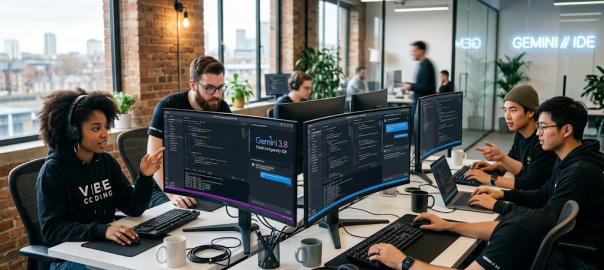
Tue Sep 01 2026 /Mpelembe Media/ — The integration of Gemini 3.8 Flash (internally codenamed “Skimaki”) into the enterprise software development lifecycle represents a tactical pivot toward rapid, high-frequency iteration and optimized tool execution. Technical leadership can leverage the model’s remarkable coding performance, which was first demonstrated on Google’s internal Jetski developer platform where engineers preferred its speed, tool integration, and code generation capabilities over premium flagship models like Anthropic’s Claude Opus. This qualitative preference is backed by strong quantitative gains on major developer benchmarks, including a 71.0% score on DeepSWE v1.1 for long-horizon software engineering [multimodal_5] and a 54.2% score on SWE-Bench Pro. This performance profile makes Gemini 3.8 Flash an ideal fit for “vibe coding” and multi-agent development loops, where distinct agents autonomously write, review, and compile code in sandbox environments. Continue reading

30Aug/26

AI Agents and Unified Film Pipelines

The AI Film Production Operating System
Automating Independent Cinema: How Real-Time Collaborative Operating Systems Compress Production Timelines by 50%

Sun Aug 30 2026 /Mpelembe Media/ —The emergence of digital filmmaking operating systems in 2026 represents a paradigm shift where traditional, fragmented production pipelines are replaced by a unified, AI-driven software stack. Rather than relying on expensive contractor day-rates and physical gear rentals, indie filmmakers utilize a centralized stack of twelve high-leverage software engines to execute everything from pre-visualization to post-production. This modern framework compresses mid-budget pre-production timelines from 16–20 weeks down to 8–11 weeks, drastically reducing administrative overhead and crew holding fees. In the NeoMovie software ecosystem, this transformation is driven by a specialized 12-tool software stack, consisting of Claude and ChatGPT for script analysis and brainstorming, Filmustage for screenplay breakdowns, Midjourney and Canva for anamorphic keyframe pre-visualization, Luma AI for smartphone-based 3D location scouting, Runway and Luma Dream Machine for b-roll generation, Suno and Udio for scoring, ElevenLabs for voice cloning, DaVinci Resolve for editing and rotoscoping, Topaz Video AI for 4K upscaling, Descript for text-based editing, and OpusClip for trailer marketing. By deploying these twelve software engines at a consolidated cost of $185 to $210 per month, an independent filmmaker can avoid more than $54,200 in traditional contractor costs across pre-production, filming, post-production, and marketing phases. On-set operations benefit enormously from this workflow efficiency, which has been shown to reduce average scene turnaround times from 3.5 days to just 1.1 days. Continue reading

Building bulletproof billing for AI

The Webhook and Metering Playbook: Scaling Gemini Applications with Resilient Stripe Architecture

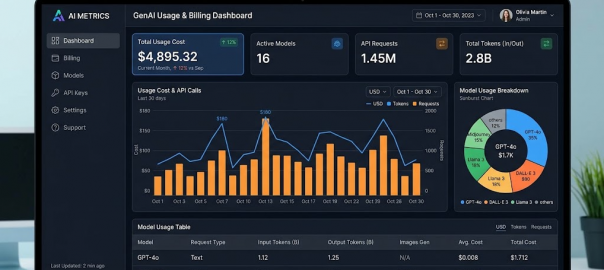
Fri Aug 27 2026 /Mpelembe Media/ — Integrating Stripe into generative AI applications powered by Google Gemini requires a strict architectural separation between user-facing interfaces and backend payment pipelines to protect sensitive keys and prevent exploitation.

Storing Stripe secret keys, Gemini API credentials, or performing payment orchestrations directly on the client side introduces critical security vulnerabilities, allowing malicious actors to manipulate price details, bypass paywalls, or run unauthorized, high-volume model executions. To build a resilient defense, developers must funnel all checkout, subscription, and credential-heavy actions through a server-side intermediary, such as a FastAPI backend or a serverless environment like Firebase Cloud Functions. This intermediary securely handles Stripe Checkout Session creation with server-side price validation, returning a hosted, pre-built payment URL to redirect the customer safely. Continue reading

01Aug/26

Why Your AI History Is Not Yours

Who Owns Your AI Transcript? The Battle Over Session Portability.

Sat, Aug 01 2026 /Mpelembe Media/ — The transition of AI inference APIs from simple, portable input-output logs to complex, provider-sealed states represents a significant shift toward vendor lock-in. Major AI providers are increasingly embedding encrypted reasoning traces, server-retained interaction histories, and opaque compaction blocks into their endpoints, effectively turning local session records into non-portable pointers tied to a single ecosystem. This architecture obscures critical context, such as the exact evidence retrieved from hosted web searches or the specific prompts exchanged between autonomous subagents. As a result, users are prevented from seamlessly exporting their session histories, recreating exact context windows, or migrating their workflows to alternative models and third-party architectures. Continue reading

31Jul/26

Why Philosophy Degrees Now Outperform Coding

From Syntax to Semantics: The Real Role of the Humanities in the Age of Generative AI

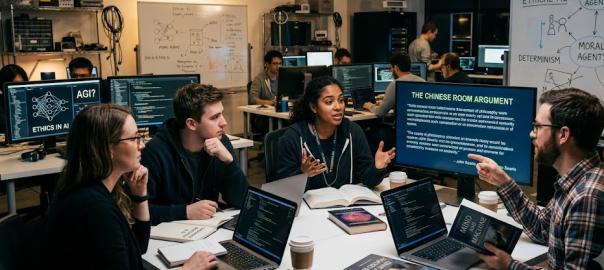
Fri, July 31 2026 /Mpelembe Media/ — he traditional belief that a computer science degree is a guaranteed golden ticket to lucrative employment is currently collapsing. Driven by macroeconomic tightening, the end of zero-interest-rate policies, and the rapid advancement of generative AI that automates entry-level coding tasks, tech companies have drastically reduced their hiring of new graduates. Tech leaders like Nvidia CEO Jensen Huang are even suggesting that the era of learning to code is over, advising future generations to focus on domain-specific expertise as natural language becomes the primary programming interface. Consequently, recent data from the Federal Reserve Bank of New York shows computer science and engineering graduates facing unemployment rates around 7%, which is noticeably higher than those in several humanities disciplines. Continue reading

29Jul/26

Why Zuckerberg is Building an AI CEO

Friction in the Labs: Delays, Layoffs, and Culture Clashes Inside Meta’s Superintelligence Push

Wed, July 29 2026 /Mpelembe Media/ — The Open-Source Vision and Industry Dominance Meta CEO Mark Zuckerberg is aggressively positioning the company as the primary institutional sponsor of open-source (open-weight) artificial intelligence. With the release of Llama 3.1, Zuckerberg argues that open-source AI is the path forward because it empowers developers, prevents centralization of power, and allows organizations to protect their data without being locked into closed vendor ecosystems like those of Apple, OpenAI, or Google. By freely distributing its models, Meta hopes to commoditize the AI layer and establish Llama as the ubiquitous global industry standard. Continue reading

26Jul/26

Why the AI job apocalypse hasn’t happened

The Macroeconomic Paradox of Cognitive Automation

Sun, July 26 2026 /Mpelembe Media/ — At the aggregate level, the widely feared “AI jobs apocalypse” has not materialized in the macroeconomic data. Prominent technology executives, including Anthropic CEO Dario Amodei, have previously warned of an imminent structural crisis, predicting that advanced cognitive systems could displace up to 50% of entry-level white-collar jobs and push aggregate unemployment into double digits. However, actual labor statistics tell a much more stable story. The U.S. labor market remains near full employment, hovering at a 4.2% jobless rate, with prime-age employment rates remaining near multi-decade highs. Extensive research by Anthropic’s head of economics, Peter McCrory, shows no relative increase in unemployment for highly exposed occupations compared to unexposed ones. Continue reading

03Jun/26

The “Sentient” Marketplace: How AI Agents Hire and pay Machines

The Mpelembe Agent Architect (also referred to as the Silicon-Native Agent Architect) is a comprehensive technical blueprint and decentralized infrastructure platform designed to securely deploy and govern autonomous AI agents

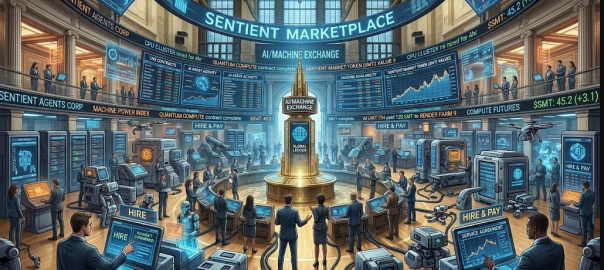
Wed, Jun 03 2026 /Mpelembe Media/ — The Sentient Economy (also referred to as the “Agentic” or “Machine Economy”) represents a fundamental shift from a human-operated digital environment to a decentralized network driven by autonomous, “silicon-native” AI agents. Unlike traditional chatbots that passively wait for human instructions, these autonomous agents proactively reason, allocate capital, and collaborate across organizational boundaries to execute complex, revenue-generating workflows. By 2030, this machine-to-machine economy is projected to mediate between $3 trillion and $5 trillion in global commerce. Continue reading

01Jun/26

Vibe Code Your Life: The Rise of Low-Stakes, High-Speed Software Building

The Era of Vibe Coding: How Plain English Became the Hottest Programming Language

Mon, Jun 01 2026 /Mpelembe Media/ — Vibe coding is an AI-assisted software development practice where creators use natural language prompts to describe their desired applications, and large language models (LLMs) autonomously generate the source code. Coined in early 2025 by computer scientist Andrej Karpathy, the approach shifts the human role from manually writing syntax to acting as a director who oversees, evaluates, and iteratively refines AI-generated outputs. Continue reading

29May/26

Beyond Chatbots: How Robinhood, Visa, and Google are Building the Rails for Agentic Commerce

The $135 Billion Protocol War: Inside the Race to Standardize AI-Driven Transactions

Sat, May 30 2026 /Mpelembe Media/ — Robinhood’s Pioneering Launch Robinhood has officially ushered in the era of “agentic finance” by launching two flagship products: Agentic Trading and the Agentic Credit Card. Utilizing the Model Context Protocol (MCP), these tools allow retail investors to connect third-party AI agents (like Claude or ChatGPT) directly to Robinhood’s infrastructure to execute financial decisions autonomously. Continue reading