Tag Archives: Agentic commerce

29May/26

Beyond Chatbots: How Robinhood, Visa, and Google are Building the Rails for Agentic Commerce

The $135 Billion Protocol War: Inside the Race to Standardize AI-Driven Transactions

Robinhood’s Pioneering Launch Robinhood has officially ushered in the era of “agentic finance” by launching two flagship products: Agentic Trading and the Agentic Credit Card. Utilizing the Model Context Protocol (MCP), these tools allow retail investors to connect third-party AI agents (like Claude or ChatGPT) directly to Robinhood’s infrastructure to execute financial decisions autonomously. Continue reading

26May/26

Inside the Agentic Enterprise of 2026

The Age of Autonomy: How Multi-Agent Systems are Redefining Enterprise AI in 2026

Tue, May 26 2026 /Mpelembe Media/ — In 2026, the technology landscape has firmly transitioned from conversational generative AI to autonomous, multi-agent AI ecosystems. Rather than waiting for step-by-step human prompts, these AI agents can independently reason, plan, use tools, and collaborate to execute complex workflows across enterprise systems. Continue reading

20May/26

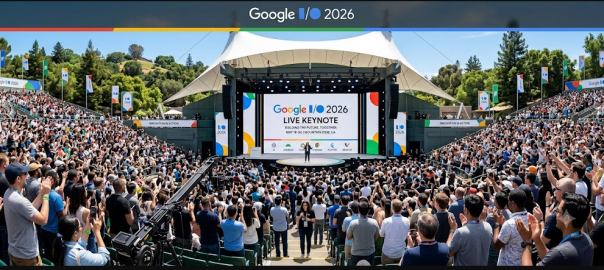
The Death of Doomscrolling and the Birth of AI Agents: Everything Announced at Google I/O 2026

Tue, May 19 2026 /Mpelembe Media/ — Google I/O 2026 and the preceding Android Show marked a major pivot for Google towards an “agentic era,” where AI transitions from a passive assistant to a proactive, autonomous system. Google introduced advanced models like Gemini Omni and Gemini 3.5, which are designed to perform complex actions rather than just generating text. A major focus was placed on Google Antigravity, a development platform that enables creators to build autonomous agents for various tasks. These innovations extend across the company’s ecosystem, including intelligent eyewear, a universal shopping cart, and enhanced scientific research tools. Furthermore, the updates emphasize multimodal capabilities and new creative applications such as Google Pics and Stitch. Ultimately, the source portrays a future where proactive AI assistants are deeply integrated into search, hardware, and professional workflows. Continue reading

14May/26

Your AI is now an autonomous coworker

Meet Your New Digital Coworker: 15 AI Workflows Redefining Small Business Operations

Thur, May 14 2026 /Mpelembe Media/ — Anthropic has officially launched Claude for Small Business, an intelligent operating layer built into its desktop agent, Claude Cowork, designed to automate complex, multi-step administrative tasks for SMBs. Moving beyond a traditional chatbot interface, this package embeds directly into the software stack small businesses already rely on, connecting to platforms like Intuit QuickBooks, PayPal, HubSpot, Canva, Docusign, Google Workspace, Microsoft 365, and Slack. Continue reading

20Apr/26

Replacing Static Dashboards With Agentic AI

The Agentic Evolution: Unifying Compute, Code, and Context in Zerve’s Data Workspace

April 20, 2026 /Mpelembe Media/ — Zerve is an AI-native, agentic data workspace designed to unify data exploration, advanced analysis, team collaboration, and production deployment into a single, seamless environment. Continue reading

23Mar/26

How AI agents spend your money

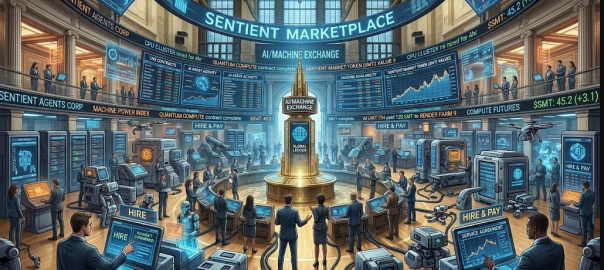
The Rise of the Agentic Economy and Machine-to-Machine Commerce

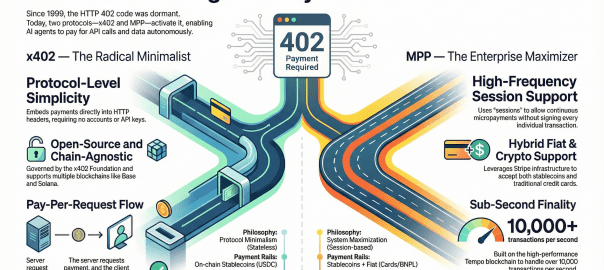
March 23, 2026 /Mpelembe Media/ — The digital economy is undergoing a massive paradigm shift from human-centric web browsing to an “Agentic Web,” where autonomous AI agents act as the primary economic participants. These agents are evolving beyond simple chatbots into sovereign entities capable of discovering services, negotiating, and executing transactions at machine speed without human intervention. This multi-trillion dollar market expansion is being powered by blockchain infrastructure and stablecoins, utilizing specialized protocols like x402, which revives the HTTP 402 “Payment Required” status code to enable seamless, sub-cent micro-transactions for APIs, compute power, and data access. Continue reading

18Feb/26

The “Agentic” Era: How AI, Biometrics, and Shifting Demographics Are Rewriting the Global Travel Map by 2050

The Future of the Stay: A Student’s Primer on AI & IoT in Hospitality

Feb 18, 2026 /Mpelembe media/ — The travel industry is undergoing a structural metamorphosis driven by the transition from generative to “Agentic AI,” the rise of the Asia-Pacific (APAC) region as the dominant market, and a shift toward hyper-personalized, “zero-touch” experiences. While technology promises to erase logistical friction, it introduces new challenges regarding algorithmic bias, data privacy, and the “complexity tax” of managing massive scale. Continue reading

29Jan/26

The Structural Reconfiguration for Agentic AI

Jan. 29, 2026 /Mpelembe Media/ — Thoughtworks introduced their latest Looking Glass report, which outlines necessary structural changes for businesses in the agentic AI era. The report emphasizes that companies must move beyond minor experiments to rewire their core architectures, ensuring that data, platforms, and security are fully integrated to support autonomous intelligence. Key focus areas include modernizing software delivery, transitioning to intent-driven user experiences, and establishing federated data ecosystems that provide real-time information to AI agents. Additionally, the report highlight the importance of computational governance, suggesting that safety and privacy regulations should be built directly into a company’s technical foundation. This overview also mentions the Mpelembe Network, a platform that distributes such technology news and analysis to help leaders navigate rapidly evolving industry trends. Together, these documents serve as a strategic guide for enterprises aiming to maintain architectural integrity while adopting transformative digital innovations. Continue reading

27Jan/26

The Dawn of Agentic Commerce and Autonomous Retail AI

Jan. 27, 2026 /Mpelembe Media/ — The emergence of agentic commerce is a transformative phase in retail where autonomous AI agents move beyond basic interactions to execute complex, multi-step tasks. Google Cloud is spearheading this shift by introducing Gemini Enterprise for Customer Experience, a platform that integrates shopping and service into a unified, intelligent system. Major global brands like The Home Depot, Papa Johns, and Gap Inc. are already adopting these tools to streamline internal operations and provide personalized digital concierges for their customers. By utilizing advanced reasoning and multimodal capabilities, these AI agents can autonomously manage the entire buyer journey, from initial product discovery to post-purchase support. Ultimately, this technology aims to bridge the gap between physical and digital storefronts, creating a seamless, proactive shopping environment that anticipates consumer needs. Continue reading