Tag Archives: 1

24Aug/26

Why joblessness and diamonds fuel civil war

The Dual Private Sector Dilemma: Why IMF Market-Led Growth Models Fail to Create Jobs in Fragmented African Economies

Mon, Aug 24 2026 /Mpelembe Media/ — The economic relationship between sub-Saharan Africa and the International Monetary Fund (IMF) has its roots in the 1944 Bretton Woods Conference, where the few developing nations present failed to secure explicit references to their development financing needs in the Articles of Agreement. From its inception, the IMF maintained a rigid, short-term balance-of-payments focus, famously denying Ethiopia’s first request for financial assistance on the grounds that its needs were neither immediate nor temporary. By the 1980s and 1990s, this short-term framework was formalized into neoliberal Structural Adjustment Programs (SAPs), which mandated strict conditionalities such as market deregulation, extensive privatization of state-owned enterprises, and rapid trade opening. Although promoted as pathways to long-term macroeconomic stability, these interventions frequently triggered severe adverse social consequences, including declining real wages, heightened poverty, and the systematic deterioration of basic health and social welfare systems. In response to widespread critique in the late 1990s, the IMF purported to shift its operational model, replacing traditional SAPs with the Enhanced Structural Adjustment Facility (ESAF) and, subsequently, various credit facilities under the Poverty Reduction and Growth Trust (PRGT). However, empirical evidence indicates that these contemporary programs represent “SAPs in disguise,” with loan conditionalities and stringency steadily rising, and core prescriptions of fiscal consolidation and state retrenchment remaining largely unchanged. Continue reading

28Jul/26

Why innovation needs useless knowledge

The Power of Curiosity: Why “Useless” Knowledge is the Engine of Human Progress

Tue, July 28 2026 /Mpelembe Media/ — This is a comprehensive analysis of the distinction between basic and applied research, outlining their unique motivations, methodologies, and societal roles. Basic research is described as a curiosity-driven endeavor aimed at expanding the frontiers of human knowledge and establishing theoretical foundations without immediate concern for utility. In contrast, applied research focuses on utilizing existing scientific frameworks to engineer practical solutions for specific, real-world challenges. The articles emphasize that these two approaches exist on a dynamic continuum, where fundamental discoveries frequently pave the way for later technological and medical breakthroughs. By examining various disciplines such as medicine, social sciences, and engineering, the texts illustrate how a balanced research ecosystem relies on the symbiotic relationship between pure intellectual inquiry and targeted problem-solving. Ultimately, the collection highlights that while their timelines and goals differ, both forms of investigation are essential for continuous innovation and the advancement of the human condition. Continue reading

03Jun/26

CHISENGA’ s corporate shield for raw hip-hop

Tue, Jun 02 2026 /Mpelembe Media/ — The legacy of Diamond Chain Media is fundamentally tied to the pioneering two-decade career of its founder, Chisenga Katongo (historically known as C.R.I.S.I.S. or Crisis Mr. Swagger), who established the foundation of Zambian hip-hop by producing the country’s first-ever hip-hop album in 2005. This legacy is defined by a commitment to quality, authenticity, and elevating African narratives for an international audience. By challenging the historical marginalization of African media, the organization represents a deliberate convergence of artistic integrity and professional business structures. Continue reading

26May/26

Inside the Agentic Enterprise of 2026

The Age of Autonomy: How Multi-Agent Systems are Redefining Enterprise AI in 2026

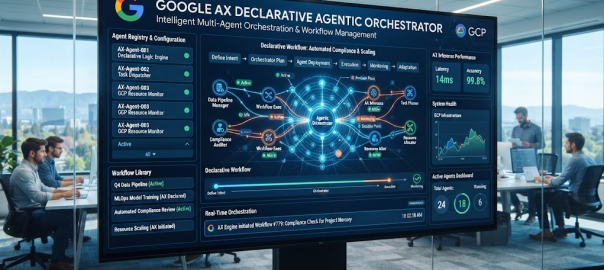
Tue, May 26 2026 /Mpelembe Media/ — In 2026, the technology landscape has firmly transitioned from conversational generative AI to autonomous, multi-agent AI ecosystems. Rather than waiting for step-by-step human prompts, these AI agents can independently reason, plan, use tools, and collaborate to execute complex workflows across enterprise systems. Continue reading

22May/26

Why Quantum Computing Starts in the Dirt

Vying for Quantum Supremacy: National Strategies of the US, UK, and China

Fri, May 22 2026 /Mpelembe Media/ — The global race for quantum technology is a high-stakes competition poised to revolutionize major industries, including healthcare, finance, clean energy, and national defense. This “second quantum revolution” relies on principles like superposition and entanglement to solve highly complex optimization problems exponentially faster than classical supercomputers. However, the technology also presents profound national security risks, particularly the potential to eventually break the cryptographic infrastructure that currently secures global communications and financial data. Continue reading

20May/26

Zambia Tames Its Deadly Gold Rush

From Copper to Gold: Zambia’s State-Led Blueprint for Formalizing Artisanal Mining

Wed, May 20 2026 /Mpelembe Media/ — Zambia is actively diversifying its mining economy beyond its traditional reliance on copper by executing a structural overhaul of its artisanal and small-scale gold mining (ASGM) sector. The primary catalyst for this shift was a massive, unregulated gold rush in the Kikonge area of Mufumbwe in mid-2025. The sudden influx of thousands of informal miners led to catastrophic safety failures, the emergence of illicit smuggling markets, and deadly clashes with state security forces. Recognizing that military intervention was an unsustainable fix for an economic problem, the Zambian government shifted toward a commercial integration strategy. Continue reading

08May/26

Snoop Dogg: 30 Years of Gin and Juice

Hallowed Ground or Open Doors? A Theological Review of Secular-to-Sacred Transitions in the Contemporary Black Church

1. Introduction: The Prodigal’s Return to the G-Funk Gospel

The historical relationship between the Black Church and secular music has long been characterized by a permeable yet rigorously policed boundary, a tension that reached a watershed moment with the “return home” of G-Funk pioneers. This transition, epitomized by Snoop Dogg, represents a profound subversion of traditional ecclesiastical hierarchies and a renegotiation of sacred space. In the field of liturgical musicology, this pivot is significant not merely as a celebrity conversion, but as an reclamation of a foundational identity. Snoop Dogg himself provides the sociological justification for this narrative, noting that “95 percent of the gangster rappers were born and raised in a church.” For these artists, the sanctuary provided the primary pedagogical environment for reading, acting, and performance—skills later utilized to navigate the profane world.In evaluating the intent behind his sacred projects, particularly the 2018  Bible of Love , one must engage with Snoop’s pneumatological claim: he asserts the album is a “spirit-driven” rather than a “money-driven” endeavor. His core theological argument—an ecclesiology of radical inclusion—can be distilled as follows: Continue reading

23Mar/26

Poisoned Memories and Fake News: The Vulnerable Intersection of AI and Algorithmic Trading

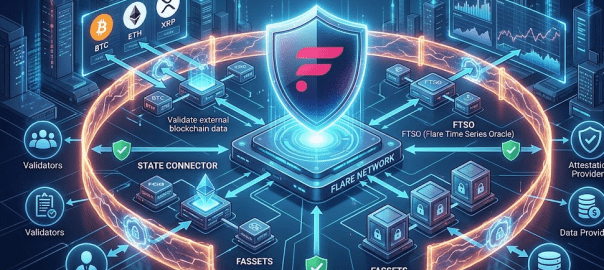
March 23, 2026 /Mpelembe Media/ — The provided sources comprehensively detail the rapid evolution of artificial intelligence from conversational large language models (LLMs) to autonomous “agentic AI,” and the massive security challenges accompanying this shift. As AI agents gain the ability to retrieve information, orchestrate multi-step workflows, and execute high-privilege actions (like trading or system administration), they introduce unprecedented attack surfaces across enterprises and Web3 ecosystems.

Continue reading

10Mar/26

Anthropic Sues Pentagon Over “Unlawful” Blacklist in Major AI Ethics Showdown

The $200 Million Red Line: 5 Surprising Truths Behind the Anthropic-Pentagon War

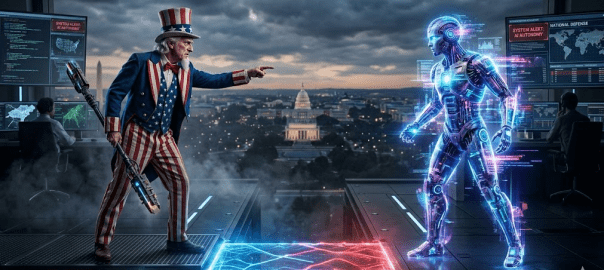
March 10, 2026 /Mpelembe Media/ —  The conflict between artificial intelligence company Anthropic and the U.S. government escalated into a major legal and public battle after the company refused to allow its Claude AI model to be used for mass domestic surveillance or fully autonomous lethal weapons. The Pentagon demanded an unrestricted “any lawful use” clause, and when Anthropic refused to yield, the Trump administration retaliated aggressively.

Continue reading

02Mar/26

The Era of the Agentic Inference Cloud: How DigitalOcean is Democratizing AI for Developers

The Aspiring Learner’s Guide to AI Infrastructure: GPUs and Cloud Economics

The provided sources detail DigitalOcean’s comprehensive expansion into the artificial intelligence sector, transforming into an “Agentic Inference Cloud” tailored for AI-native businesses, developers, and startups. Following its acquisition of Paperspace, DigitalOcean has built a unified ecosystem that bridges affordable, high-performance GPU infrastructure with advanced tools for building and deploying AI agents. Continue reading