Tag Archives: Politics

01Nov/26

The Illusion of Democracy: Constitutional Manipulation and the Modern Dictator

How Modern Dictators Hold Absolute Power

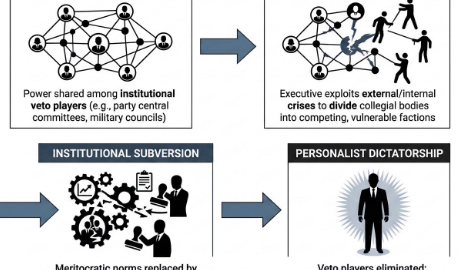
Sun, Nov 01 2026 /Mpelembe Media/ —A dictatorship is a system of governance where a single individual or political party wields absolute power, typically emerging during periods of severe social unrest or economic instability. Within these regimes, personal autonomy, political choice, and human rights are heavily suppressed, and democratic institutions as well as opposition parties are dismantled. Rulers maintain authority through coercion, intimidation, unlawful imprisonment, violence, and state apparatuses such as secret police or indefinite detentions. Furthermore, autocrats frequently manipulate legal frameworks to preserve control; for instance, constitutional amendments in Russia altered presidential term limits to allow Vladimir Putin to remain in power through 2036. While autocracies concentrate unchecked authority strictly within an individual—a category that historically encompassed benevolent rulers—dictatorships can disperse authority across a governing party or ruling circle and inherently feature severe abuses of power. Continue reading →
24Oct/26

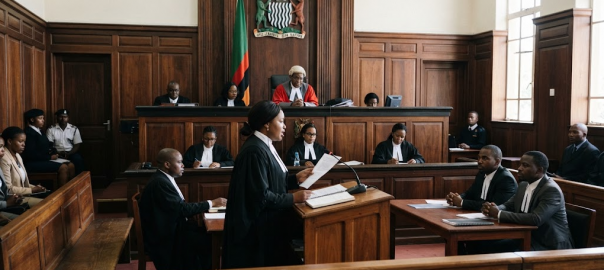
Zambia’s Rule of Law Paradox

Beyond the Composite Score: Bridging the Implementation Gap in Zambia’s Legal System

Sat Oct. 24, 2026 /Mpelembe Media/ — In the 2026 World Justice Project (WJP) Rule of Law Index, Zambia registers an overall composite score of 0.44 on a scale from 0.00 to 1.00, placing it 108th globally out of 143 surveyed countries. This performance marks a single-position drop in global standing and a minor 0.01 score contraction from the 0.45 baseline maintained between 2022 and 2025. Regionally, Zambia ranks 19th out of 34 Sub-Saharan African states, placing its score slightly below the regional benchmark of 0.45 and well beneath the global average of 0.55. Despite this global deficit, Zambia maintains a solid standing within its lower-middle-income cohort, outperforming regional neighbors such as Nigeria (120th) and Zimbabwe (122nd). Historically, Zambia reached a decade-high score of 0.48 in 2016 before political polarization eroded it to 0.44 in 2021; while the peaceful transfer of power in late 2021 stabilized scores at 0.45 through 2025, administrative bottlenecks led to the slight 2026 contraction. Continue reading →

24May/26

The Politics of Humiliation: Why Shared Cruelty is the Ultimate Community Builder

United by Contempt: The Psychological Roots of Authoritarianism and Affective Polarization

Sun, May 24 2026 /Mpelembe Media/ — The intersection of psychology and contemporary politics reveals that the rise of modern authoritarian and populist movements is largely driven by identity, fear, and malice rather than policy or economic grievances. At the center of this dynamic is the deployment of shared cruelty as a political strategy. Demagogues turn the degradation of vulnerable out-groups into a participatory public spectacle, which provides their supporters with a profound sense of community, pride, and euphoria. This shared joy in the suffering of others functions as a powerful social adhesive, securing fierce loyalty to the leader while distracting the public from the elite’s personal enrichment or political corruption. Continue reading →

06May/23

Why is 19 significant.

The number 19 is significant in the Vietnam War and the Ukraine conscription because it is the age at which many young men were conscripted to fight in those wars. In the Vietnam War, the draft age was 18 to 26, but many young men were drafted at the age of 19. In the Ukraine conscription, the draft age is 18 to 60, but many young men are being conscripted at the age of 19. Continue reading →

10Mar/23

NEW REPORT: Global Freedom Declines for 17th Consecutive Year, but May Be Approaching a Turning Point

Global freedom declined for a 17th consecutive year in 2022 as 35 countries suffered deterioration in their political rights and civil liberties, according to a new report released today by Freedom House. A total of 34 countries made improvements during the year, however, meaning the gap between the numbers of countries that improved and declined was the narrowest it has ever been since the negative pattern began. The report suggests that the struggle for democracy may be approaching a turning point, and offers recommendations on how democratic governments and societies should work together to roll back authoritarian gains. Continue reading

10Jan/23

The online ‘hierarchy of credibility’ that fuels influencers like Andrew Tate

Paul TJ French, Liverpool John Moores University

The arrest of influencer Andrew Tate in Romania on charges of sex trafficking and sexual abuse will do little to deter his supporters. For some time now, those outside his sphere of influence have looked on bemused as to how he appears to have accumulated so much power over young people.

Continue reading →

09Dec/22

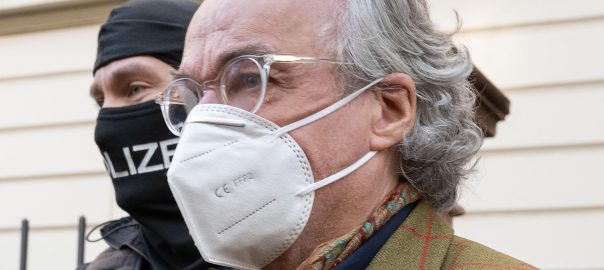
What is the Reichsbürger movement accused of trying to overthrow the German government?

Claire Burchett, King’s College London

Police have arrested 25 people accused of planning to overthrow the German government in a series of raids across the country.

Continue reading →

26Sep/22

Giorgia Meloni and the return of fascism: how Italy got here

George Newth, University of Bath

The rise of far-right politician Giorgia Meloni has left many outside Italy asking how her brand of what many argue is fascism can achieve such prominence in a country that has experienced life under the dictatorship of Benito Mussolini. The answer can be traced back to a recent normalisation of reactionary politics.

Continue reading →

13Sep/22

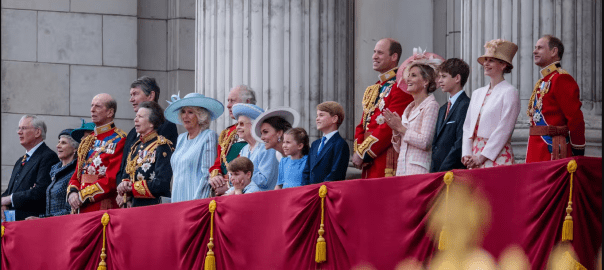
King Charles inherits crown with support for monarchy at record low – but future not set in stone

John Curtice, University of Strathclyde

The death of Queen Elizabeth II after 70 years on the throne has, of course, been met with widespread sadness and mourning. For most people in Britain, she is the only monarch they have known. Yet, inevitably, the mourning of her passing will be followed by a discussion about the future of the monarchy as an institution. After all, much has changed since 1951.

Although it may have provided the head of state for over a thousand years, in a modern democracy like Britain the monarchy will need to retain public consent if it is to survive.

Continue reading →