Tag Archives: Political philosophy

01Nov/26

The Illusion of Democracy: Constitutional Manipulation and the Modern Dictator

How Modern Dictators Hold Absolute Power

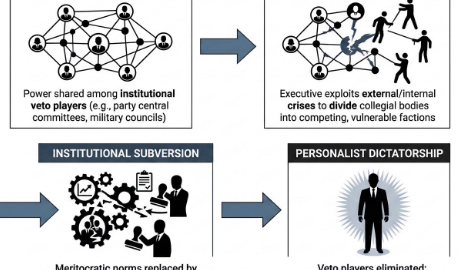
Sun, Nov 01 2026 /Mpelembe Media/ —A dictatorship is a system of governance where a single individual or political party wields absolute power, typically emerging during periods of severe social unrest or economic instability. Within these regimes, personal autonomy, political choice, and human rights are heavily suppressed, and democratic institutions as well as opposition parties are dismantled. Rulers maintain authority through coercion, intimidation, unlawful imprisonment, violence, and state apparatuses such as secret police or indefinite detentions. Furthermore, autocrats frequently manipulate legal frameworks to preserve control; for instance, constitutional amendments in Russia altered presidential term limits to allow Vladimir Putin to remain in power through 2036. While autocracies concentrate unchecked authority strictly within an individual—a category that historically encompassed benevolent rulers—dictatorships can disperse authority across a governing party or ruling circle and inherently feature severe abuses of power. Continue reading →
24Oct/26

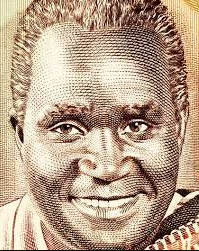
Zambia’s Rule of Law Paradox

Beyond the Composite Score: Bridging the Implementation Gap in Zambia’s Legal System

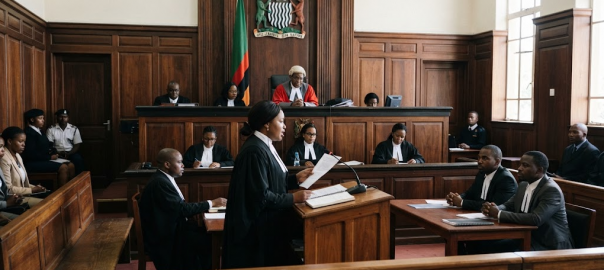
Sat Oct. 24, 2026 /Mpelembe Media/ — In the 2026 World Justice Project (WJP) Rule of Law Index, Zambia registers an overall composite score of 0.44 on a scale from 0.00 to 1.00, placing it 108th globally out of 143 surveyed countries. This performance marks a single-position drop in global standing and a minor 0.01 score contraction from the 0.45 baseline maintained between 2022 and 2025. Regionally, Zambia ranks 19th out of 34 Sub-Saharan African states, placing its score slightly below the regional benchmark of 0.45 and well beneath the global average of 0.55. Despite this global deficit, Zambia maintains a solid standing within its lower-middle-income cohort, outperforming regional neighbors such as Nigeria (120th) and Zimbabwe (122nd). Historically, Zambia reached a decade-high score of 0.48 in 2016 before political polarization eroded it to 0.44 in 2021; while the peaceful transfer of power in late 2021 stabilized scores at 0.45 through 2025, administrative bottlenecks led to the slight 2026 contraction. Continue reading →

22Oct/26

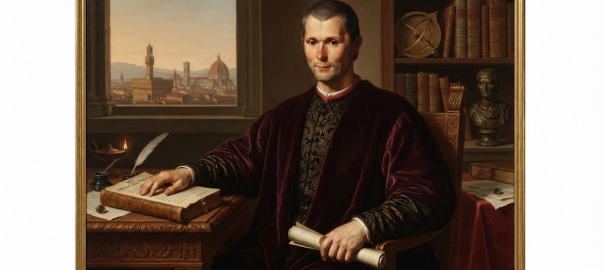
Why Machiavelli Believed Rulers Need Dirty Hands

Power, Virtù, and Human Nature: A Multidisciplinary Synthesis of Machiavellian Pragmatism

Thu Oct. 22, 2026 /Mpelembe Media/ — Niccolò Machiavelli’s foundational political thought, articulated in The Prince (1513) and the Discourses on Livy (1517), marks a radical shift from classical teleological ethics and medieval Christian scholasticism toward empirical political realism. Rejecting idealized imaginary republics, Machiavelli sought the “effectual truth” of human behavior, asserting that effective governance must be guided by strategic necessity (necessità) and the preservation of state stability (ragione di stato) rather than abstract moral pieties. He redefined virtù not as moral goodness, but as the dynamic capability, drive, and tactical agility—symbolized by combining the courage of the lion with the cunning of the fox—required to master unpredictable circumstances (fortuna). Although critics historically viewed The Prince as an autocratic handbook and the Discourses as a defence of republican liberty, scholars emphasize that these works are complementary: princely authority is often necessary to establish order in a corrupted state, whereas a mixed republican constitution preserves long-term security, popular freedom, and civic vitality. Continue reading →

01Mar/26

The Sovereign Individual Predicted Nation State Collapse

28 Feb. 2026 /Mpelembe Media/ — In this analyis. James I. Porter argues that the modern pursuit of absolute personal autonomy is a flawed and dangerous illusion. He contends that influential figures in politics and technology have embraced the “sovereign individual” as an ideal, mistakenly believing that a person can exist entirely independent of social constraints. By drawing on various philosophers, Porter illustrates that human identity is actually formed through interdependence and friction with others rather than in isolation. He suggests that removing the resistance provided by a community does not grant freedom, but instead leads to a loss of meaning and the eventual destruction of the self. Ultimately, the text asserts that our inherent vulnerability and connection to one another are the essential foundations of a functional social existence. Continue reading →

31May/23

Decolonisation is not about racism.

May 30, 2023 /World/ — Decolonization is the process of a country or people gaining independence from a colonizing power. It is a complex process that can involve political, economic, and social change. Decolonization can be a peaceful process, but it can also be violent.

Decolonization is not about racism. It is about respecting the right of people to self-determination. It is about recognizing that all people are equal and that they have the right to choose their own destiny. Decolonization is about creating a more just and equitable world for all people. Continue reading →

01May/23

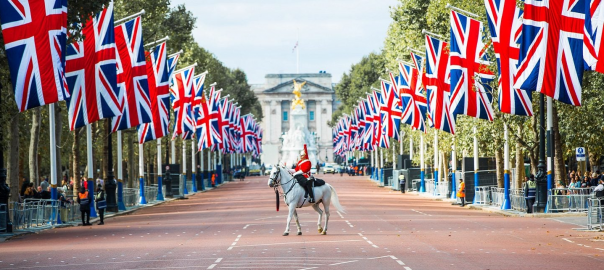
Impact of British coronation on the world’s perceptions of Britain and its monarchy

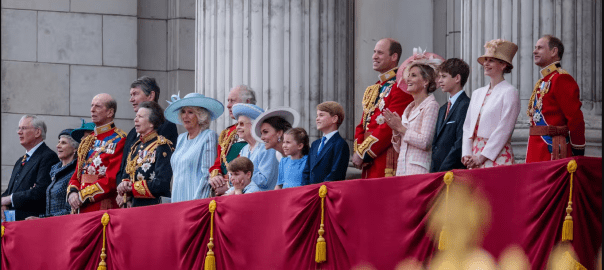
May 1, 2023 /World/ — A British coronation is important to people around the world for a number of reasons. First, it is a rare and momentous occasion. The coronation of a new British monarch only happens once in a lifetime, and it is a time for celebration and national pride. Second, the coronation is a beautiful and historic ceremony. It is full of pomp and circumstance, and it is a chance for people to witness a piece of British history being made. Third, the coronation is a symbol of stability and continuity. The British monarchy has been around for centuries, and it is a source of stability and comfort for many people. Continue reading →

10Mar/23

NEW REPORT: Global Freedom Declines for 17th Consecutive Year, but May Be Approaching a Turning Point

Global freedom declined for a 17th consecutive year in 2022 as 35 countries suffered deterioration in their political rights and civil liberties, according to a new report released today by Freedom House. A total of 34 countries made improvements during the year, however, meaning the gap between the numbers of countries that improved and declined was the narrowest it has ever been since the negative pattern began. The report suggests that the struggle for democracy may be approaching a turning point, and offers recommendations on how democratic governments and societies should work together to roll back authoritarian gains. Continue reading

26Sep/22

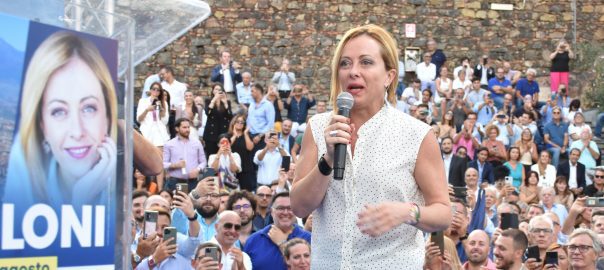
Giorgia Meloni and the return of fascism: how Italy got here

George Newth, University of Bath

The rise of far-right politician Giorgia Meloni has left many outside Italy asking how her brand of what many argue is fascism can achieve such prominence in a country that has experienced life under the dictatorship of Benito Mussolini. The answer can be traced back to a recent normalisation of reactionary politics.

Continue reading →

13Sep/22

King Charles inherits crown with support for monarchy at record low – but future not set in stone

John Curtice, University of Strathclyde

The death of Queen Elizabeth II after 70 years on the throne has, of course, been met with widespread sadness and mourning. For most people in Britain, she is the only monarch they have known. Yet, inevitably, the mourning of her passing will be followed by a discussion about the future of the monarchy as an institution. After all, much has changed since 1951.

Although it may have provided the head of state for over a thousand years, in a modern democracy like Britain the monarchy will need to retain public consent if it is to survive.

Continue reading →