Category Archives: Finance

21Aug/26

The hidden plumbing of AI commerce

From Payments to Intelligence: Inside Stripe’s Bold Move to Own the AI Token Economy

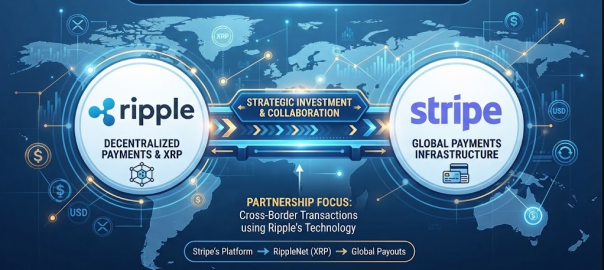
Fri, Aug 21 2026 /Mpelembe Media/ — Stripe has officially agreed to acquire OpenRouter, a premier AI model marketplace and gateway, in a landmark transaction that positions the fintech giant at the center of the fast-growing token routing sector. While the companies did not publicly disclose the purchase price, multiple reports value the deal at approximately $7.5 billion, representing a massive premium over the startup’s $1.3 billion private valuation set just months earlier. Under the reported terms of the agreement, $1.5 billion will be distributed to OpenRouter’s founders and key staff, with the remaining $6 billion going to its venture capital and seed-stage investors. OpenRouter, which facilitates access to over 400 AI models and handles more than 10 trillion tokens daily for over 10 million developers, will continue to operate under its existing brand, name, and product roadmap. Through this acquisition, Stripe aims to help enterprise clients dynamically evaluate and route requests to the most cost-efficient models in real time, turning the management of volatile AI token costs into a core part of its programmable financial services platform. Continue reading

18Aug/26

Why your brain hates being a sucker

The Anatomy of Sugrophobia: Why We Dread Being Played for a Fool

Tue, Aug 18 2026 /Mpelembe Media/ — The ubiquitous fear of being duped, or played for a fool, is a powerful and underappreciated driver of human behavior that can escalate into a true phobia known as sugrophobia. Coined in 2007 by experimental psychologists Kathleen Vohs, Roy Baumeister, and Jason Chin, sugrophobia represents the specific, anticipatory dread that someone is taking advantage of us, partly due to our own choices. While a baseline level of wariness is highly adaptive, excessive skepticism can paralyze our ability to trust and cooperate. Unlike passive forms of misfortune such as pickpocketing, being suckered involves our active consent or participation; when a deception is revealed, we are forced to see an element of ourselves in the event, triggering a painful “sucker in the mirror” phenomenon characterized by deep self-blame, anticipated humiliation, and cognitive dissonance. This deep aversion is not limited to major frauds but is triggered daily in low-stakes situations—such as yielding to an aggressive driver, overpaying for lunch, or taking on the workload of a slacker colleague. Continue reading

03Aug/26

Private markets hit a physical bottleneck

From Hyperscaler Debt to Emerging Market Tailwinds: The Macroeconomics of the AI Supercycle.

Mon , Aug 03 2026 /Mpelembe Media/ —The current macroeconomic landscape is dominated by an unprecedented artificial intelligence capital expenditure boom, with hyperscalers projected to invest up to $1.4 trillion annually by 2027 to fund data centers, advanced packaging, and energy grids. This massive concentration of tech spending is currently masking broader economic weaknesses, prompting growing concerns among investors regarding an “expectations correction” or an AI bubble. While the underlying technology continues to advance rapidly, Wall Street is increasingly demanding tangible financial returns, as value capture currently lags behind widespread experimentation and massive cash burn. To sustain this infrastructure race, companies are heavily tapping into debt markets, with AI-linked firms and hyperscalers now dominating a significant portion of investment-grade and high-yield bond issuances. Concurrently, public markets are bracing for a wave of mega-IPOs from innovation-led giants like SpaceX, OpenAI, and Anthropic, which could represent trillions in market value and test the capital absorption limits of global equities. In the private sector, the focus on AI data centers and the broader energy transition has led to record fundraising for infrastructure assets, even as traditional private equity distributions remain sluggish. Globally, this AI supercycle is acting as a powerful structural tailwind for emerging markets, creating a historic wealth transfer as developed markets rely on emerging market suppliers for memory, silicon, and critical minerals, which is further fueling surges in mining mergers and acquisitions. Continue reading

29Jul/26

Why Zambia’s Digital Rails Need Routine

Zambia’s Digital Payment Landscape: Bridging the Gap from Rails to Routine

Wed, July 29 2026 /Mpelembe Media/ — Zambia has made remarkable strides in expanding financial access, achieving a financial inclusion rate of 80.1% by 2025, a significant increase from 69.4% in 2020. A cornerstone of this progress is the National Financial Switch (NFS), a shared infrastructure that connects banks, payment service providers, fintechs, and mobile money operators. By facilitating wallet-to-bank, bank-to-wallet, and merchant transactions, the NFS eliminates the need for institutions to build expensive bilateral connections. However, despite these foundational achievements, Zambia faces a critical new challenge: transitioning these digital “rails” into an affordable, trusted, and everyday routine for its citizens. Continue reading

29Jul/26

ASML panic and AI circular funding

Historic Tech Plunge: Asian Markets Tumble Amid Fears of Unsustainable AI Spending and New Chinese Rivals

Wed, July 29 2026 /Mpelembe Media/ — The summer of 2026 witnessed a profound global market recalibration as major technology and semiconductor stocks faced a severe sell-off, pushing the tech-heavy Nasdaq-100 index into correction territory. This downturn reflected a fundamental shift in investor sentiment, moving from speculative optimism surrounding artificial intelligence to a rigorous demand for tangible monetization and balance sheet stability. The correction was not triggered by a singular event, but rather by a confluence of escalating capital expenditures, systemic credit risks tied to circular financing, and significant geopolitical shifts in the Asian semiconductor supply chain. Continue reading

29Jul/26

The $20 Billion FIFA Civil War

Selling the Soul of Soccer: UEFA Threatens Boycott Over FIFA’s Private Equity Push

Tue, July 28 2026 /Mpelembe Media/ — The international football landscape is currently facing an unprecedented institutional fracture driven by a highly controversial commercialization proposal from FIFA. At the center of the debate is FIFA’s strategic plan to establish a semi-private commercial subsidiary named FIFA Forward Enterprise (FFE), which would consolidate the management of commercial rights—including broadcasting, sponsorships, ticketing, and licensing—alongside the operational delivery of major tournaments like the men’s and women’s World Cups. By selling a minority, non-controlling equity stake of approximately 20 to 21 percent to private investors, FIFA aims to raise up to $4.2 billion, basing the transaction on an initial corporate valuation of $20 billion. Continue reading

29May/26

Beyond Chatbots: How Robinhood, Visa, and Google are Building the Rails for Agentic Commerce

The $135 Billion Protocol War: Inside the Race to Standardize AI-Driven Transactions

Sat, May 30 2026 /Mpelembe Media/ — Robinhood’s Pioneering Launch Robinhood has officially ushered in the era of “agentic finance” by launching two flagship products: Agentic Trading and the Agentic Credit Card. Utilizing the Model Context Protocol (MCP), these tools allow retail investors to connect third-party AI agents (like Claude or ChatGPT) directly to Robinhood’s infrastructure to execute financial decisions autonomously. Continue reading

21May/26

SpaceX’s Two Trillion Dollar Space AI IPO

Orbital Intelligence: How SpaceX and Google Are Moving AI Data Centers to Space

Thur, May 21 2026 /Mpelembe Media/ — The Mega-IPO and xAI Merger: SpaceX is preparing for a highly anticipated mid-2026 IPO, aiming to raise up to $75 billion at a target valuation between $1.75 trillion and $2 trillion. This historic offering follows a February 2026 merger with Elon Musk’s artificial intelligence firm, xAI, which initially established a combined private entity valued at $1.25 trillion. Continue reading

09Apr/26

TACO” (Trump Always Chickens Out) trade theory

Greedflation and the Global Market: How Empty Ultimatums are Costing the Consumer

April 9, 2026 /Mpelembe Media/ —  The analysis explores the geopolitical and economic volatility surrounding the 2025–2026 trade policies of the Trump administration, specifically focusing on the “Taco trade” theory. This investment strategy, standing for “Trump Always Chickens Out,” suggests that markets often rally following aggressive tariff threats because traders anticipate a subsequent retreat or moderation. While some financial analysts view these maneuvers as negotiating tactics, macroeconomic reports warn of a “tax on certainty” that drives inflation and disrupts global supply chains. The texts also detail specific international frictions, such as 100% tariffs on Chinese goods and military tensions with Iran, which impact energy prices and strategic mineral control. Additionally, regional reactions are captured through public discourse in Louisiana regarding political monuments and legislative priorities. Collectively, the sources examine how authoritarian populism and executive discretion have transformed the global trade landscape into a transactional, high-stakes environment.

Continue reading

23Mar/26

How AI agents spend your money

The Rise of the Agentic Economy and Machine-to-Machine Commerce

March 23, 2026 /Mpelembe Media/ — The digital economy is undergoing a massive paradigm shift from human-centric web browsing to an “Agentic Web,” where autonomous AI agents act as the primary economic participants. These agents are evolving beyond simple chatbots into sovereign entities capable of discovering services, negotiating, and executing transactions at machine speed without human intervention. This multi-trillion dollar market expansion is being powered by blockchain infrastructure and stablecoins, utilizing specialized protocols like x402, which revives the HTTP 402 “Payment Required” status code to enable seamless, sub-cent micro-transactions for APIs, compute power, and data access. Continue reading