
Tag Archives: Beijing

07Aug/26

Why the World Is Bypassing the Dollar

Zambia’s Closed-Loop Monetary Strategy: Balancing Retail De-Dollarization with Sovereign Copper Finance

Fri , Aug 0& 2026 /Mpelembe Media/ — Sub-Saharan Africa is undergoing a profound structural transformation as sovereign nations systematically seek to reduce their historic reliance on the United States dollar for reserves, trade invoicing, and domestic transactions. For decades, the US dollar served as the undisputed financial anchor across the continent, but this deep integration has exposed emerging economies to extreme macro-financial vulnerabilities, particularly during cycles of US Federal Reserve monetary tightening. When interest rates rise in Washington, global capital retreats to dollar-denominated assets, triggering sharp depreciations of local African currencies that inflate the cost of imported goods and escalate the servicing costs of dollar-denominated sovereign debt. This systemic vulnerability was starkly demonstrated in November 2020 when Zambia defaulted on a $42.5 million Eurobond payment, with the concurrent strength of the US dollar significantly exacerbating the domestic financial fallout. Furthermore, the geopolitical landscape of the mid-2020s has accelerated the search for alternative payments due to the perceived weaponization of Western-dominated dollar-clearing systems, prompting African policymakers to seek bilateral trade architectures and payment systems backed by the BRICS+ alliance to protect their economic sovereignty. Continue reading

03Aug/26

Zambia’s Debt Miracle and Democratic Backsliding

For Zambian voters, the 2026 election represents a critical choice balancing long-term macroeconomic recovery against immediate, severe household pressures. While President Hakainde Hichilema’s administration successfully restructured the nation’s default-era debt and introduced popular programs like universal free education, ordinary citizens are heavily squeezed by a high cost of living, rising food costs, and inflation exacerbated by a historic drought. A primary concern voters should watch out for is the post-election handling of the country’s structural electricity crisis. To avoid grueling 20-hour blackouts during the campaign cycle, the state utility ZESCO has relied on costly emergency regional power imports. Because this spending is fiscally unsustainable, voters face the high risk of a post-election fiscal correction, which will likely involve steep, inflation-inducing retail tariff hikes or a return to severe load-shedding. Furthermore, due to widespread grassroots dissatisfaction with local representation, there is a strong potential for split-ticket voting, meaning voters may back the incumbent president while actively rejecting sitting members of parliament and local councilors. Continue reading

03Aug/26

How Copper Debt Poisoned Zambian Democracy

From Reform to Repression: Zambia’s Authoritarian Turn Under the Shadow of Digital Neo-Colonialism

Mon, Aug 01 2026 /Mpelembe Media/ — The abrupt cancellation of RightsCon 2026 in Lusaka, Zambia, just days before its scheduled opening in May 2026, has exposed the profound intersection of foreign coercion and domestic democratic erosion. Although the Zambian government officially claimed the postponement was to ensure alignment with “national values,” organizers and independent reports revealed that the cancellation was directly triggered by immense pressure from the Chinese Communist Party. Chinese diplomats essentially leveraged their vast economic investments in the country to demand the exclusion of Taiwanese civil society delegates and the moderation of panels critical of Beijing’s digital authoritarianism. Because the conference was slated to be held in a facility donated by the Chinese government, and coincided with negotiations over critical development grants, the Zambian state capitulated to these extraterritorial censorship demands. Continue reading

29Jul/26

ASML panic and AI circular funding

Historic Tech Plunge: Asian Markets Tumble Amid Fears of Unsustainable AI Spending and New Chinese Rivals

Wed, July 29 2026 /Mpelembe Media/ — The summer of 2026 witnessed a profound global market recalibration as major technology and semiconductor stocks faced a severe sell-off, pushing the tech-heavy Nasdaq-100 index into correction territory. This downturn reflected a fundamental shift in investor sentiment, moving from speculative optimism surrounding artificial intelligence to a rigorous demand for tangible monetization and balance sheet stability. The correction was not triggered by a singular event, but rather by a confluence of escalating capital expenditures, systemic credit risks tied to circular financing, and significant geopolitical shifts in the Asian semiconductor supply chain. Continue reading

23Jul/26

Why Kimi and DeepSeek Terrify Superpowers

The Geopolitics of Chinese Open-Weight AI

Thu, July 23 2026 /Mpelembe Media/ —The global artificial intelligence landscape is undergoing a major structural shift driven by the rapid technical maturation and aggressive pricing of open-weight models originating from China, specifically Moonshot AI’s Kimi K3 and DeepSeek’s V4 Pro. While these models offer massive cost efficiencies for Western enterprises, they introduce severe national security, cybersecurity, and intellectual property concerns, prompting a pivot in Washington toward weaponized regulatory uncertainty, federal procurement restrictions, and supply chain mapping.
Continue reading

21Jun/26

Chinese debt and mining labor in Zambia

The Dragon and the Copper Belt: The Complex Realities of China-Zambia Relations

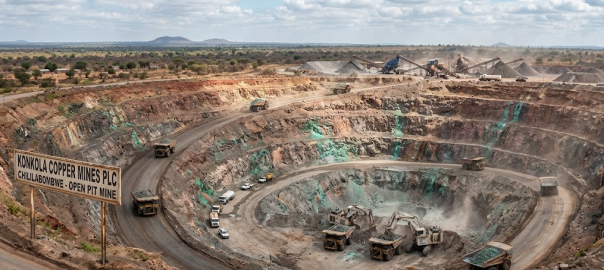
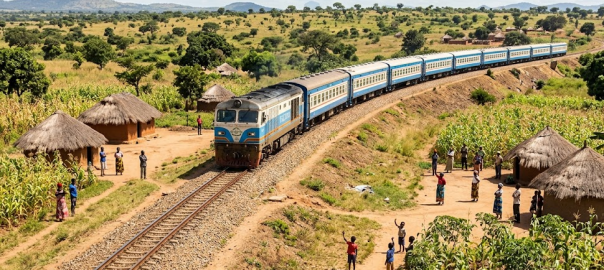
Fri, Jun 18 2026 /Mpelembe Media/ — The relationship between China and Zambia is deeply complex, evolving from historical solidarity into a modern partnership defined by massive economic investment, sovereign debt crises, and significant labor controversies. Continue reading

08Jun/26

Playing with Fire: How the 2026 Direct Conflict Reshaped the Middle East and Paralyzed Global Markets

Iran’s 2026 Systemic Collapse

The sources detail a massive geopolitical and economic upheaval centering around the 2026 Iran War, which fundamentally altered the Middle East and the global economy.

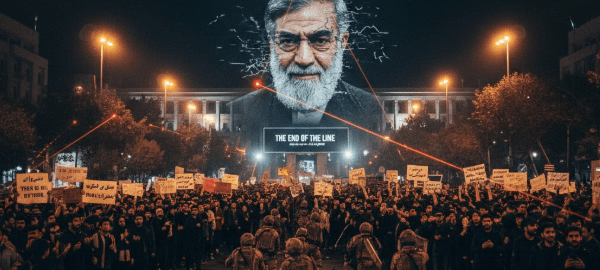
Sat, Jun 05 2026 /Mpelembe Media/ — The Geopolitical and Military Conflict: By early 2026, the long-standing “shadow war” between Israel and Iran erupted into a direct, high-intensity conflict. Driven by fears that Iran was mere days away from possessing weapons-grade uranium for a nuclear bomb, Israel and the United States launched unprecedented military strikes targeting Iranian nuclear facilities, air defenses, and energy infrastructure. This followed Israel’s systematic degradation of Iran’s “Axis of Resistance,” including the severe weakening of Hezbollah and Hamas, and the collapse of the Assad regime in Syria. Continue reading

22May/26

Why Quantum Computing Starts in the Dirt

Vying for Quantum Supremacy: National Strategies of the US, UK, and China

Fri, May 22 2026 /Mpelembe Media/ — The global race for quantum technology is a high-stakes competition poised to revolutionize major industries, including healthcare, finance, clean energy, and national defense. This “second quantum revolution” relies on principles like superposition and entanglement to solve highly complex optimization problems exponentially faster than classical supercomputers. However, the technology also presents profound national security risks, particularly the potential to eventually break the cryptographic infrastructure that currently secures global communications and financial data. Continue reading

15May/26

Why Giving Away Clean Stoves Fails

Fri, May 15 2026 /Mpelembe Media/ —The global reliance on traditional, polluting cooking fuels remains a critical health and environmental crisis, with over 2 billion people lacking access to clean alternatives like liquefied petroleum gas (LPG), biogas, and electricity. This dependence generates severe household air pollution (HAP), which is linked to nearly 3 million premature deaths annually and disproportionately impacts women and children, who also suffer the economic and educational toll of “time poverty” from daily fuel collection. Continue reading