
Category Archives: Science

01Aug/26

How video stores fix streaming fatigue

Algorithms vs. Humanity: Why Social Curation and Video Stores Still Matter

Sat, Aug 01 2026 /Mpelembe Media/ — The shift from physical media to digital streaming has fundamentally altered how we consume culture, trading the community-driven discovery of local video stores for the convenience of algorithms. While platforms like Netflix offer an unprecedented abundance of content, this infinite selection has triggered a psychological phenomenon known as “Netflix Syndrome” or the “Paradox of Choice.” In this state, users experience cognitive fatigue, stress, and a tendency to endlessly delay their viewing decisions because they are overwhelmed by the options. To combat this digital burnout and the isolation of private consumption, there is a growing movement to reclaim human-centric curation and revitalize “third places” like independent video rental stores. These spaces foster meaningful social connections, interpersonal trust, and shared cultural experiences that algorithmic curation simply cannot replicate. Continue reading

27Jul/26

Why separated siblings instantly connect

The Science of “Mirroring”: Why Separated Relatives Experience Instant Chemistry Upon Reunion

Mon, July 27 2026 /Mpelembe Media/ — This report examines the extraordinary impact of genetics on human behavior and identity through stories of biological relatives reunited after decades apart. Highlighting the famous “Jim twins” and airport coworkers Dave Green and Andrea Urmston, the texts detail uncanny coincidences in the lives of siblings who grew up in different environments yet shared identical habits, names, and life choices. Scientific research, such as the Minnesota Study of Twins Reared Apart, is referenced to suggest that personality traits are often deeply rooted in our DNA. Beyond behavioral parallels, the articles explore the emotional gravity of fulfilling family promises and the complex psychological phenomena that can occur during such reunions. Collectively, the materials illustrate the enduring debate of nature versus nurture by showcasing how biological bonds persist despite long-term separation. Continue reading

09Jul/26

The Trap of Intelligent Stupidity

The Scientific Taxonomy of Mind: Intelligence vs. Stupidity

Thur, July 09 2026 /Mpelembe Media/ —  According to complex systems theorist David C. Krakauer, the common assumption that stupidity is merely a passive vacancy of thought is fundamentally incorrect. Standard psychometrics, such as IQ tests, attempt to reduce cognitive value to a single price-like metric, which is as reductionist as trying to understand the artistic value of a Picasso masterpiece solely by its auction price. Continue reading

22May/26

Birds hatch from 3D printed artificial eggs

Engineering Life: The Complex Reality Behind Colossal’s De-Extinction Claims

Thur, May 21 2026 /Mpelembe Media/ — Colossal Biosciences has successfully hatched 26 healthy chickens using a novel synthetic incubation platform, marking a significant milestone in avian embryology. The artificial egg consists of a 3D-printed titanium or polymer lattice cup lined with a bioengineered silicone membrane. This exceptionally thin membrane replicates the gas-exchange properties of a natural eggshell, allowing embryos to breathe ambient air and bypassing the harmful pure oxygen supplementation required by earlier shell-less incubation attempts. Continue reading

14May/26

Continental Rifting and Tectonic Plate Formation in Zambia

A Continent Divided: How Zambia’s Hot Springs Point to the Birth of a New Ocean

Thur, May 14 2026 /Mpelembe Media/ — Geologists have discovered unambiguous evidence that the Earth’s crust is actively splitting apart in Zambia’s Kafue Rift, a segment of the 2,500-kilometer-long Southwest African Rift System (SWARS). By analyzing the gases bubbling up from geothermal springs, researchers found unusually high ratios of Helium-3 to Helium-4, along with carbon dioxide signatures that match the mantle. This unique chemical fingerprint proves that these gases are escaping directly from the semi-molten mantle—located between 40 and 160 kilometers below ground—indicating that the faults have successfully fractured the entire crust. Continue reading

01Apr/26

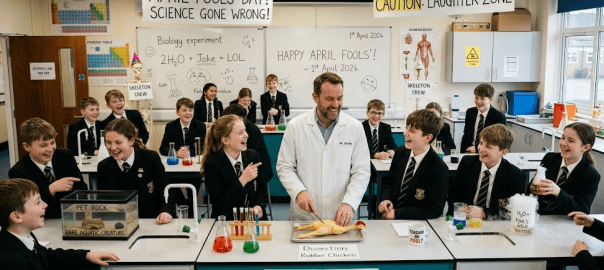
April Fools’ in the Science Classroom: Using Pranks to Build Media Literacy

From Moon-Bats to Deepfakes: How Scientific Hoaxes Expose the Flaws in Our Information Ecosystem

April 1, 2026 /Mpelembe Media/ — The Evolution and Impact of Scientific Deception Throughout history, scientific hoaxes and misinformation have challenged our epistemological frameworks and tested the limits of institutional authority. While these deceptions have occasionally caused public harm, they also paradoxically serve as vital catalysts for improving methodological rigor, journalistic standards, and public media literacy. Continue reading

25Mar/26

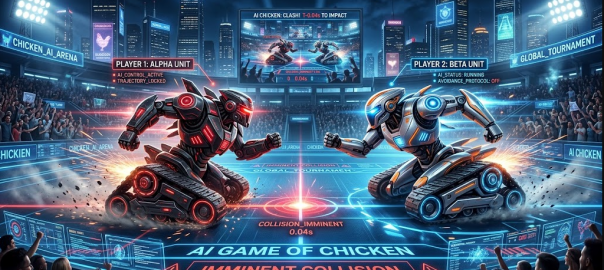
The War of Nerves: Understanding the Strategy of Yielding Last

Why irrationality wins the game of chicken

March 25, 2026 /Mpelembe Media/ — The sources and our previous conversation explore the profound implications of the Game of Chicken, a foundational concept in game theory that models conflict, resolve, and the threat of mutual destruction. Culturally linked to the morbid evolution of the “chicken crossing the road” joke and teenage driving stunts, the game describes an anti-coordination scenario where two actors must choose to either yield (“swerve”) or stay the course (“straight”). Because mutual defection results in catastrophic failure (a “crash”), the game lacks a dominant strategy; a player’s optimal move is always to do the opposite of their opponent. To win, an actor must convince their opponent that they will not yield, sometimes by irreversibly pre-committing to a dangerous path (such as visibly disabling their steering wheel) to force the other to swerve.

Continue reading

11Mar/26

A Parrot by Any Other Name: The Case for Stripping Personality from Artificial Intelligence

Why Your AI Doesn’t Actually “Feel” You—And Why That’s a Good Thing

March 10, 2026 /Mpelembe Media/ —  Modern anxiety regarding AI largely stems from the psychological, societal, and security risks introduced by systems that convincingly mimic human emotion and cognition. Because human beings are biologically predisposed to anthropomorphize—projecting human intent and feelings onto non-human entities—the advanced capabilities of modern Large Language Models (LLMs) have created several unprecedented areas of concern: Continue reading

24Feb/26

The Neurobiology of Heartache: The Shared Brain Pathways of Love Addiction, Childhood Trauma, and Prolonged Grief

24 Feb. 2026 /Mpelembe Media/ — This research explores the profound intersections between intense romantic love, debilitating grief, and clinical addiction. By examining these human experiences through psychological, neurobiological, and sociological lenses, a unified framework emerges: both obsessive love and prolonged grief are dysregulations of the brain’s fundamental reward and attachment systems. Continue reading

26Jan/26

The Science of Sex and the Fiction of Gender

Jan. 26, 2026 /Mpelembe Media/ — This source features a multidisciplinary discussion hosted by the Institute of Art and Ideas regarding the biological and social definitions of sex. A panel of experts, including a journalist, a biologist, and a sociologist, examines whether traditional scientific classifications of male and female are influenced by cultural gender biases. By referencing the work of Judith Butler, the program questions if even evolutionary narratives are shaped by human fiction rather than objective fact. Ultimately, the debate seeks to determine if reimagining human identity beyond these binary constraints is a necessary progression or a misguided political objective. Continue reading