Tag Archives: Scotland

26Oct/26

How Freemasons Legally Keep People Out

Jurisdictional Sovereignty and Institutional Governance in Freemasonry

Freemasonry operates through a supreme, decentralized network of autonomous regional governing bodies known as Grand Lodges, each holding sovereign administrative, legislative, and judicial jurisdiction over its constituent local lodges. Local lodges function under the constitutional mandates, statutory codes, and bylaws established by their overarching Grand Lodge, which define standards for ritual conduct, administrative reporting, officer duties, and internal discipline. Internal governance balances executive authority—exercised locally by the Worshipful Master and regionally by District Deputy Grand Masters and the Grand Master—with formal administrative and judicial mechanisms. This structural arrangement mandates that all Masonic proceedings strictly adhere to established organizational law and ancient landmarks. Continue reading →

21Oct/26

A Strategic Guide to Diaspora Investment, Incentives, and Land Acquisition in Zambia

Bridging Homeland and Diaspora: Civic Engagement, Traditional Gastronomy, and Travel Formalities for Zambians in the UK

Wed Oct. 21, 2026 /Mpelembe Media/ — The transnational migration corridor connecting Zambia’s Copperbelt region to suburban centers across Greater London reflects a vital flow of skilled professionals, students, and families who maintain deep socio-economic, civic, and cultural ties. To support local community integration in the United Kingdom while driving social and economic development in Zambia, an extensive organizational ecosystem operates across multiple tiers. Grassroots groups like the London Association of Zambians (LazUK) deliver civic networking and localized peer support, while commercial promotion platforms such as UK Zambian Events Ltd host business expos and cultural festivals to celebrate heritage and facilitate cross-border trade. On a broader national scale, registered charities including the Zambia Society Trust (ZST) and the Scotland Zambia Partnership (SCOZAP) coordinate grassroots development—funding healthcare delivery at St Francis Mission Hospital, nurse sponsorships, community schooling through Kwasha Mukwenu, and poverty alleviation projects. Institutional engagement is anchored by the Ministry of Foreign Affairs and International Cooperation through its dedicated Diaspora Web Portal, which officially recognizes overseas citizens as the nation’s “Eleventh Province” and encourages active involvement in domestic land acquisition, agriculture, and climate resilience. Furthermore, international advocacy organizations like the Organization of Zambians Abroad (OZA) and professional bodies like the British Association of Social Workers (BASW) Diaspora Special Interest Group provide constitutional advocacy, trade joint ventures, and structured induction standards for overseas-qualified social workers and professionals. Continue reading →

15Jul/26

The 2026 World Cup breaks traditional TV

The Death of the Living Room: How CazéTV and YouTube’s 21-Million-Device Milestone Just Ended Linear TV’s Monopoly

The 2026 FIFA World Cup has arrived as a definitive inflection point in media history, signaling a massive disruption in how global sporting events are distributed and monetized. While the tournament’s expansion to 48 teams has provided a gargantuan spectacle on the pitch, the real story is the tectonic shift in consumption habits. We are witnessing the final transition from the “old way” of sports—passive viewing via traditional linear TV—to the era of the “Connected Fan,” defined by mobile-first interaction and creator-led broadcasting.While 6.25 million fans (99.7% occupancy) have packed physical stadiums, these numbers pale in comparison to the digital milestones being set. For strategists and analysts, 2026 isn’t just another World Cup; it is the moment digital platforms effectively decapitated the traditional broadcasting monopoly.
Continue reading →

24Mar/26

The Anatomy of Disintegration: Madness, Blindness, and Nihilism in King Lear

Historical Context and Sources
March 24, 2026 /Mpelembe Media/ — Shakespeare adapted King Lear from a variety of historical and literary texts, most notably Geoffrey of Monmouth’s 12th-century Historia Regum Britanniae, Raphael Holinshed’s Chronicles, and an anonymous 1605 play titled The True Chronicle History of King Leir. While these earlier legends traditionally featured a happy ending where the king is restored to power by his loyal daughter, Shakespeare radically altered the narrative by introducing a bleak, catastrophic conclusion. This shift allowed Shakespeare to explore the political anxieties of Jacobean England, specifically the fears surrounding succession, the division of kingdoms, and the “Divine Right of Kings” following the death of Queen Elizabeth I. 

Continue reading →

16Mar/26

British Accents and Dialects: A Comprehensive Linguistic Guide

The Palimpsest of the Tongue: 1,500 Years of History Written in the British Accent

George Bernard Shaw famously observed that “it is impossible for an Englishman to open his mouth without making some other Englishman hate or despise him.” While biting, Shaw’s aphorism captures a profound sociolinguistic reality: in Britain, an accent is rarely just a collection of phonetic habits. It is a social GPS, a historical palimpsest, and a political manifesto.For the uninitiated, the linguistic landscape of the British Isles is a bewildering minefield. Why does a resident of Liverpool sound fundamentally different from one in Manchester, a mere 30 miles away? Why are the terms “The UK” and “Great Britain” so often—and so erroneously—treated as synonyms? By peering through the lens of sociophonetics and cultural history, we find that these vocal variations are not random quirks of modern urbanity. They are the living echoes of ancient tribal migrations and 19th-century industrial upheavals.Here are five takeaways from recent research that reveal the secret history hiding in the way Britons speak.
Continue reading →

09Jan/26

A Divided Pitch: The Rise of “Fortress America” and the Death of the Global Fan

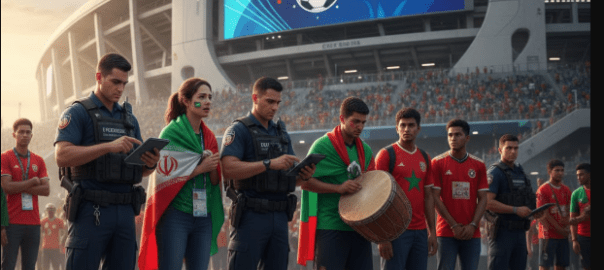
Jan. 9, 2026 /Mpelembe Media/ — The intersection of U.S. immigration policy and the 2026 FIFA World Cup has become a major flashpoint. The feasibility of a boycott and the “ruining” of the game are subjects of intense debate among human rights groups, fans, and governing bodies. Football without fans is like a movie without a soundtrack. You can still follow the plot, and the acting (the skill) is still world-class, but you lose the emotional crescendos that make you jump out of your seat. For a World Cup—an event built on the “unity” of humanity—a lack of fans doesn’t just change the score; it changes the soul of the event. Continue reading →

25Nov/25

Critical Thinking: There is a thin line between genius and insanity

Nov. 25, 2025 /Mpelembe Media/ — This phrase, “There is a thin line between  genius and insanity,” is a compelling and long-standing stereotype that suggests a close connection between exceptional creativity and mental illness.

While it’s a popular idea, modern research indicates that it’s an oversimplification. There isn’t a single “thin line,” but rather a complex, non-linear relationship where certain traits and genetic factors are sometimes shared between highly creative individuals and those with specific mood disorders. Continue reading →

05Sep/25

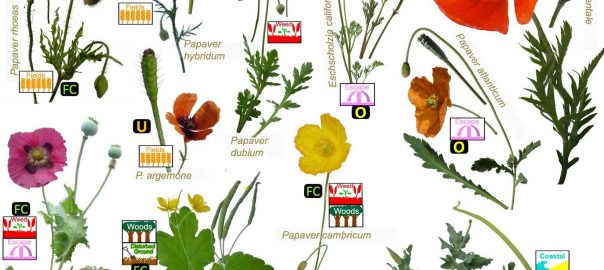
What I’ve learned from photographing (almost) every British wildflower

The author’s project took him all over Britain.
Montage images: Pajor Pawel/Shutterstock (background); Richard Milne (flowers)

Richard Milne, University of Edinburgh

The wildflowers of Britain include all manner of treasures – yet many people are only aware of a few, such as bluebells and foxgloves. A lot of its other flora are rare because of Britain’s location at the northern, western or even southern edges of their natural geographic – and hence climatic – ranges.

Continue reading →

15Jun/24

Scotland’s reputation for fine whisky

June 14, 2024 /Lifestyle/ –Scotland’s reputation for fine whisky stems from a perfect blend of factors: ideal natural resources, a long history of distillation, and unique regulations. Here’s a breakdown of why Scotland excels in this area:

Continue reading →

11Oct/23

How loneliness changes the way our brains process the world

Robin Kramer, University of Lincoln

If there’s one thing we as humans seem to have in common, it’s that most of us have felt lonely at one time or another. But is the pain that comes with feeling socially isolated simply a part of being human? Why does the world seem so different when we’re feeling lonely?

Recent research has begun to provide some answers. And it turns out that loneliness can affect your perception and cognition.

Continue reading →