
Tag Archives: Emotions

24Jul/26

How Empathy Became a Political Weapon

The War on Feeling: How the American Right Reframed Empathy as a Vice

Fri, July 24 2026 /Mpelembe Media/ — Modern American conservative thought has increasingly shifted toward a vocal rejection of empathy, labeling the trait as a dangerous moral failing. Prominent right-wing authors and influencers argue that prioritizing emotional understanding leads to societal decline and prevents leaders from making difficult but vital decisions. This perspective is reinforced by a surge of best-selling books that categorize compassion as a “toxic” or even “suicidal” impulse for Western civilization. High-profile figures like Elon Musk have amplified these warnings, suggesting that cultural survival depends on abandoning soft-hearted policies. This ideological trend represents a stark departure from earlier iterations of Republicanism, which once embraced the concept of compassionate conservatism. By framing empathy as a threat to the nation, contemporary right-wing media effectively distances itself from its own political history. Continue reading

21Jul/26

How the nervous system rebuilds trust

Rebuilding Trust The 5-Step Daily Protocol

Tue, July 21 2026 /Mpelembe Media/ — This analsis examines the profound psychological impact of betrayal and the multifaceted process of rebuilding trust within human relationships. Expert clinical perspectives describe how relational trauma can rewire the nervous system, leading to persistent hypervigilance and a diminished ability to feel safe with others. To overcome these injuries, the texts recommend consistent transparency, somatic healing, and professional support to shift from defensive posturing toward genuine emotional safety. Literary insights from T.S. Eliot underscore the fragility of these bonds, suggesting that while trust is difficult to repair once severed, it remains the essential foundation for authentic connection. Ultimately, the collection highlights that recovery is a gradual, non-linear journey requiring both personal accountability and self-compassion.
Continue reading

21Jul/26

The Architecture of Autonomy Reclaiming Your Story

The Anxiety Prison: Practical Strategies For Daily Resilience

Tue, July 21 2026 /Mpelembe Media/ —Psychological distress is often far more than “temporary sadness” or “occasional worry.” In our modern experience, uncertainty and distress act as a persistent undercurrent of unease that can rob the present moment of joy and create exhausting “what if” loops in the mind. Whether stemming from career transitions, health challenges, or relational instability, this distress manifests as a deep-seated tension that disrupts sleep and impairs daily functioning.The core function of therapy is to provide a provider of safety, structure, and evidence-based tools. It serves as a laboratory for emotional resilience, helping to reframe the brain’s perception of threat and move a person from a state of survival into one of grounded calm. Continue reading

09Jul/26

Why your biology needs other people

The Stoic Philosophy of Friendship: Autonomy from Fullness

Thur, July 09 2026 /Mpelembe Media/ — Seneca’s moral essays resolve the apparent contradiction between radical mental self-sufficiency (autarkeia) and the human yearning for companionship. In Letter 9, Seneca distinguishes between “needing” others to patch over an internal void (which breeds fragile, “fair-weather” utility friendships) and “desiring” friends to share a life that is already complete. The Stoic sage possesses the ultimate psychological autonomy—relying on internal virtue rather than external Fortune. Yet, because humans are naturally social cosmopolitans, we seek friendship for its own sake. True friendship is an active theater for projecting virtue and kindness, beautifully summarized by Hecato’s timeless formula: “If you would be loved, love”. Practically, Seneca’s Letter 3 sets out a strict temporal blueprint for relationships: exercise rigorous, analytical judgment before admitting someone to your life, but once they are chosen, trust them unconditionally, removing all defensive barriers. This framing invites us to connect from fullness, rather than lack.

Continue reading

26May/26

How heat rewrites the rules of survival

When the Heat is On: Cognitive Decline, Aggression, and Ecological Collapse

Tue, May 26 2026 /Mpelembe Media/ — Extreme heat acts as a severe neuroenvironmental stressor that physically damages animal brains, leading to profound cognitive and behavioral impairments. As temperatures rise, animals suffer from localized cerebral hyperthermia, which causes neuronal silencing, neuroinflammation, and even the structural shrinkage of key brain regions responsible for memory and social behavior. This physiological damage manifests as degraded problem-solving abilities, impaired spatial navigation, and the rapid loss of learned associations across diverse species, from bumblebees and fish to birds and mammals. Continue reading

12Apr/26

AI Care Agents and the Helper’s High

April 9, 2026 /Mpelembe Media/ —  The Mpelembe Network is a multifaceted digital collaborative platform built on Google Cloud that integrates artificial intelligence with social, health, and community services. The network facilitates specialized initiatives like CuraFlow AI, which uses multi-agent systems to orchestrate clinical care, and the Justina Mutale Foundation, which promotes gender equality and STEM education for African women. Central to the platform’s philosophy is the “helper’s high,” a neurobiological concept suggesting that altruism and volunteering are essential for mental resilience and physical longevity. Beyond technology, the materials examine complex social issues such as loneliness, psychological trauma, and the economic challenges of providing care in aging urban environments like Richmond upon Thames. Collectively, these sources present a vision for a 2026 “Agentic Era,” where high-fidelity AI and human collaboration bridge the gap between social isolation and meaningful community support.
Continue reading

09Apr/26

How helping others saves your life

From Isolation to Inclusion: How Volunteering Helps Us Feel Connected Again

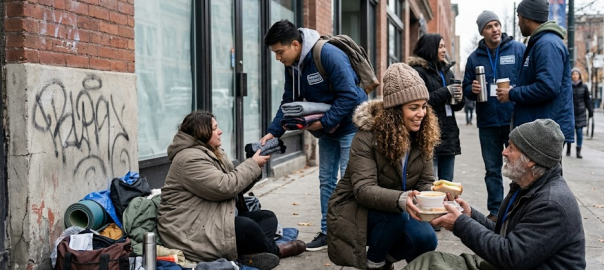
April 9, 2026 /Mpelembe Media/ —  The “Helper’s High” and Physical Health Volunteering produces a documented physiological response known as the “helper’s high”. When individuals engage in acts of altruism, the brain releases a cascade of neurochemicals, including endorphins (natural painkillers that elevate mood), dopamine (which creates a sense of pleasure and reward), and oxytocin (the “bonding hormone” that fosters trust and empathy). Because of this biological response, volunteering actively reduces stress and anxiety, combats depression, lowers mortality rates, and can even lessen symptoms of chronic pain and heart disease. Continue reading

29Mar/26

Navigating the Friendship Recession and the Cost of Connection

The Decline of the “Third Place” and the Rise of Global Isolation

March 30, 2026 /Mpelembe Media/ — The Core Issue: The “Friendship Recession” Modern society is experiencing a severe decline in social capital and interpersonal connections, a phenomenon widely referred to as the “friendship recession”. Data shows a quantifiable collapse in the size of our social networks: in 1990, 33% of Americans reported having 10 or more close friends, but by 2021, that number had plummeted to just 13%. Meanwhile, the percentage of individuals reporting zero close friends has quadrupled. This erosion of social capital—the “glue” that holds communities together through networks, trust, and reciprocity—is undermining both civic engagement and personal well-being.

Continue reading

16Sep/25

Racism isn’t innate – here are five psychological stages that may lead to it

Steve Taylor, Leeds Beckett University

Research from Europe and Australia in recent years has found a rise in the number of people experiencing racism. Reports from the US and UK have indicated that most ethnic minority participants felt racism was getting worse. And a global study has found rising incidents of discrimination.

Continue reading

25Oct/23

Zambians are celebrating peace!

May 3, 2024 Politics/ — t’s great to hear that Zambians are celebrating peace! It’s important to remember that hate is often rooted in fear and ignorance. When people are afraid of what they don’t understand, it can lead to anger and resentment. This can manifest itself in violence, discrimination, and other forms of hatred. Continue reading