Tag Archives: Digital technology

31Oct/26

The Death of Passwords and Physical Screens

Scalable Media Discovery Meets Immersive Reality: The Technical Blueprint of Horizon

Thu, July 29 2026 /Mpelembe Media/ —The Horizon streaming ecosystem combines a zero-friction identity architecture with broad media delivery capabilities to streamline subscriber acquisition and long-term engagement. To eliminate the user drop-off typical of manual registration forms and credential entry, the platform integrates standard OAuth 2.0 and OpenID Connect protocols alongside in-context Google One-Tap authentication. Utilizing browser-level Federated Credential Management APIs, Google One-Tap detects active sessions and transmits cryptographically signed JSON Web Tokens directly to backend verification endpoints without triggering disruptive page redirects. This passwordless entry pattern produces conversion rate increases ranging between 50% and 107%, capturing verified demographic data immediately to personalize content catalogs upon arrival.

Continue reading →

30Oct/26

Why Bad Dashboards Stress Your Brain

Core Architectural Framework and Operational Design

Thu, July 29 2026 /Mpelembe Media/ — Modern legal tracking platforms represent a fundamental transition from static, paper-based administrative records to unified digital command centers that orchestrate multi-jurisdictional case flows and high-stakes legal operations in real time. To handle the divergent demands of legal practice, enterprise judicial systems deploy a dual-storage architecture that pairs normalized relational schemas with append-only, event-sourcing streams. The relational data tier maintains strict structural integrity across core entities—such as cases, parties, variable legal roles, hearings, and financial ledgers—preventing data redundancy and conflict across matters. Concurrently, immutable, timestamped event-sourcing logs capture dynamic procedural milestones, hearing results, and docket modifications, enabling high-performance rendering of chronological court timelines and automated calculation of statutory deadlines. Continue reading →

29Oct/26

Which AI Certifications Actually Matter

Inside Google’s Centralized Learning Hub for Enterprise AI, Cloud Infrastructure, and Agentic Engineering

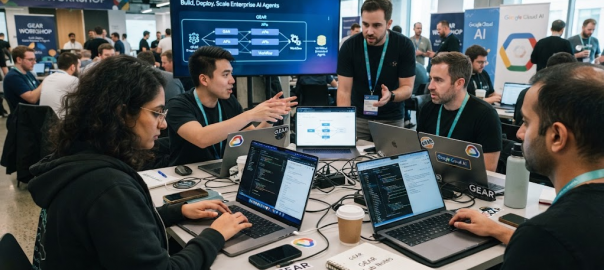
Thu, July 29 2026 /Mpelembe Media/ — Google Skills represents a strategic consolidation of Google’s educational ecosystem, consolidating nearly 3,000 courses, hands-on interactive labs, and professional credentials into a single unified platform. By merging content across Google Cloud, Google DeepMind, Grow with Google, and Google for Education, the platform establishes a continuous learning continuum serving all proficiency levels. Learners can progress seamlessly from foundational digital literacy to advanced large language model architectures and enterprise cloud infrastructure management. Prior to this unification, users across these individual properties completed over 26 million courses and credentials in a single year, highlighting the massive global demand for structured technical upskilling. Continue reading →

28Oct/26

How Digital Tech Saves Vinyl Records

The Pulse of the Crate: How Live Community Feeds Transformed Vinyl Discovery

Mon, July 26 2026 /Mpelembe Media/ — The Live Vinyl Community Feed represents a structural shift in physical music discovery, transforming solitary record collecting into a real-time, interactive global network. Rather than relying on static catalogs or passive marketplace listings, the feed captures synchronous “Save to Crate” actions across diverse genres, broadcasting details such as album titles, release years, record labels, and physical store geolocations in real time. Collectors contribute enriched micro-metadata alongside acquisitions, attaching Goldmine condition grades, shop locations, and personal commentary on specific pressings or drum breaks. Advanced hardware protocols—including LiDAR groove depth mapping, acoustic scratch detection during playback, and NFC sleeve tagging—further standardize physical condition verification, bridging tactile playback with digital cataloging. Continue reading →

26Oct/26

Anthropic S-1 Warns of AI Extinction

Balancing Hyper-Growth and Public Safety: Anthropic Pairs Operating Profits with Catastrophic AI Disclosures

Mon, July 26 2026 /Mpelembe Media/ — Under Anthropic, PBC has officially filed its Form S-1 registration statement with the U.S. SEC to list its Class A common stock on the Nasdaq under the ticker symbol “ANT”. The artificial intelligence developer is seeking a target IPO valuation between $1.8 trillion and $2.0 trillion, with plans to raise as much as $80 billion to $100 billion. If realized at this scale, the offering would surpass SpaceX’s $1.77 trillion market debut from June 2026 to become the largest initial public offering in history. Driving this valuation is unprecedented enterprise expansion: revenue for the first half of 2026 surged to $16.286 billion—a 14-fold increase compared to $1.163 billion in the corresponding prior-year period. In the second quarter of 2026 alone, Anthropic generated $11.6 billion in revenue and achieved an operating profit of $974 million. Corporate API token contracts generate approximately 80% of top-line revenue, propelled by rapid adoption of agentic software products like Claude Code. Continue reading →

25Oct/26

How Sewage Tomatoes Beat the AI Web

Mapping the Neighborhood: Reimagining Wikipedia as a Proximity-Based Experience

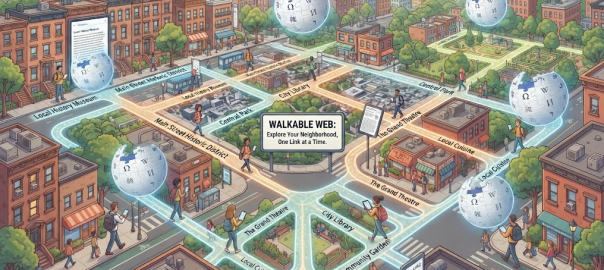
Sat Oct. 24, 2026 /Mpelembe Media/ — Local Wikipedia is an independent, unofficial web application developed by journalist, software developer, and data specialist Ed Jefferson that turns Wikipedia into a proximity-focused, ambient spatial encyclopedia. Conceived during lockdown and released in late 2026, the application operates on the core thesis of displaying geotagged Wikipedia articles located within a thirty-minute walk from the user. Users can set their location using native browser geolocation or manual text queries such as town names, landmarks, and UK postal codes. To balance visual clutter and system performance across varying geographic densities, the platform automatically adjusts its operational scope, expanding up to six miles in low-density rural areas or capping results at five hundred items in dense urban centers. Designed with client-side privacy in mind, positioning coordinates remain strictly within temporary local browser memory, and exported links are sanitized to ensure physical location data is never shared. Continue reading →

24Oct/26

Why Gemini 4 Forced Google Into Space

Frontier AI Takes Priority: How Google Is Sacrificing Cloud Revenue to Win the AI Arms Race

Sat Oct. 24, 2026 /Mpelembe Media/ — Google has reaffirmed its commitment to frontier AI with the launch of Gemini 4 Argon, which processed approximately 25 trillion tokens in its first 72 hours—a threefold surge over Gemini 3.0 during its initial release. To maintain leadership at the technical frontier, Alphabet CEO Sundar Pichai stated that dedicating compute to Google DeepMind is an absolute, non-negotiable priority. As a result, Google Cloud is actively sacrificing short-term revenue by reallocating computing resources away from enterprise leasing and toward internal frontier research. This reallocation addresses a severe, industry-wide compute shortage caused by a rigid two-to-three-year lag in data center infrastructure development alongside an unexpected explosion in agentic task demand, making 2027 computing capacity exceptionally difficult for external customers to secure. Continue reading →

03Mar/26

How DNA and Smartwatches Rewrite Health Insurance

March 2, 2026 /Mpelembe Media/ — By 2042, the global scientific community has undergone a profound transformation, shifting from a rigid, standardized “directed science” model to a “radically exploratory” paradigm. This evolution was catalyzed by a terrifying “crisis decade” (2026–2035) marked by intense political hostility, institutional stagnation, and the deadly resurgence of preventable diseases—like measles and whooping cough—due to declining vaccination rates. Forced to self-reflect, the scientific community rebuilt public trust by abandoning the pretense of absolute objectivity and instead embracing humility, uncertainty, and methodological pluralism.

Continue reading →

25Dec/25

Agriculture-as-a-Service platform

Dec. 25, 2025 /Mpelembe Media/ — Citiesabc Impakt is a sophisticated Agriculture-as-a-Service platform developed by Dinis Guarda and the Ztudium Group. The initiative establishes a digital infrastructure designed to support farmers and agribusinesses through artificial intelligence, blockchain, and IoT sensors. By providing a verified digital identity and financial tools, the platform seeks to improve market access and sustainability in regions such as India, Indonesia, and Africa. The system addresses critical issues like climate volatility and financial exclusion by offering crop monitoring, price forecasting, and secure data ownership. Ultimately, the project aims to foster global food security and economic resilience through high-tech, human-centric solutions. Continue reading →

24Jun/25

OpenSTX Foundation: Industrial Wireless Protocol Standardization

The provided text announces the launch of the OpenSTX Foundation, an initiative by the Joint Development Foundation (part of the Linux Foundation family) aimed at standardising Synchronous Transmission (STX) as an open industry protocol for industrial wireless connectivity. This new standard seeks to provide ultra-reliable, time-sensitive communication essential for applications like smart factories, cities, and disaster response, addressing the growing demand for scalable, secure, and real-time wireless protocols in mission-critical environments. The foundation will unite industry leaders and researchers to develop an enterprise-ready specification, ensuring interoperability and broad accessibility for next-generation industrial IoT and cyber-physical systems. Read more