Tag Archives: Computer security

06Aug/26

AI Automates the Industrialized Cybercrime Economy

Coordinated Policing Battles a Surge in Sophisticated, AI-Powered Scams Across Africa

Thur , Aug 06 2026 /Mpelembe Media/ — Artificial intelligence has become the primary engine transforming cybercrime across Africa, driving 55 percent of all reported digital offenses and shifting the threat landscape from isolated incidents into an industrialized, borderless criminal ecosystem. This automation spans every stage of a cyberattack, from initial target reconnaissance and highly personalized phishing generation to execution, extortion, and operational evasion. Fueled by the continent’s rapid digital transformation, which reached over 1.1 billion registered mobile subscribers in 2025, cybercriminals have successfully scaled their operations to target massive audiences simultaneously. This has resulted in a devastating financial toll, with annual regional losses skyrocketing from $192 million in 2024 to $484 million in 2025, while the number of identified individual victims surged from 35,000 to 87,000. Continue reading

30Jul/26

AI and blockchain beyond zero trust

Why Zero Trust Isn’t Enough: Tackling the Threat of “Ambient Authority” in AI Agents

Thu, July 30 2026 /Mpelembe Media/ — The Shift from Zero Trust to “Beyond Zero” The rapid proliferation of autonomous AI agents has fundamentally broken traditional “Zero Trust” architectures, such as Google’s pioneering BeyondCorp. Because AI agents can consume and process data at machine speed, they often inherit the broad, over-provisioned privileges of their human operators—a vulnerability known as “ambient authority”. To address this, Google security researchers introduced “Beyond Zero,” a new security paradigm that shrinks the trust boundary from the broad application level down to the individual resource action. Continue reading

03Jun/26

Reputation Capital: The Economic Engine Driving Mpelembe’s Autonomous Agents

Reputation Capital: The Economic Engine Driving Mpelembe’s Autonomou Agents

Tue, Jun 02 2026 /Mpelembe Media/ — The Mpelembe Agent Crypto Framework is a decentralized infrastructure platform designed to replace traditional, reactive dApps with Proactive Cryptographic Agency. This framework empowers software agents to autonomously manage assets, operate hardware compute clusters, stake capital, and sign atomic settlements while maintaining strict risk insulation. Continue reading

20Apr/26

Claude Mythos triggers global cyber panic

The Mythos Inflection: How Anthropic’s New AI is Rattling Global Finance

April 20, 2026 /Mpelembe Media/ — The Emergence of Autonomous AI Cyber Threats Anthropic’s recent announcement of Claude Mythos Preview has fundamentally disrupted the cybersecurity landscape, marking a transition from AI as a productivity tool to an autonomous offensive cyber weapon. The model has demonstrated an unprecedented ability to discover and exploit zero-day vulnerabilities at machine speed, autonomously uncovering decades-old flaws in systems like OpenBSD, FFmpeg, and the Linux kernel without human intervention. Cybersecurity experts warn this creates an “AI Vulnerability Storm”, collapsing the timeline between a vulnerability’s discovery and its weaponization from months to mere hours. Continue reading

02Mar/26

Standards vs. Policies: Crafting Your Organization’s Cloud Security Framework

Why Your Cloud is More Vulnerable Than You Think

March 2, 2026 /Mpelembe Media/ — Cloud security policies are foundational guidelines that dictate how an organization securely operates within cloud ecosystems. Unlike global security standards—which are mandatory, non-customizable baselines created by recognized authorities—cloud policies are customizable, internal frameworks designed by an organization’s security professionals to meet specific operational and compliance needs..

Continue reading

24Feb/26

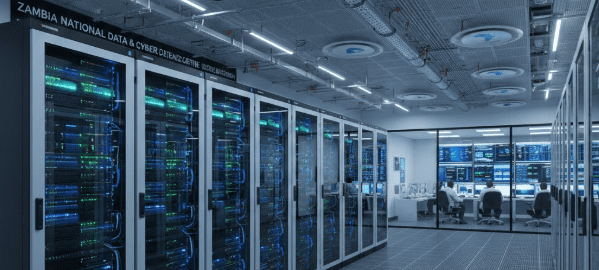
Securing the Cyberspace: The Impact of Zambia’s 2025 Cyber Laws on Security and Civil Liberties

Zambia’s Digital Vault: 6 Takeaways from the New Cybersecurity Revolution

 Feb. 24, 2026 /Mpelembe Media/ –Zambia is currently undergoing a rapid digital transformation characterized by the expansion of financial technology (FinTech), increased internet penetration, and a concerted government push toward a digital economy. However, this growth has been accompanied by a surge in cyber threats, including massive financial fraud, online scams, and critical data breaches. In response, the Zambian government overhauled its legal framework by enacting the Cyber Security Act (2025) and the Cyber Crimes Act (2025). While the government champions these laws as necessary for national security and child online protection, civil society and digital rights advocates warn that the legislation grants the state sweeping surveillance powers, threatening freedom of expression, privacy, and democratic participation Continue reading

21Jan/26

The Evolution of Digital Deception: How 2025 Scams Blended into Daily Online Life

Jan. 20, 2026 /PRNewswire/ — The Q4 2025 Gen Threat Report highlights a significant shift in cybercrime, where fraudulent advertisements and deepfake content have become the primary methods for targeting consumers. These findings indicate that attackers are increasingly exploiting trusted social media platforms like Facebook and YouTube to host fake online shops and deceptive investment schemes. Rather than using complex technical exploits, modern scams trick individuals into performing routine digital actions, such as clicking links or scanning QR codes, to compromise their data. The report also identifies GhostPairing attacks and a sharp rise in identity-related breaches as growing risks that bridge the gap between mobile and desktop devices. Ultimately, the data warns that malvertising has evolved into a sophisticated tool that allows threats to blend seamlessly into everyday internet browsing. Continue reading

29Dec/25

Cybersecurity Forecast 2026: The Rise of AI Agents, Persistent Extortion, and Evolving Nation-State Tactics

Dec. 29, 2025 /Mpelembe Media/ — The Cybersecurity Forecast 2026 report by Google Cloud examines the anticipated evolution of digital threats, primarily focusing on the transformative role of artificial intelligence. It describes how adversaries will increasingly use AI agents for automated attacks and sophisticated social engineering, while defenders will adopt similar technology to enhance security operations. Beyond AI, the analysis highlights the persistent danger of ransomware and the expansion of cybercrime into the blockchain and virtualisation sectors. The document also evaluates the strategic motivations of nation-state actors from Russia, China, Iran, and North Korea as they pursue global espionage and disruption. Ultimately, the report serves as a guide for organisations to modernise their identity management and governance frameworks in response to these emerging risks. Continue reading

26Dec/25

There’s no place like Chrome

Dec. 25, 2025 /Mpelembe Media/ — Chrome Enterprise Premium is a specialized web browser solution designed to enhance corporate security through a Zero Trust architecture. By acting as a central enforcement point, it provides businesses with advanced threat protection against malware, phishing, and malicious websites. The platform features robust data loss prevention tools that allow administrators to restrict sensitive actions like uploading, printing, or downloading on various devices. It simplifies endpoint management by offering real-time visibility and context-aware access controls without requiring complex software installations. Ultimately, this service enables IT teams to secure a modern workforce while maintaining high levels of productivity and seamless integration with existing tools. Continue reading

20Dec/25

Privacy risks associated with the Epstein Library

Dec. 19, 2025 /Mpelembe Media/ — This official webpage serves as a public repository hosted by the United States Department of Justice specifically for the Epstein Library. It provides access to a collection of legal and government documents, including court records and disclosures released under the Freedom of Information Act. Users can download various electronic files organized into specific datasets, though the agency warns that some sensitive or private information may remain despite efforts to censor it. The site also includes a privacy notice requesting that the public report any inadvertently published personal details to a dedicated government email address. Ultimately, this digital archive functions as a transparency tool for reviewing materials related to specific high-profile legal matters. Continue reading