Tag Archives: National security

25Oct/26

Where Foreign Influence Becomes Illegal

Allegations, Cyber Surveillance, and Denials: The Conflict Over Jared Kushner’s Middle East Financial Dealings

Sat Oct. 24, 2026 /Mpelembe Media/ — An excerpt published by Vanity Fair from journalist Matthew Cole’s book Princes and Thieves alleges that former White House senior adviser Jared Kushner had access to undisclosed foreign bank accounts holding up to $2 billion supplied by Gulf leaders during Donald Trump’s first presidential administration. According to these claims, Dutch military intelligence (MIVD) intercepted Kushner’s personal smartphone activity starting in 2018 after discovering device screenshots stored on a Russian military intelligence (GRU) server in Rostov. Spies reportedly observed Kushner accessing Account Alpha at First Abu Dhabi Bank—which contained roughly $750 million under the cover of an Emirati charitable foundation with funds routed via Azerbaijani banks—as well as Account Beta, an estimated $1 billion repository at the Bank of Israel reportedly subject to transaction oversight by Israeli Prime Minister Benjamin Netanyahu. Continue reading →

20Oct/26

How Algorithms Act Like Rat Traps

From the Well Trap to the Digital Sphere: The Allegory and Reality of Horizontal Conflict

Mon Oct. 19, 2026 /Mpelembe Media/ — The central narrative across the collection explores how artificial containment and structural coercion alter baseline behaviors, transforming subjects into instruments of self-destruction. This phenomenon is framed through the allegory of trapped rodents—whether in a farmer’s abandoned well or Raoul Silva’s island oil drum in Skyfall—where subjects are confined under extreme scarcity until forced cannibalism fundamentally alters their nature. Once released, these conditioned survivors no longer consume ambient environmental resources; instead, they exclusively hunt their own kind, allowing the external operator to outsource systemic destruction without engaging directly in battle. This allegorical framework parallels ancient East Asian rituals of Gu or Kodoku magic, where venomous scorpions, spiders, and insects were sealed inside a jar to fight to the death so that the sole survivor could be harvested as a concentrated weapon or curse. In Victorian London, actual rodent management trades documented by Henry Mayhew—most famously represented by Queen Victoria’s self-proclaimed rat-catcher Jack Black—similarly relied on spatial containment and an intimate understanding of conspecific aggression, eventually giving rise to both public rat-baiting sports and the breeding of fancy domesticated pets. Continue reading →

09Jan/26

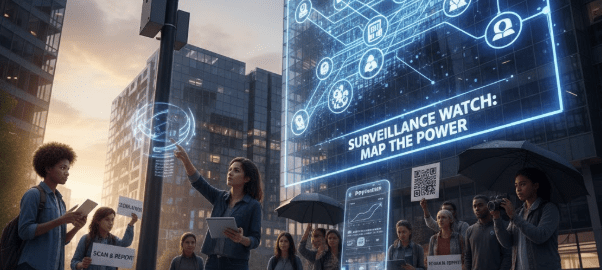
The Vigilance Blueprint: A Framework for Community-Led Counter-Surveillance

Jan. 9, 2026 /Mpelembe Media/ — This initiative, modeled on the Surveillance Watch concept, empowers citizens to transition from passive subjects of monitoring to active participants in privacy oversight. By leveraging a decentralized network of volunteers, the project creates a high-resolution, grassroots map of surveillance infrastructure—such as facial recognition cameras, license plate readers, and cell-site simulators. The framework addresses the inherent risks of community activism (such as data inaccuracy and volunteer safety) Continue reading →

28Aug/24

EU and India to convene high-level regional experts to discuss how to combat exploitation of online spaces by extremist actors

The European Union (EU), in collaboration with organising partner Global Counter-Terrorism Council (GCTC) and with India’s Ministry of External Affairs as a strategic partner, will be hosting a crucial regional conference on August 21-22, to discuss the current and emerging threats in online radicalisation and find ways to jointly counter the exploitation of online spaces by extremist and terrorist actors. Continue reading

06Oct/23

Exporting surveillance to Africa

By Kim Harrisberg | South Africa correspondent

Privacy experts are calling for citizens to be protected from growing surveillance in Africa, following a new report by the Institute of Development Studies (IDS) and the African Digital Rights Network (ADRN).

Their report, “Mapping the supply of surveillance technologies to Africa” focuses on Nigeria, Ghana, Morocco, Malawi and Zambia importing surveillance tech from countries including the U.S., Britain, China, Israel as well as the EU amounting to more than $1bn every year. Continue reading →

16Jun/23

World’s biggest cyber attack on European banks.

June 16, 2023 /Security/ — Three hacker groups, Killnet, Anonymous Sudan, and REvil, have reportedly teamed up to launch a “world’s biggest cyber attack” on European banks. The groups have released a video warning of the attack, which they say will target SWIFT, the international payments system.

KillNet is a pro-Russian hacking group that has been active since 2022. The group has claimed responsibility for a number of cyberattacks, including attacks on Ukrainian government websites and infrastructure. Continue reading →

05May/23

Google Career Certificate for hackers

30Apr/23

If code could be generated, why can’t it generate security controls?

April 30, 2023 /Technology/ — As generative AI continues to develop, it is likely that we will see even more innovative and effective ways to use this technology to protect our data and our systems. By creating predictive models, generating simulated environments, and analyzing large volumes of data, generative AI can help identify and respond to threats before they cause damage. Generative AI has enormous potential to transform cybersecurity, including cloud, device, and even home security systems. Continue reading →

22Apr/23

UK Security Minister CYBERUK speech

20 April 2023 /Policy/ — The Security Minister stressed the importance of businesses and individuals taking steps to protect themselves from cyber threats. He said that businesses should invest in cyber security measures, such as firewalls and intrusion detection systems. He also said that individuals should be careful about what information they share online and should use strong passwords. Continue reading →

03Mar/23

Snooping on campaigners

By Kim Harrisberg | South Africa correspondent

From phishing traps to arrests based on their social media posts alone, activists from Russia to Uganda say they’re increasingly being watched for their online campaigning.
Continue reading →