Tag Archives: Washington

04Nov/26

How Democrats Swept the 2026 Midterms

Shockwaves in the Senate: Kansas and Texas Victories Power Decisive Democratic Sweep

Tue, Nov 03 2026 /Mpelembe Media/ — Democrats are projected to win control of both the House and the Senate in the 2026 midterm elections, bringing an end to the Republican House majority held since 2023 and establishing a comfortable edge for Democrats across both chambers of Congress. Among the most notable victories highlighted in the results are the capture of a Texas Senate seat and the election of Kansas’s first Democratic senator since 1932. The electoral surge was largely fueled by public discontent over the war in Iran, rising living costs, and unfulfilled Republican campaign pledges. Continue reading →

26Oct/26

Anthropic S-1 Warns of AI Extinction

Balancing Hyper-Growth and Public Safety: Anthropic Pairs Operating Profits with Catastrophic AI Disclosures

Mon, July 26 2026 /Mpelembe Media/ — Under Anthropic, PBC has officially filed its Form S-1 registration statement with the U.S. SEC to list its Class A common stock on the Nasdaq under the ticker symbol “ANT”. The artificial intelligence developer is seeking a target IPO valuation between $1.8 trillion and $2.0 trillion, with plans to raise as much as $80 billion to $100 billion. If realized at this scale, the offering would surpass SpaceX’s $1.77 trillion market debut from June 2026 to become the largest initial public offering in history. Driving this valuation is unprecedented enterprise expansion: revenue for the first half of 2026 surged to $16.286 billion—a 14-fold increase compared to $1.163 billion in the corresponding prior-year period. In the second quarter of 2026 alone, Anthropic generated $11.6 billion in revenue and achieved an operating profit of $974 million. Corporate API token contracts generate approximately 80% of top-line revenue, propelled by rapid adoption of agentic software products like Claude Code. Continue reading →

23Oct/26

How Failed US-Iran Talks Triggered War

Losing the Coalition: How Domestic Immigration Raids and Foreign Conflicts Alienated Key Voters

Fri Oct. 23, 2026 /Mpelembe Media/ — The Republican Party faces an intensifying political and governance crisis heading into the November 3, 2026 midterm elections, driven by President Donald Trump’s career-low approval ratings between 32% and 35%. Broad public disapproval stems from an unfulfilled campaign promise to avoid endless foreign conflicts and lower consumer prices. Instead, the ongoing war with Iran—now in its seventh month despite initial predictions of a four-to-five-week duration—has combined with a persistent domestic affordability crisis to severely weaken GOP majorities in Congress. Continue reading →

04Sep/26

The UN Vote to Correct the Map

The Map as a Mental Model

The core objective of this guide is to deconstruct the hegemonic visuality of the 16th-century world map—a navigation tool that has metastasized into a standard classroom fixture, inadvertently codifying a biased global worldview. As critical geographers, we recognize that a map is never a neutral reflection of reality; it is a mental model that dictates the “geopolitical imaginary” of students from their earliest years of schooling. By distorting the scale of continents, maps influence how the power, agency, and place of diverse civilizations are internalized.As the “Correct the Map” campaign articulates in its core philosophy:”A fair world begins with a fair map.”When our primary visual tools marginalize the Global South, they perpetuate a form of  cartographic silencing . To dismantle this bias, we must first analyze the technical “structural flaws” that transformed a revolutionary maritime aid into a pillar of Eurocentric hegemony. Continue reading →

02Sep/26

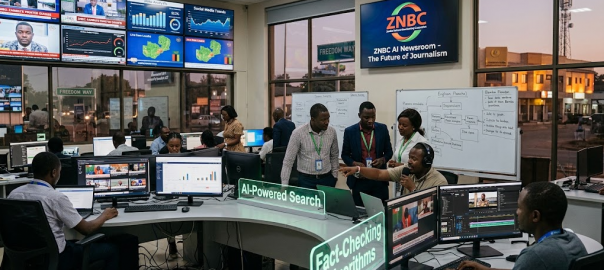
Newsrooms fight for survival against AI

Ethics in Action: Preserving Human Judgment Amid the Rise of Generative News

Tue Sep 01 2026 /Mpelembe Media/ — The global expansion of artificial intelligence has created a landscape of digital hegemony where standard-setting and economic benefits are heavily concentrated in the Global North, establishing a form of digital extractivism that mirrors historical colonial dynamics. Large technology conglomerates utilize content harvested from global networks to train proprietary models and sell them back as subscriptions. This extraction is accompanied by a severe decline in search referral traffic, which has collapsed by 50% to 60% in critical emerging markets like Brazil, South Africa, and Indonesia. This occurs because conversational search engines summarize copyrighted reporting directly on results pages, bypassing clicks to the original publisher. In response, major nations in the Global South are reframing the AI debate, moving from historical strategies of diplomatic non-alignment directly into the digital realm. Media leaders and policymakers in these regions argue that AI must not be treated as an isolated technical novelty, but as a critical national sovereignty, labor, and industrial policy issue that fundamentally impacts the health of local information environments. Continue reading →

27Aug/26

Trump’s Silverback Strategy and the Donroe Doctrine

A Weapon of Mass Disruption: Why the 2026 Iran War Exposed the Limits of American Might

Wed, Aug 26 2026 /Mpelembe Media/ — Donald Trump’s second term has transitioned into a highly volatile era characterized not by a passive “lame duck” status, but by what analysts call the “Silverback Presidency.” This statecraft style mirrors an aging mountain gorilla that, sensing its time is short and its dominance threatened, resorts to aggressive, unpredictable outbursts rather than yielding to institutional gridlock. Operating under a framework of personal grievance, vengeance, and an explicit rejection of the post-war rules-based order, Trump has openly asserted that his executive actions are limited only by his “own mind and morality”. Free from the perceived constraints of international law, the administration has launched high-stakes global maneuvers designed to forcefully project American power and secure a disruptive, nationalist legacy. Continue reading →

07Aug/26

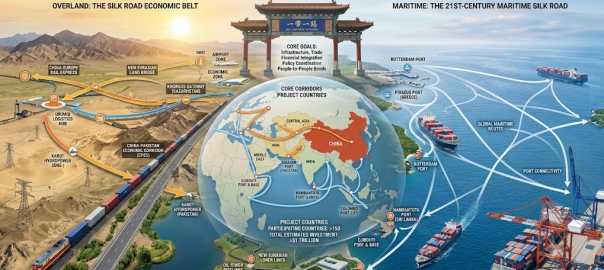
Why the World Is Bypassing the Dollar

Zambia’s Closed-Loop Monetary Strategy: Balancing Retail De-Dollarization with Sovereign Copper Finance

Fri , Aug 0& 2026 /Mpelembe Media/ — Sub-Saharan Africa is undergoing a profound structural transformation as sovereign nations systematically seek to reduce their historic reliance on the United States dollar for reserves, trade invoicing, and domestic transactions. For decades, the US dollar served as the undisputed financial anchor across the continent, but this deep integration has exposed emerging economies to extreme macro-financial vulnerabilities, particularly during cycles of US Federal Reserve monetary tightening. When interest rates rise in Washington, global capital retreats to dollar-denominated assets, triggering sharp depreciations of local African currencies that inflate the cost of imported goods and escalate the servicing costs of dollar-denominated sovereign debt. This systemic vulnerability was starkly demonstrated in November 2020 when Zambia defaulted on a $42.5 million Eurobond payment, with the concurrent strength of the US dollar significantly exacerbating the domestic financial fallout. Furthermore, the geopolitical landscape of the mid-2020s has accelerated the search for alternative payments due to the perceived weaponization of Western-dominated dollar-clearing systems, prompting African policymakers to seek bilateral trade architectures and payment systems backed by the BRICS+ alliance to protect their economic sovereignty. Continue reading →

03Aug/26

Zambia’s Debt Miracle and Democratic Backsliding

For Zambian voters, the 2026 election represents a critical choice balancing long-term macroeconomic recovery against immediate, severe household pressures. While President Hakainde Hichilema’s administration successfully restructured the nation’s default-era debt and introduced popular programs like universal free education, ordinary citizens are heavily squeezed by a high cost of living, rising food costs, and inflation exacerbated by a historic drought. A primary concern voters should watch out for is the post-election handling of the country’s structural electricity crisis. To avoid grueling 20-hour blackouts during the campaign cycle, the state utility ZESCO has relied on costly emergency regional power imports. Because this spending is fiscally unsustainable, voters face the high risk of a post-election fiscal correction, which will likely involve steep, inflation-inducing retail tariff hikes or a return to severe load-shedding. Furthermore, due to widespread grassroots dissatisfaction with local representation, there is a strong potential for split-ticket voting, meaning voters may back the incumbent president while actively rejecting sitting members of parliament and local councilors. Continue reading →

29Jul/26

ASML panic and AI circular funding

Historic Tech Plunge: Asian Markets Tumble Amid Fears of Unsustainable AI Spending and New Chinese Rivals

Wed, July 29 2026 /Mpelembe Media/ — The summer of 2026 witnessed a profound global market recalibration as major technology and semiconductor stocks faced a severe sell-off, pushing the tech-heavy Nasdaq-100 index into correction territory. This downturn reflected a fundamental shift in investor sentiment, moving from speculative optimism surrounding artificial intelligence to a rigorous demand for tangible monetization and balance sheet stability. The correction was not triggered by a singular event, but rather by a confluence of escalating capital expenditures, systemic credit risks tied to circular financing, and significant geopolitical shifts in the Asian semiconductor supply chain. Continue reading →

29Jul/26

Why Zuckerberg is Building an AI CEO

Friction in the Labs: Delays, Layoffs, and Culture Clashes Inside Meta’s Superintelligence Push

Wed, July 29 2026 /Mpelembe Media/ — The Open-Source Vision and Industry Dominance Meta CEO Mark Zuckerberg is aggressively positioning the company as the primary institutional sponsor of open-source (open-weight) artificial intelligence. With the release of Llama 3.1, Zuckerberg argues that open-source AI is the path forward because it empowers developers, prevents centralization of power, and allows organizations to protect their data without being locked into closed vendor ecosystems like those of Apple, OpenAI, or Google. By freely distributing its models, Meta hopes to commoditize the AI layer and establish Llama as the ubiquitous global industry standard. Continue reading →