Tag Archives: Ethiopia

05Sep/26

Emmanuel Mwamba from statecraft to sedition

Diplomacy, Dissidence, and Digital Resistance: The Life and Career of Emmanuel Mwamba

Sat Sep 05 2026 /Mpelembe Media/ — Emmanuel Mwamba was born on April 18, 1971, in the mining hub of Luanshya within the Copperbelt Province of Zambia. He completed his secondary education at Roan Antelope Secondary School and subsequently earned a Diploma in Journalism and Public Relations from Evelyn Hone College. He expanded his qualifications globally, obtaining a Master of Business Administration from Edith Cowan University in Australia and a Master in Peace Studies from the Institute of Peace & Security Studies at Addis Ababa University. After initial employment at the Zambia National Commercial Bank, he entered the political arena as the administrative secretary and spokesperson for Zambia’s second president, Frederick Chiluba. During this time, Mwamba aggressively defended Chiluba against state-directed corruption prosecutions. This loyalty caused friction with the administration of Levy Mwanawasa, resulting in the termination of Mwamba’s probationary contract in October 2004, though he continued serving Chiluba in a private capacity. Following the reconciliation of Chiluba and Michael Sata in 2005, Mwamba transitioned his allegiance to the Patriotic Front (PF). Continue reading

03Sep/26

Zambia’s High Stakes Digital Money Revolution

The Digital Economy at a Crossroads

Thu Sep 03 2026 /Mpelembe Media/ — Zambia’s developmental trajectory currently faces a paradoxical challenge: the imperative to widen the domestic tax base versus the mandate to achieve universal digital financial inclusion. As the primary engine for the nation’s 2027 digital economy vision, mobile money provides the “last mile” infrastructure necessary to transition the informal sector into the formal economy. However, the introduction of a dedicated transaction levy creates a friction point that threatens to bifurcate the ecosystem. While fiscal authorities view the levy as a mechanism for equity, it risks introducing a regressive cost layer that could stall the momentum of Zambia’s most successful financial inclusion tool.Strategic Dilemma:  Policymakers must reconcile the immediate need for revenue with the long-term macroeconomic benefits of digital liquidity. The core risk is that aggressive fiscal extraction at this nascent stage may drive users back to cash, thereby eroding the Bank of Zambia’s visibility into the economy and increasing the cost of cash management.The current tension is a byproduct of Zambia’s rapid evolution from fragmented banking silos to a sophisticated, shared payment infrastructure. Continue reading

24Aug/26

Why joblessness and diamonds fuel civil war

The Dual Private Sector Dilemma: Why IMF Market-Led Growth Models Fail to Create Jobs in Fragmented African Economies

Mon, Aug 24 2026 /Mpelembe Media/ — The economic relationship between sub-Saharan Africa and the International Monetary Fund (IMF) has its roots in the 1944 Bretton Woods Conference, where the few developing nations present failed to secure explicit references to their development financing needs in the Articles of Agreement. From its inception, the IMF maintained a rigid, short-term balance-of-payments focus, famously denying Ethiopia’s first request for financial assistance on the grounds that its needs were neither immediate nor temporary. By the 1980s and 1990s, this short-term framework was formalized into neoliberal Structural Adjustment Programs (SAPs), which mandated strict conditionalities such as market deregulation, extensive privatization of state-owned enterprises, and rapid trade opening. Although promoted as pathways to long-term macroeconomic stability, these interventions frequently triggered severe adverse social consequences, including declining real wages, heightened poverty, and the systematic deterioration of basic health and social welfare systems. In response to widespread critique in the late 1990s, the IMF purported to shift its operational model, replacing traditional SAPs with the Enhanced Structural Adjustment Facility (ESAF) and, subsequently, various credit facilities under the Poverty Reduction and Growth Trust (PRGT). However, empirical evidence indicates that these contemporary programs represent “SAPs in disguise,” with loan conditionalities and stringency steadily rising, and core prescriptions of fiscal consolidation and state retrenchment remaining largely unchanged. Continue reading

07Aug/26

Why the World Is Bypassing the Dollar

Zambia’s Closed-Loop Monetary Strategy: Balancing Retail De-Dollarization with Sovereign Copper Finance

Fri , Aug 0& 2026 /Mpelembe Media/ — Sub-Saharan Africa is undergoing a profound structural transformation as sovereign nations systematically seek to reduce their historic reliance on the United States dollar for reserves, trade invoicing, and domestic transactions. For decades, the US dollar served as the undisputed financial anchor across the continent, but this deep integration has exposed emerging economies to extreme macro-financial vulnerabilities, particularly during cycles of US Federal Reserve monetary tightening. When interest rates rise in Washington, global capital retreats to dollar-denominated assets, triggering sharp depreciations of local African currencies that inflate the cost of imported goods and escalate the servicing costs of dollar-denominated sovereign debt. This systemic vulnerability was starkly demonstrated in November 2020 when Zambia defaulted on a $42.5 million Eurobond payment, with the concurrent strength of the US dollar significantly exacerbating the domestic financial fallout. Furthermore, the geopolitical landscape of the mid-2020s has accelerated the search for alternative payments due to the perceived weaponization of Western-dominated dollar-clearing systems, prompting African policymakers to seek bilateral trade architectures and payment systems backed by the BRICS+ alliance to protect their economic sovereignty. Continue reading

07Aug/26

From Zamrock to Internet Kill-Switches

The Rise of Zed Beats and the Digital Music Revolution

Fri , Aug 0& 2026 /Mpelembe Media/ — Zed Beats, which takes its name from the letter “Z” in Zambia, represents a dynamic hybrid music genre that emerged in the late 1980s. Young, self-taught producers began using affordable computer software to blend indigenous Zambian elements with popular global sounds like R&B, reggae, rap, hip-hop, Jamaican dancehall, Afrobeats, and amapiano. The rise of this digital movement was catalyzed by a major cultural void in the late 1980s and 1990s, when the devastating HIV/AIDS epidemic claimed the lives of a generation of veteran musicians who had anchored traditional live genres like Kalindula and Zamrock. To fill this void, which had left radio and television heavily dominated by foreign music, young enthusiasts utilized newly accessible computer technology to resurrect local music and forge a modern urban identity. Continue reading

03Aug/26

Zambia’s Debt Miracle and Democratic Backsliding

For Zambian voters, the 2026 election represents a critical choice balancing long-term macroeconomic recovery against immediate, severe household pressures. While President Hakainde Hichilema’s administration successfully restructured the nation’s default-era debt and introduced popular programs like universal free education, ordinary citizens are heavily squeezed by a high cost of living, rising food costs, and inflation exacerbated by a historic drought. A primary concern voters should watch out for is the post-election handling of the country’s structural electricity crisis. To avoid grueling 20-hour blackouts during the campaign cycle, the state utility ZESCO has relied on costly emergency regional power imports. Because this spending is fiscally unsustainable, voters face the high risk of a post-election fiscal correction, which will likely involve steep, inflation-inducing retail tariff hikes or a return to severe load-shedding. Furthermore, due to widespread grassroots dissatisfaction with local representation, there is a strong potential for split-ticket voting, meaning voters may back the incumbent president while actively rejecting sitting members of parliament and local councilors. Continue reading

15Mar/26

“Honoring Her Light: Meaningful Ways to Celebrate Mothers, Both Here and in Our Hearts”

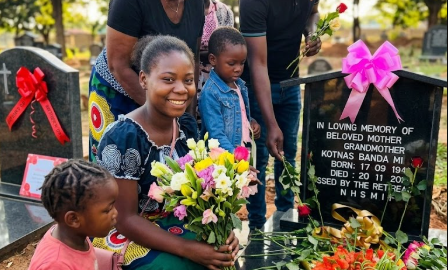
March 15, 2026 /Mpelembe Media/ — These sources explore different ways of honoring mothers through personal expression and cultural traditions. The first source features lyrics from Tupac Shakur, who offers a raw, emotional tribute to his mother’s resilience and sacrifices while raising him in poverty. In contrast, the second source provides a comparative look at how Mother’s Day is observed in Zambia versus the United Kingdom, noting differences in calendar systems and cultural focus. While the song emphasizes personal gratitude for a mother’s strength during hardship, the article explains the global diversity of the holiday’s timing and meaning. Together, they illustrate that maternal appreciation is a universal sentiment expressed through both individual storytelling and regional customs. Continue reading

25Jan/26

A Democratic Sea Change: Africa’s 2026 Election Calendar

Jan. 25, 2026 /Mpelembe Media/ — The year 2026 represents a critical juncture for African democracy as numerous nations across the continent prepare for high-stakes elections. While countries like Zambia and Benin face tests of institutional integrity and leadership transitions, others such as Uganda and Ethiopia continue to struggle with political suppression and internal conflict. Long-standing leaders in the Republic of the Congo and Djibouti maintain their grip on power, whereas nations like Libya and South Sudan face deep uncertainty regarding their ability to hold votes at all. These upcoming polls occur against a backdrop of regional instability and varying levels of public trust in the electoral process. Ultimately, the collective results of these contests will determine if the continent is moving toward a systemic democratic shift or further entrenched authoritarianism. Through this comprehensive calendar, the source highlights the diverse political challenges and socioeconomic factors shaping the future of African governance. Continue reading

04Jun/24

How is BRICS (Brazil, Russia,India,China,South Africa) bloc doing so far?

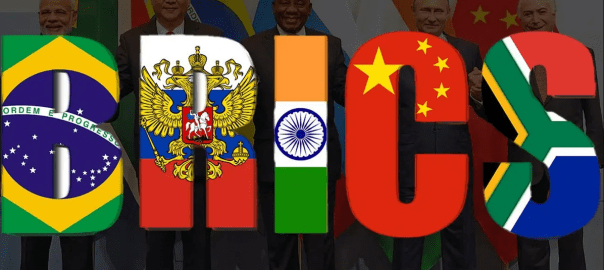
June 4, 2024 /Economy/ — The BRICS bloc has been in the news recently due to a significant development: it doubled its membership in January 2024. Argentina, Egypt, Ethiopia, Iran, Saudi Arabia, and the United Arab Emirates were all invited to join Atlantic Council. This expansion has the potential to reshape the bloc’s influence, but it also comes with challenges. Continue reading

23May/23

Ukraine challenges Russian influence in Africa

22 May 2023 /Conflict and War/ –Ukraine’s foreign minister, Dmytro Kuleba, began a tour of African countries this week in an effort to challenge Russian influence in the “Global South.” Kuleba met with foreign ministers from Egypt, Ethiopia, Ghana, Kenya, and Morocco to discuss the war in Ukraine and to seek their support for Ukraine’s position. Continue reading