Tag Archives: Frederick Chiluba

05Sep/26

Emmanuel Mwamba from statecraft to sedition

Diplomacy, Dissidence, and Digital Resistance: The Life and Career of Emmanuel Mwamba

Sat Sep 05 2026 /Mpelembe Media/ — Emmanuel Mwamba was born on April 18, 1971, in the mining hub of Luanshya within the Copperbelt Province of Zambia. He completed his secondary education at Roan Antelope Secondary School and subsequently earned a Diploma in Journalism and Public Relations from Evelyn Hone College. He expanded his qualifications globally, obtaining a Master of Business Administration from Edith Cowan University in Australia and a Master in Peace Studies from the Institute of Peace & Security Studies at Addis Ababa University. After initial employment at the Zambia National Commercial Bank, he entered the political arena as the administrative secretary and spokesperson for Zambia’s second president, Frederick Chiluba. During this time, Mwamba aggressively defended Chiluba against state-directed corruption prosecutions. This loyalty caused friction with the administration of Levy Mwanawasa, resulting in the termination of Mwamba’s probationary contract in October 2004, though he continued serving Chiluba in a private capacity. Following the reconciliation of Chiluba and Michael Sata in 2005, Mwamba transitioned his allegiance to the Patriotic Front (PF). Continue reading

20Aug/26

Zambia’s Landslide Victory and Opposition Crackdown

From Democratic Beacon to Shadow State — President Hichilema’s Co-option of the Judiciary and Post-Election Security Crackdowns

Thu, Aug 20 2026 /Mpelembe Media/ — Zambia’s standing as a historically resilient multiparty democracy in Southern Africa has been severely tested by the events surrounding the August 13, 2026, general election, which critics argue represent a systematic campaign by President Hakainde Hichilema’s administration to dismantle the country’s democratic framework. Although Hichilema came to power in 2021 on a reformist “New Dawn” platform pledging to restore the rule of law and depoliticize the civil service, his administration has increasingly co-opted state institutions to eliminate political opposition and consolidate executive hegemony, fueling fears of an engineered “life presidency”. The run-up to the election was marked by rising authoritarianism, including the weaponization of the Cyber Crimes Act of 2025 to arrest independent journalists like MacPherson Mukuka and Thomas Allan Zgambo, as well as a proposed Non-Governmental Organizations Bill designed to grant the government excessive control over civil society groups. Tensions escalated further following the death of former President Edgar Lungu in June 2025, which fragmented the opposition, and the Constitutional Court’s retroactive disqualification of Lungu from contesting the 2026 elections. Continue reading

18Jul/26

Guy Scott: The Life and Legacy of a Zambian Statesman

The Life, Legacy, and Passing of Guy Scott
Sat, July 18 2026 /Mpelembe Media/ —  Dr. Guy Lindsay Scott was born in Livingstone in 1944 to Scottish immigrant parents. Educated at Cambridge and the University of Sussex, where he earned a PhD in cognitive science, Scott entered politics as part of the Movement for Multiparty Democracy (MMD) in 1991. Appointed Minister of Agriculture, Food, and Fisheries, he earned national acclaim for successfully managing the catastrophic 1991–1992 drought, stabilizing food production, and preventing widespread famine.

Continue reading

24May/23

What was Kenneth Kaunda known for?

Kenneth David Kaunda (28 April 1924 – 17 June 2021), also known as KK, was a Zambian politician who served as the first President of Zambia from 1964 to 1991. He was at the forefront of the struggle for independence from British rule. Continue reading

28Apr/23

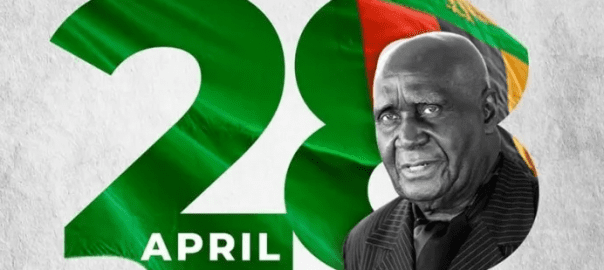
Kenneth Kaunda Day

Kenneth Kaunda Day is a day to celebrate the life and legacy of Kenneth Kaunda. Kaunda served as president of Zambia for 27 years. During his time in office, he oversaw the country’s transition from a colony to an independent nation. He was a great leader who helped to shape Zambia into the country that it is today. Continue reading