Tag Archives: United Kingdom

25Oct/26

Where Foreign Influence Becomes Illegal

Allegations, Cyber Surveillance, and Denials: The Conflict Over Jared Kushner’s Middle East Financial Dealings

Sat Oct. 24, 2026 /Mpelembe Media/ — An excerpt published by Vanity Fair from journalist Matthew Cole’s book Princes and Thieves alleges that former White House senior adviser Jared Kushner had access to undisclosed foreign bank accounts holding up to $2 billion supplied by Gulf leaders during Donald Trump’s first presidential administration. According to these claims, Dutch military intelligence (MIVD) intercepted Kushner’s personal smartphone activity starting in 2018 after discovering device screenshots stored on a Russian military intelligence (GRU) server in Rostov. Spies reportedly observed Kushner accessing Account Alpha at First Abu Dhabi Bank—which contained roughly $750 million under the cover of an Emirati charitable foundation with funds routed via Azerbaijani banks—as well as Account Beta, an estimated $1 billion repository at the Bank of Israel reportedly subject to transaction oversight by Israeli Prime Minister Benjamin Netanyahu. Continue reading →
25Oct/26

Racial Census Categories and Africa’s Economic Future

Deconstructing Digital Demography: How Viral Visualizations Distort Ethnic and Migration Data

Sat Oct. 24, 2026 /Mpelembe Media/ — The historical development of ethnic diversity in the United Kingdom has shifted from post-war Commonwealth migration to a state of complex super-diversity, where communities are increasingly differentiated by nationality, socio-economic background, legal status, and generational depth. Measurement systems have evolved from early administrative proxies like country of birth to multi-tiered census self-identification containing 19 detailed categories. However, public reporting and government research frequently continue to rely on broad “big 5” macro-categories (White, Black, Asian, Mixed, Other), which systematically mask critical micro-ethnic disparities, regional nuances, and diverging socio-economic outcomes in employment, education, and health. Continue reading →

25Oct/26

How Sewage Tomatoes Beat the AI Web

Mapping the Neighborhood: Reimagining Wikipedia as a Proximity-Based Experience

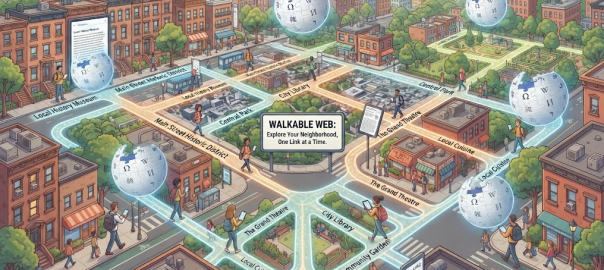
Sat Oct. 24, 2026 /Mpelembe Media/ — Local Wikipedia is an independent, unofficial web application developed by journalist, software developer, and data specialist Ed Jefferson that turns Wikipedia into a proximity-focused, ambient spatial encyclopedia. Conceived during lockdown and released in late 2026, the application operates on the core thesis of displaying geotagged Wikipedia articles located within a thirty-minute walk from the user. Users can set their location using native browser geolocation or manual text queries such as town names, landmarks, and UK postal codes. To balance visual clutter and system performance across varying geographic densities, the platform automatically adjusts its operational scope, expanding up to six miles in low-density rural areas or capping results at five hundred items in dense urban centers. Designed with client-side privacy in mind, positioning coordinates remain strictly within temporary local browser memory, and exported links are sanitized to ensure physical location data is never shared. Continue reading →

24Oct/26

How Foreign Investors Trade in Zambia

Investing in the Lusaka Securities Exchange: Comparative Pathways, Settlement Mechanics, and Treaty Tax Relief for UK Residents

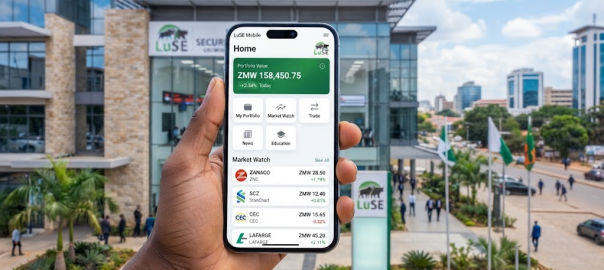
Sat Oct. 24, 2026 /Mpelembe Media/ — The Lusaka Securities Exchange (LuSE) operates under the regulatory supervision of the Securities and Exchange Commission (SEC) of Zambia pursuant to the Securities Act No. 41 of 2016, providing a centralized capital market with an equity market capitalization of approximately USD 2.30 billion. To prevent off-market fragmentation, Zambian law mandates that all public companies with 50 or more shareholders must register with the SEC and trade exclusively on a recognized stock exchange, effectively prohibiting Over-The-Counter (OTC) equity markets. The exchange functions across a two-tier market structure comprising the Main Board (Official List) for established public enterprises and the Quoted Tier for growth-phase entities. Zambia maintains a fully liberalized foreign exchange regime with no exchange controls, permitting up to 100% foreign ownership in private and listed assets—with narrow statutory exceptions, such as domestic cellular network operators required to float 10% of their shares on the exchange—and guaranteeing the repatriation of investment capital, dividends, and profits through the Bank of Zambia. Continue reading →

23Oct/26

Why Modern Election Polls Fail

The Mirage of Precision: How Partisan Nonresponse and Evolving Electorates Reshaped Election Polling

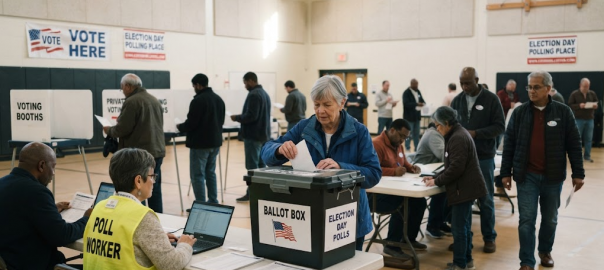
Fri Oct. 23, 2026 /Mpelembe Media/ — Modern pre-election polling has encountered severe structural challenges over recent presidential election cycles, primarily driven by partisan nonresponse bias rather than declining response rates alone. Across three consecutive presidential contests in 2016, 2020, and 2024, public polls systematically underestimated Republican vote shares relative to Democrats, producing signed errors that overstated Democratic margins by 3.1, 4.6, and 2.7 percentage points, respectively. While response rates dropped below five to ten percent across the industry, lower participation only generates systemic error when nonresponse correlates with political behavior. Voter cohorts exhibiting lower levels of institutional and social trust—disproportionately conservative, working-class, and rural populations—have increasingly opted out of survey research, creating persistent coverage gaps in raw polling samples. Continue reading →

21Oct/26

A Strategic Guide to Diaspora Investment, Incentives, and Land Acquisition in Zambia

Bridging Homeland and Diaspora: Civic Engagement, Traditional Gastronomy, and Travel Formalities for Zambians in the UK

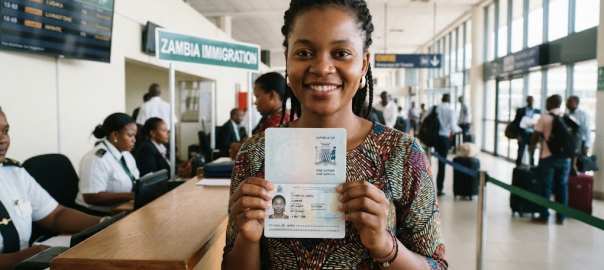
Wed Oct. 21, 2026 /Mpelembe Media/ — The transnational migration corridor connecting Zambia’s Copperbelt region to suburban centers across Greater London reflects a vital flow of skilled professionals, students, and families who maintain deep socio-economic, civic, and cultural ties. To support local community integration in the United Kingdom while driving social and economic development in Zambia, an extensive organizational ecosystem operates across multiple tiers. Grassroots groups like the London Association of Zambians (LazUK) deliver civic networking and localized peer support, while commercial promotion platforms such as UK Zambian Events Ltd host business expos and cultural festivals to celebrate heritage and facilitate cross-border trade. On a broader national scale, registered charities including the Zambia Society Trust (ZST) and the Scotland Zambia Partnership (SCOZAP) coordinate grassroots development—funding healthcare delivery at St Francis Mission Hospital, nurse sponsorships, community schooling through Kwasha Mukwenu, and poverty alleviation projects. Institutional engagement is anchored by the Ministry of Foreign Affairs and International Cooperation through its dedicated Diaspora Web Portal, which officially recognizes overseas citizens as the nation’s “Eleventh Province” and encourages active involvement in domestic land acquisition, agriculture, and climate resilience. Furthermore, international advocacy organizations like the Organization of Zambians Abroad (OZA) and professional bodies like the British Association of Social Workers (BASW) Diaspora Special Interest Group provide constitutional advocacy, trade joint ventures, and structured induction standards for overseas-qualified social workers and professionals. Continue reading →

18Oct/26

Zambian Tribal Governance on Google Cloud

From London to Chief Magodi: The Synthesis of Cloud Engineering and Traditional Heritage

Sun Oct. 18, 2026 /Mpelembe Media/ — Contemporary African diaspora families operating between Western metropoles and indigenous homelands are re-engineering traditional cultural governance into cloud-based ecosystems. As demonstrated by the multi-generational trajectory of the Mbale family in London, individuals maintain social mobility in sectors such as digital media, private corporate enterprise, and secondary education, while remaining formally anchored to their ancestral Tumbuka lineage. Central to this arrangement is the technological leadership of software engineer Sam Mbale, who utilizes Google Cloud infrastructure to power the Mpelembe Network. By systematically archiving family milestones alongside artificial intelligence initiatives and socio-cultural commentaries, the platform establishes a digital node that connects UK-based youth directly to the Chief Magodi traditional establishment in Eastern Zambia. This cloud framework enables diaspora members to maintain recognized tribal membership, clan solidarity, and royal heritage stakeholdership without requiring continuous physical residency.
Continue reading →

17Oct/26

Lily Mutamz Takes On the Zambian Government

From Munali to the UK Diaspora: The Evolution of Lillian Mutambo’s Transnational Advocacy

Sat Oct. 16, 2026 /Mpelembe Media/ — Lillian Mutambo’s political career began with direct community-level organizing in Zambia ahead of the 2021 General Election. After returning from the UK, she sought the UPND nomination for the Munali Constituency under the campaign slogan “Shape You Munali,” engaging in local economic empowerment initiatives such as distributing eggs to help youth and women start small businesses. Following intra-party selection disputes and friction within the UPND, Mutambo broke away to contest the seat as an Independent candidate in 2021, marking her formal entry into parliamentary politics. Continue reading →

04Oct/26

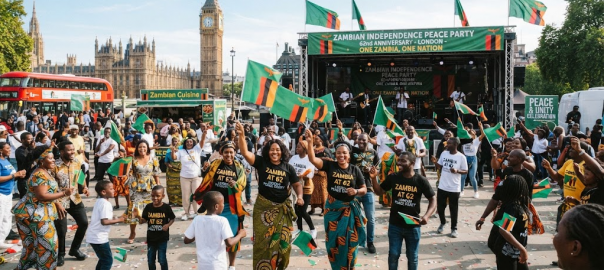
Inside London’s 62nd Zambian Independence Celebration

Events bring together diaspora members, community associations, and diplomatic partners under the national motto “One Zambia, One Nation”.

Sun 04 Oct 2026 /Mpelembe Media/ — Zambians living in the UK celebrate Independence Day through vibrant community galas, cultural showcases, live musical performances, and shared traditional meals held across major cities like London.

Continue reading →

19Sep/26

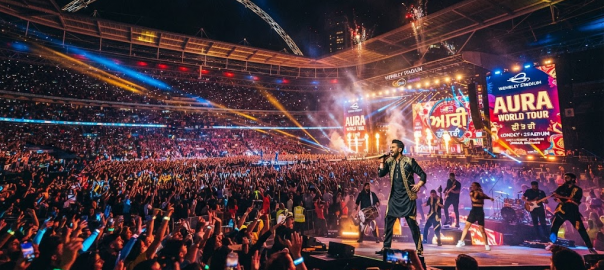
Diljit Dosanjh and the Punjabi Invasion

The Turbaned Tide: How Diljit Dosanjh Rewrote Global Pop History at Wembley Stadium

Sat Sep 19 2026 /Mpelembe Media/ — On September 12, 2026, Diljit Dosanjh made history as the first Punjabi artist to headline London’s iconic Wembley Stadium, bringing his global AURA World Tour to a sold-out crowd of over 90,000 fans. The performance represented a major cultural watershed, placing Punjabi music squarely on a premier international stage historically occupied by legendary acts like Michael Jackson, Prince, and Queen. Rather than diluting his artistic presentation or assimilating to meet Western crossover expectations, Dosanjh championed Punjabi language, attire, and identity throughout the show, opening with his signature exclamation “Punjabi Aa Gaye Wembley Oye!” and offering complimentary turban-tying for venue attendees. Continue reading →