Tag Archives: Currency

07Aug/26

Why the World Is Bypassing the Dollar

Zambia’s Closed-Loop Monetary Strategy: Balancing Retail De-Dollarization with Sovereign Copper Finance

Fri , Aug 0& 2026 /Mpelembe Media/ — Sub-Saharan Africa is undergoing a profound structural transformation as sovereign nations systematically seek to reduce their historic reliance on the United States dollar for reserves, trade invoicing, and domestic transactions. For decades, the US dollar served as the undisputed financial anchor across the continent, but this deep integration has exposed emerging economies to extreme macro-financial vulnerabilities, particularly during cycles of US Federal Reserve monetary tightening. When interest rates rise in Washington, global capital retreats to dollar-denominated assets, triggering sharp depreciations of local African currencies that inflate the cost of imported goods and escalate the servicing costs of dollar-denominated sovereign debt. This systemic vulnerability was starkly demonstrated in November 2020 when Zambia defaulted on a $42.5 million Eurobond payment, with the concurrent strength of the US dollar significantly exacerbating the domestic financial fallout. Furthermore, the geopolitical landscape of the mid-2020s has accelerated the search for alternative payments due to the perceived weaponization of Western-dominated dollar-clearing systems, prompting African policymakers to seek bilateral trade architectures and payment systems backed by the BRICS+ alliance to protect their economic sovereignty. Continue reading

09Mar/26

The Political Economy of Crisis, War Finance, and Inflation

Why the “Money Printer Goes Brrr”: The Ancient Roots of Modern Inflation

March 9, 2026 /Mpelembe Media/ — Inflation, Hyperinflation, and the “Money Printer” Relying on the printing press to fund state expenditures has historically been a primary catalyst for inflation and, in extreme cases, hyperinflation. This phenomenon stretches back to the fall of the Roman Empire, where successive emperors debased the silver Denarius to pay for military and administrative costs, ultimately destroying public faith in the currency. Modern examples of hyperinflation—such as Weimar Germany in 1923, Zimbabwe in 2008, and Venezuela—demonstrate the devastating consequences of unchecked monetary expansion, which annihilates savings, causes basic necessities to become unaffordable, and forces citizens to resort to bartering or foreign currencies

Continue reading

16Jul/24

Wirex and Visa Expand Partnership to Drive Web3 Payment Adoption

Wirex, the leading Web3 money app, and Visa, a world leader in digital payments, are thrilled to announce a partnership to further the use of digital currencies in the UK and the European Economic Area (EEA). Read more

17Apr/23

Reasons why Purchasing-power parity is a better metric for comparing people’s well-being than Exchange rates

April 17, 2023 /Economy/ — Purchasing-power parity (PPP) is a measure of the value of different currencies, taking into account the cost of living in different countries. It is often used to compare the standard of living in different countries.

Exchange rates, on the other hand, are the prices of one currency in terms of another. They are determined by supply and demand in the foreign exchange market.

There are a few reasons why PPP is a better metric for comparing people’s well-being than exchange rates. Continue reading

17Apr/23

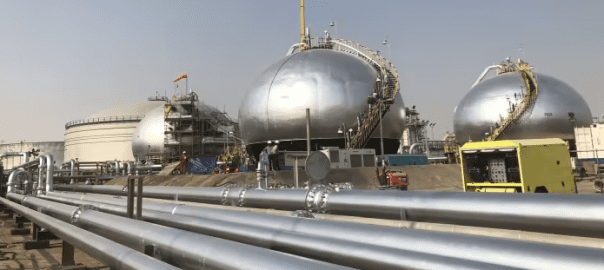
Future of the dollar, as oil deals are increasingly done in other currencies

April 17, 2023 /Economy/ — The future of the dollar as the world’s reserve currency is uncertain. The dollar has been the world’s reserve currency for over 70 years, but there is a growing trend of countries using other currencies for oil deals. This trend is being driven by a number of factors, including the rise of China and other emerging economies, the increasing volatility of the dollar, and the desire of some countries to reduce their reliance on the United States.
Continue reading