Category Archives: Healthcare

29Oct/26

Why Positive Thinking Backfires

Cultivating Psychological Flexibility: Synthesizing Behavioral Therapy, Cognitive Science, and Existential Thought

Thu, July 29 2026 /Mpelembe Media/ — Psychological Flexibility and Acceptance & Commitment Therapy (ACT) Psychological flexibility—defined as consciously contacting the present moment as a human being and guiding action based on chosen values—serves as the foundational mechanism of Acceptance and Commitment Therapy (ACT). Derived from Relational Frame Theory (RFT), ACT addresses the core problematic process of experiential avoidance, wherein individuals expend immense energy attempting to suppress, escape, or alter unpleasant thoughts, emotions, and bodily sensations. Cognitive fusion occurs when literal language and internal verbal rules dominate behavior, pulling individuals away from direct contingencies in their environment. Through core processes such as cognitive defusion, acceptance, present-moment awareness, self-as-context, values clarification, and committed action, ACT fundamentally alters an individual’s relationship to their internal experiences rather than attempting to forcibly modify cognitive content. Empirical research confirms that workplace interventions increasing psychological flexibility enhance employee health, innovation, software mastery, and performance targets while outperforming traditional individual-difference constructs like Emotional Intelligence or the Big Five personality traits. Continue reading →
29Oct/26

Hidden Drivers of Depression in Zambia

Beyond Individual Risk: How Community Context and Structural Inequalities Shape Mental Health Across Zambia

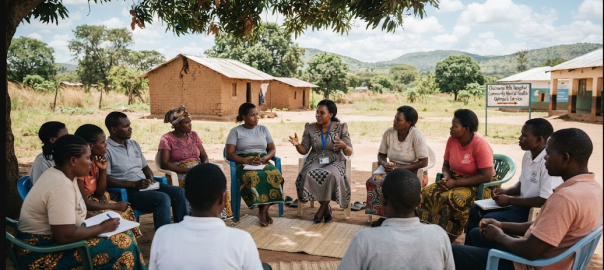
Thu, July 29 2026 /Mpelembe Media/ — National epidemiological evidence from the 2024 Zambia Demographic and Health Survey (ZDHS) demonstrates that approximately 8.2% of Zambian adults aged 15–59 years—or roughly one in twelve people—screen positive for probable depression, probable anxiety, or both. Utilizing validated screening tools including the Patient Health Questionnaire (PHQ-9) and Generalized Anxiety Disorder scale (GAD-7), the study establishes a national baseline for a population where epidemiological evidence was previously scarce. Symptom prevalence shows a distinct age trajectory, rising steadily from 4.2% among adolescents aged 15–19 to a peak of 11.5% among adults aged 40–44. While Zambia’s overall baseline is moderate compared to regional neighbors such as South Africa (where probable depression reaches 25.7%), it reflects a substantial mental health burden that remains largely undetected and untreated due to severe healthcare workforce constraints, structural low priority, and widespread social stigma. Continue reading →

29Oct/26

Why STIs Are Outsmarting Modern Medicine

Surging Cases and Superbug Strains: Inside Europe’s Escalating Sexual Health Crisis

Thu, July 29 2026 /Mpelembe Media/ — Bacterial sexually transmitted infections have reached record highs across Europe, led by a surge in gonorrhoea notifications that reached 106,331 cases in 2024—a 303% increase since 2015 and the highest level recorded since European surveillance began. Over the same decade, syphilis cases more than doubled to 45,577, while congenital syphilis cases nearly doubled in a single year to 140. Although men who have sex with men account for the majority of diagnoses (62% of gonorrhoea cases), infections are increasingly expanding into heterosexual populations and young adults, particularly women aged 20 to 24. Epidemiologists attribute this multi-pathogen resurgence to a complex interplay of post-pandemic behavioural shifts, declining condom usage, expanded HIV PrEP protocols that mandate routine screening and catch more asymptomatic cases, and structural healthcare barriers such as out-of-pocket testing fees required in 13 European countries. Continue reading →

23Aug/26

How holding a grudge breaks your body

Boundaries as Self-Preservation: The Crucial Clinical Distinction Between Forgiveness, Trust, and Reconciliation

Sun, Aug 23 2026 /Mpelembe Media/ — Forgiveness is a past-oriented, unilateral moral virtue and internal process where an injured individual chooses to let go of resentment, anger, and the desire for revenge. Because it takes place entirely within the victim’s own psychology, it requires no apology, change in behavior, or active participation from the offender to be fully achieved. Reconciliation, in contrast, is a present-oriented, bilateral relational process focused on restoring a damaged relationship and rebuilding mutual commitment. Reconciliation depends heavily on safety, accountability, changed patterns, and genuine remorse from the wrongdoer. Further distinct is trust, which is a future-oriented, conditional assessment of vulnerability based on a proven track record of predictable, benevolent behavior. Conflating these three concepts is clinically hazardous; it often leads to cheap forgiveness, secondary victimization, or intense emotional pressure on survivors to reconcile with unrepentant or unsafe actors. Continue reading →

28Jul/26

How alcohol rewires your body

Beyond the Point of No Return: Why Advanced Liver Damage Is No Longer Considered Irreversible

Tue, July 28 2026 /Mpelembe Media/ — These sources provide a comprehensive look at the long-term physiological damage caused by excessive alcohol consumption and the pathways toward physical recovery. They specifically highlight how chronic drinking disrupts blood sugar regulation, potentially leading to a reversible form of diabetes by damaging insulin-producing cells. Additional focus is placed on gut health, detailing how alcohol causes microbiome instability and inflammatory conditions like leaky gut syndrome. The texts also examine the severe impact on the pancreas and other vital organs, leading to chronic diseases and increased cancer risks. Ultimately, the authors emphasize that sobriety, combined with professional medical treatment and nutritional support, can restore systemic balance and improve mental well-being. Continue reading →

25Jul/26

How the FDA tracks foodborne outbreaks

Systems Modernization: “New Era of Smarter Food Safety

Fri, July 24 2026 /Mpelembe Media/ — Foodborne illness, commonly referred to as food poisoning, remains a formidable public health challenge in the United States. While our national food supply is among the most rigorously monitored in the world, the sheer complexity of modern global supply chains—ranging from field environments to processing facilities—means that contamination can occur at any stage. Therefore, the safest products still require “active consumer participation” as the final line of defense in the home. The scope of this challenge is best understood through the impact on the American population. Federal government estimates provide a sobering “so what?” for every household: * 48 Million Cases: Approximately 1 in 6 Americans suffer from a foodborne illness annually. * 128,000 Hospitalizations: These infections often lead to severe complications requiring clinical intervention. * 3,000 Deaths: For thousands of families, preventable foodborne pathogens result in fatal outcomes. While these statistics represent a broad public health burden, they are not inevitable. Most domestic cases can be prevented by transitioning from passive consumption to informed, science-based food handling. Continue reading →

21Jul/26

The Architecture of Autonomy Reclaiming Your Story

The Anxiety Prison: Practical Strategies For Daily Resilience

Tue, July 21 2026 /Mpelembe Media/ —Psychological distress is often far more than “temporary sadness” or “occasional worry.” In our modern experience, uncertainty and distress act as a persistent undercurrent of unease that can rob the present moment of joy and create exhausting “what if” loops in the mind. Whether stemming from career transitions, health challenges, or relational instability, this distress manifests as a deep-seated tension that disrupts sleep and impairs daily functioning.The core function of therapy is to provide a provider of safety, structure, and evidence-based tools. It serves as a laboratory for emotional resilience, helping to reframe the brain’s perception of threat and move a person from a state of survival into one of grounded calm. Continue reading →

18Jul/26

How Empathy Breaks Cognitive Confinement

The Battle Against ‘Stigma’: Empathy as Activism

Sat, July 18 2026 /Mpelembe Media/ — This theme of compassion is echoed in an overview of Princess Diana’s legacy, specifically her belief that personal happiness is invalid if it stems from the suffering of others. Her influence as a patron is further illustrated by Turning Point, a social care organization celebrating sixty years of service through an exhibition of symbolic objects that represent recovery and inclusion. Collectively, the texts document a shift toward person-centered care and the ongoing struggle to eliminate the social stigma surrounding addiction, disability, and mental illness. Together, they provide a multi-layered perspective on the progress of social welfare and the enduring power of empathy in public life. Continue reading →

03Jun/26

The Compass Guide: Navigating Your Relationship with Alcohol

The Biology of Drinking: How Dopamine and Stress Trap Your Brain on Autopilot

Wed, Jun 03 2026 /Mpelembe Media/ — The cycle of habitual drinking is driven by an automated neurological pattern known as the habit loop, which consists of a cue, a routine, and a reward. Rather than being a moral failing or a lack of discipline, this behavior becomes consolidated in the basal ganglia, causing drinking to run on autopilot without requiring conscious thought. Alcohol triggers a surge of dopamine, which acts as an anticipation and reinforcement engine, aggressively training the brain to expect and seek alcohol for relief or pleasure. Continue reading →

21May/26

Why Ebola Borders Must Stay Open

The 2026 Bundibugyo Ebolavirus Epidemic and Research Landscape

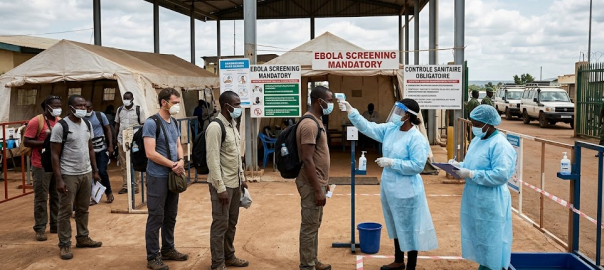
Thur, May 21 2026 /Mpelembe Media/ — The 2026 Global Health Emergency In May 2026, the World Health Organization (WHO) declared the outbreak of the Orthoebolavirus bundibugyoense (Bundibugyo virus) in the Democratic Republic of the Congo (DRC) and Uganda a Public Health Emergency of International Concern (PHEIC). The epidemic, which originated in the Ituri Province of the DRC and expanded into Kampala, Uganda, has exposed significant vulnerabilities in international disease surveillance and containment. The rapid spread of the virus has been exacerbated by a combination of cross-border dynamics, high-traffic mining operations, and regional humanitarian crises. Continue reading →