Tag Archives: Anxiety

29Oct/26

Hidden Drivers of Depression in Zambia

Beyond Individual Risk: How Community Context and Structural Inequalities Shape Mental Health Across Zambia

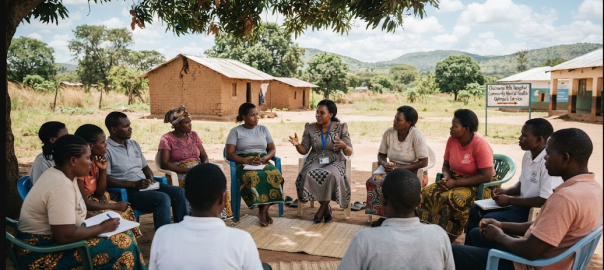
Thu, July 29 2026 /Mpelembe Media/ — National epidemiological evidence from the 2024 Zambia Demographic and Health Survey (ZDHS) demonstrates that approximately 8.2% of Zambian adults aged 15–59 years—or roughly one in twelve people—screen positive for probable depression, probable anxiety, or both. Utilizing validated screening tools including the Patient Health Questionnaire (PHQ-9) and Generalized Anxiety Disorder scale (GAD-7), the study establishes a national baseline for a population where epidemiological evidence was previously scarce. Symptom prevalence shows a distinct age trajectory, rising steadily from 4.2% among adolescents aged 15–19 to a peak of 11.5% among adults aged 40–44. While Zambia’s overall baseline is moderate compared to regional neighbors such as South Africa (where probable depression reaches 25.7%), it reflects a substantial mental health burden that remains largely undetected and untreated due to severe healthcare workforce constraints, structural low priority, and widespread social stigma. Continue reading →

06Oct/26

Why Staying Home Is the Ultimate Luxury

The Luxury of Doing Nothing: Redefining Success Through Peace, Boundaries, and Rest

In a hyper-connected world that constantly celebrates activity, socializing, and external validation, modern freedom and true luxury are being redefined around quietness, solitude, and intentional disconnection. Simple acts like staying at home, enjoying favorite snacks, and setting firm personal boundaries allow individuals to protect their peace and step away from relentless external noise. This mindset drives the shift from FOMO (the fear of missing out) to JOMO (the joy of missing out), where establishing screen boundaries and engaging in analog activities helps reclaim time, lower stress, and foster creativity and mental clarity. Continue reading →

23Aug/26

How holding a grudge breaks your body

Boundaries as Self-Preservation: The Crucial Clinical Distinction Between Forgiveness, Trust, and Reconciliation

Sun, Aug 23 2026 /Mpelembe Media/ — Forgiveness is a past-oriented, unilateral moral virtue and internal process where an injured individual chooses to let go of resentment, anger, and the desire for revenge. Because it takes place entirely within the victim’s own psychology, it requires no apology, change in behavior, or active participation from the offender to be fully achieved. Reconciliation, in contrast, is a present-oriented, bilateral relational process focused on restoring a damaged relationship and rebuilding mutual commitment. Reconciliation depends heavily on safety, accountability, changed patterns, and genuine remorse from the wrongdoer. Further distinct is trust, which is a future-oriented, conditional assessment of vulnerability based on a proven track record of predictable, benevolent behavior. Conflating these three concepts is clinically hazardous; it often leads to cheap forgiveness, secondary victimization, or intense emotional pressure on survivors to reconcile with unrepentant or unsafe actors. Continue reading →

21Jul/26

The Architecture of Autonomy Reclaiming Your Story

The Anxiety Prison: Practical Strategies For Daily Resilience

Tue, July 21 2026 /Mpelembe Media/ —Psychological distress is often far more than “temporary sadness” or “occasional worry.” In our modern experience, uncertainty and distress act as a persistent undercurrent of unease that can rob the present moment of joy and create exhausting “what if” loops in the mind. Whether stemming from career transitions, health challenges, or relational instability, this distress manifests as a deep-seated tension that disrupts sleep and impairs daily functioning.The core function of therapy is to provide a provider of safety, structure, and evidence-based tools. It serves as a laboratory for emotional resilience, helping to reframe the brain’s perception of threat and move a person from a state of survival into one of grounded calm. Continue reading →

19Jun/26

How road trips rewire your brain

The Awe Effect: How Wonder and Nature Protect Your Aging Brain

Fri, Jun 18 2026 /Mpelembe Media/ — The analysis comprehensively explores the profound neurological, psychological, and physiological effects that travel, leisure, and novel experiences have on the human body. The central themes focus on how stepping out of our daily routines can rewire our brains, strengthen our relationships, and occasionally trigger unexpected physical illnesses. Continue reading →

23Feb/26

The Invisible Disaster: AI Replacement Dysfunction and Worker Anxiety

23 Feb. 2026 /Mpelembe Media — Researchers have identified a burgeoning psychological crisis labeled AI replacement dysfunction (AIRD), which stems from the pervasive fear of professional obsolescence. This condition manifests as a specific cluster of symptoms including insomnia, paranoia, and a loss of identity triggered by the constant threat of automated labor. While not yet an official medical diagnosis, experts argue that the existential anxiety caused by industry leaders predicting massive job losses constitutes an “invisible disaster.” Evidence suggests that high-profile layoffs at major tech firms are already validating these fears and negatively impacting employee mental health. To address this, the authors advocate for specialized clinical screening to distinguish technology-related distress from traditional psychiatric disorders. Ultimately, the source emphasizes that the societal shift toward AI requires new community and medical frameworks to support a vulnerable workforce. Continue reading →

14Dec/25

How To Get a Natural High

Dec. 14, 2025 /Mpelembe Media/ — A “natural high” from endorphins is a feeling of euphoria and reduced pain that the body produces in response to certain activities or stress. These effects are a result of the body’s natural pain-relieving chemicals (endogenous morphine) binding to opioid receptors in the brain. Continue reading →
16Sep/25

Racism isn’t innate – here are five psychological stages that may lead to it

Steve Taylor, Leeds Beckett University

Research from Europe and Australia in recent years has found a rise in the number of people experiencing racism. Reports from the US and UK have indicated that most ethnic minority participants felt racism was getting worse. And a global study has found rising incidents of discrimination.

Continue reading →

22Jan/24

Mental health consequences of relentless money pursuit

Jan. 22, 2024 /Healthcare/ — There can be a significant link between the pursuit of money at any cost and mental illness. Here are some ways of this connection: Continue reading →

05Dec/23

How conspiracy theories can affect the communities they attack – new research

Daniel Jolley, University of Nottingham; Andrew McNeill, Northumbria University, Newcastle, and Jenny Paterson, Northumbria University, Newcastle

Scientists have learned a lot about why people believe in conspiracy theories and how they harm society over the past couple of decades. Yet little is known about how the groups targeted by conspiracy theories feel and behave.

Continue reading →