
Tag Archives: Diana

21Jul/26

The Architecture of Autonomy Reclaiming Your Story

The Anxiety Prison: Practical Strategies For Daily Resilience

Tue, July 21 2026 /Mpelembe Media/ —Psychological distress is often far more than “temporary sadness” or “occasional worry.” In our modern experience, uncertainty and distress act as a persistent undercurrent of unease that can rob the present moment of joy and create exhausting “what if” loops in the mind. Whether stemming from career transitions, health challenges, or relational instability, this distress manifests as a deep-seated tension that disrupts sleep and impairs daily functioning.The core function of therapy is to provide a provider of safety, structure, and evidence-based tools. It serves as a laboratory for emotional resilience, helping to reframe the brain’s perception of threat and move a person from a state of survival into one of grounded calm. Continue reading

18Jul/26

How Empathy Breaks Cognitive Confinement

The Battle Against ‘Stigma’: Empathy as Activism

Sat, July 18 2026 /Mpelembe Media/ — This theme of compassion is echoed in an overview of Princess Diana’s legacy, specifically her belief that personal happiness is invalid if it stems from the suffering of others. Her influence as a patron is further illustrated by Turning Point, a social care organization celebrating sixty years of service through an exhibition of symbolic objects that represent recovery and inclusion. Collectively, the texts document a shift toward person-centered care and the ongoing struggle to eliminate the social stigma surrounding addiction, disability, and mental illness. Together, they provide a multi-layered perspective on the progress of social welfare and the enduring power of empathy in public life. Continue reading

04May/26

The Toxic Chemistry of 1980s Film

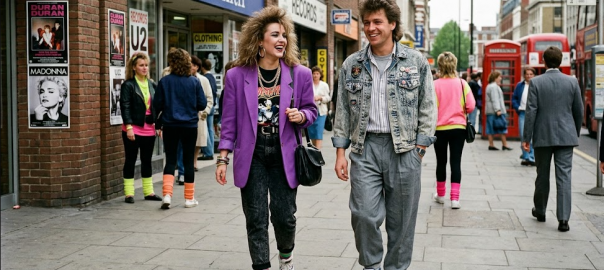
The 1980s: A Decade of Excess, Fashion, and Pop Culture

Mon, May 4 2026 /Mpelembe Media/ — This is a picture of the 1980s as a transformative era defined by conspicuous consumption, radical subcultures, and a highly performative visual aesthetic. Driven by shifting economic policies and the explosion of visual media, the decade’s culture was defined by several key themes:

Continue reading

22Mar/26

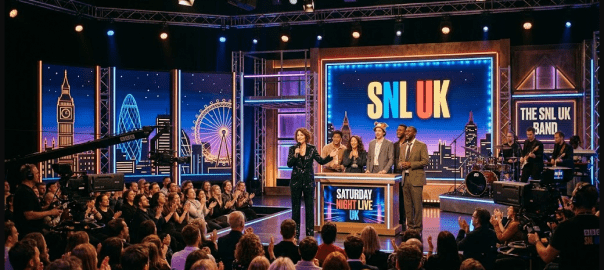
Live from London: Can SNL UK Thread the Needle Between American Spectacle and British Cynicism?

March 21, 2026 /Mpelembe Media/ — The premiere episode hosted by Tina Fey generated a highly polarized response. Professional critics offered mixed-to-positive reviews, noting that while the opening was “stilted,” the show ultimately “didn’t fail”. Reviewers praised the zingy “Weekend Review” segment, a surreal Paddington sketch, and Jack Shep’s accurate Princess Diana impression. However, critics also felt the production played the traditional SNL formula too safely, resulting in what some described as “tepid cosplay”.
Audiences were similarly divided. Some viewers reported “switching off” just moments into the political cold open mocking Prime Minister Keir Starmer, taking to social media to brand the debut as “excruciating” and “awful”. Conversely, other viewers were pleasantly surprised, praising the young cast for smashing it under pressure and delivering wonderfully British, laugh-out-loud moments.

Continue reading

02Sep/23

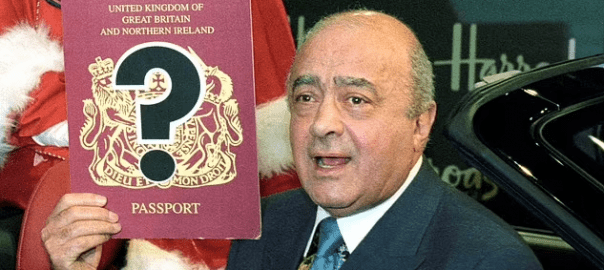
Why was Mohamed Al Fayed refused a British passport?

Sept. 2, 2023 /World/ — Mohamed Al Fayed was a wealthy Egyptian businessman who owned Harrods department store in London. He was also the father of Dodi Fayed, who died in a car crash with Princess Diana in Paris in 1997. Al Fayed has always maintained that the crash was not an accident, but was a murder plot carried out by the British establishment. He has accused the establishment of being prejudiced against him because he is a Muslim and an Arab. Continue reading

13Sep/22

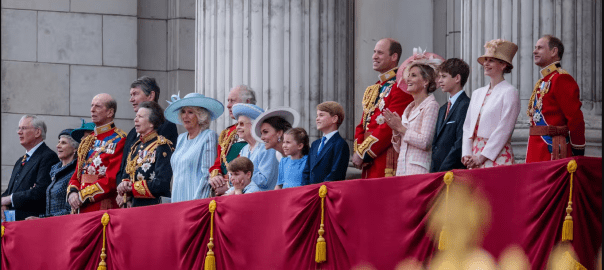
King Charles inherits crown with support for monarchy at record low – but future not set in stone

John Curtice, University of Strathclyde

The death of Queen Elizabeth II after 70 years on the throne has, of course, been met with widespread sadness and mourning. For most people in Britain, she is the only monarch they have known. Yet, inevitably, the mourning of her passing will be followed by a discussion about the future of the monarchy as an institution. After all, much has changed since 1951.

Although it may have provided the head of state for over a thousand years, in a modern democracy like Britain the monarchy will need to retain public consent if it is to survive.

Continue reading