
Category Archives: World

26May/26

How heat rewrites the rules of survival

When the Heat is On: Cognitive Decline, Aggression, and Ecological Collapse

Tue, May 26 2026 /Mpelembe Media/ — Extreme heat acts as a severe neuroenvironmental stressor that physically damages animal brains, leading to profound cognitive and behavioral impairments. As temperatures rise, animals suffer from localized cerebral hyperthermia, which causes neuronal silencing, neuroinflammation, and even the structural shrinkage of key brain regions responsible for memory and social behavior. This physiological damage manifests as degraded problem-solving abilities, impaired spatial navigation, and the rapid loss of learned associations across diverse species, from bumblebees and fish to birds and mammals. Continue reading

24May/26

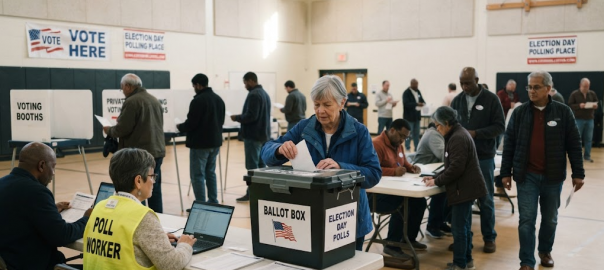
The Politics of Humiliation: Why Shared Cruelty is the Ultimate Community Builder

United by Contempt: The Psychological Roots of Authoritarianism and Affective Polarization

Sun, May 24 2026 /Mpelembe Media/ — The intersection of psychology and contemporary politics reveals that the rise of modern authoritarian and populist movements is largely driven by identity, fear, and malice rather than policy or economic grievances. At the center of this dynamic is the deployment of shared cruelty as a political strategy. Demagogues turn the degradation of vulnerable out-groups into a participatory public spectacle, which provides their supporters with a profound sense of community, pride, and euphoria. This shared joy in the suffering of others functions as a powerful social adhesive, securing fierce loyalty to the leader while distracting the public from the elite’s personal enrichment or political corruption. Continue reading

23May/26

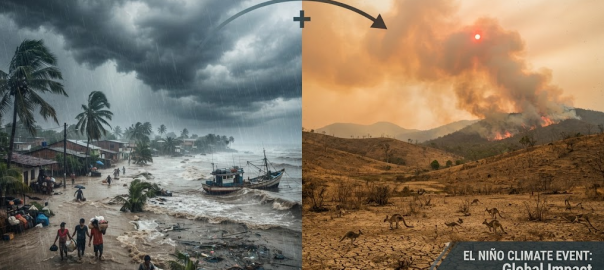
When the world’s biggest dams run dry

Rising Tides and New Horizons: Lake Kariba’s Hydrological Recovery and Energy Revival

Sat, May 23 2026 /Mpelembe Media/ —  Recent developments around Lake Kariba highlight a remarkable hydrological, economic, and safety transformation for the region. Following a severe El Niño-induced drought that caused water levels to plummet to just 13% of usable capacity in 2024, above-average rainfall in the 2025/2026 season has driven Lake Kariba’s water levels up to 42.40% by mid-May 2026. This rapid recovery has allowed the Zambezi River Authority to allocate 30 billion cubic meters of water for hydroelectric power generation, paving the way to ease crippling load-shedding in Zambia and Zimbabwe and triple electricity output at facilities like the Kariba South Power Station. Continue reading

20May/26

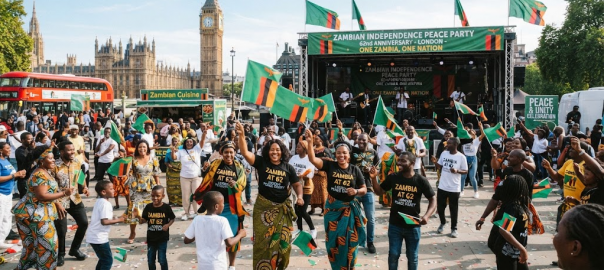
Zambia Tames Its Deadly Gold Rush

From Copper to Gold: Zambia’s State-Led Blueprint for Formalizing Artisanal Mining

Wed, May 20 2026 /Mpelembe Media/ — Zambia is actively diversifying its mining economy beyond its traditional reliance on copper by executing a structural overhaul of its artisanal and small-scale gold mining (ASGM) sector. The primary catalyst for this shift was a massive, unregulated gold rush in the Kikonge area of Mufumbwe in mid-2025. The sudden influx of thousands of informal miners led to catastrophic safety failures, the emergence of illicit smuggling markets, and deadly clashes with state security forces. Recognizing that military intervention was an unsustainable fix for an economic problem, the Zambian government shifted toward a commercial integration strategy. Continue reading

09Apr/26

From Doret Legore to Kemi Badenoch: Unpacking Britain’s Post-Racial Paradox

The Bureaucratic Class and the Culture War: Kemi Badenoch’s Vision for Britain

April 9, 2026 /Mpelembe Media/ —  The provided sources revolve around the contemporary British political and cultural landscape, specifically focusing on debates over race, institutional power, and conservative ideology. The material can be summarized across three interconnected themes: Continue reading

08Apr/26

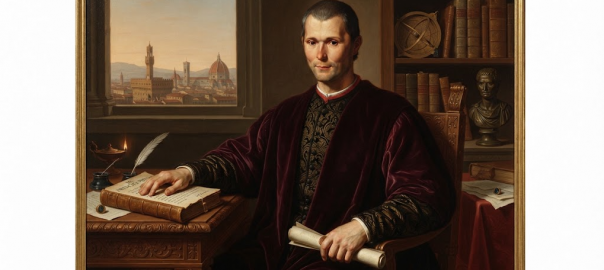
The Economic and Strategic Costs of Cosplaying Madness

Wrecking Ball Diplomacy: How ‘America First’ Tariffs and Transactionalism Alienated the World

April 8, 2026 /Mpelembe Media/ —  The “Madman Theory” is a concept in international relations suggesting that a leader can gain coercive bargaining leverage by appearing irrational, highly volatile, or indifferent to the costs of conflict. By cultivating a reputation for madness, a leader attempts to make otherwise incredible threats—such as initiating a nuclear war or destroying the global economy—appear credible, thereby forcing adversaries to concede to avoid a catastrophe.

Continue reading

08Apr/26

The Fragile 2026 Iran War Ceasefire

Global Markets Rally as U.S. Halts Operation Epic Fury for Islamabad Negotiations

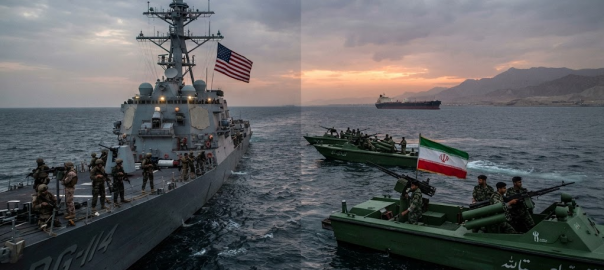
April 8, 2026 /Mpelembe Media/ — The 2026 war in the Middle East has reached a critical diplomatic turning point following a provisional two-week ceasefire between the United States and Iran, agreed upon on April 7, 2026. The truce, brokered through the mediation of Pakistani officials, was reached less than two hours before President Donald Trump’s deadline to launch devastating strikes against Iranian power plants and bridges. Prior to the agreement, Trump had escalated his rhetoric to unprecedented levels, warning that “a whole civilization will die” if Iran did not reopen the vital Strait of Hormuz to global shipping.

Continue reading

06Apr/26

Why Friction Prevents Escalation

U.S. politicians across the political spectrum have reacted with intense alarm to the President’s recent expletive-laden threats toward Iran, with several questioning his mental fitness for office.

April 6, 2026 /Mpelembe Media/ — The current conflict between the United States, Israel, and Iran began in late February 2026 with joint U.S.-Israeli “preemptive” military strikes on Iran, aiming to either eliminate the country’s nuclear capabilities or force regime change. In retaliation, Iran launched drones and ballistic missiles against Israel, as well as U.S. military targets located in the Gulf States and Jordan. Now in its sixth week, the war has severely destabilized the Middle East, killing over 3,500 people across the region—including more than 1,900 in Iran and 1,400 in Lebanon—while displacing millions. Continue reading

01Apr/26

NATO’s secret armies and modern hybrid warfare

Unmasking the Deep State: Cold War Subversion, the P2 Lodge, and Modern Whistleblowers

April 1, 2026 /Mpelembe Media/ — The historical sources detail the emergence of a covert “shadow government” architecture that originated during the Cold War. Initially organized by NATO, the CIA, and MI6 as clandestine “stay-behind” armies (such as Operation Gladio) to mount armed resistance in the event of a Soviet invasion, these networks frequently evolved into instruments of domestic political subversion. Across Western Europe and Turkey, right-wing paramilitary units employed a “strategy of tension,” staging false-flag terrorist attacks to spread public fear, discredit left-wing political movements, and justify authoritarian crackdowns. Prominent examples of this state-sponsored terror include the 1969 Piazza Fontana and 1980 Bologna massacres in Italy, as well as the Brabant massacres in Belgium.

Continue reading

31Mar/26

Institutional Analysis: The P2 Lodge and the Mechanics of the ‘State Within a State’

March 30, 2026 /Mpelembe Media/ — Experts investigate the intersection of clandestine organizations, criminal narratives, and institutional responses in Italian history. They primarily focus on Propaganda Due (P2), a secret Masonic lodge that functioned as a shadow government by infiltrating the highest levels of the military, media, and judiciary to advance a radical right-wing agenda. While some academic analysis explores the organizational criminology and cultural initiation rituals of the ‘Ndrangheta mafia, other materials highlight the fight for justice led by determined women. This anti-mafia effort is exemplified by the 2026 DIA calendar, which honors female activists, journalists, and whistleblowers who challenged mafia culture. Collectively, the texts document a legacy of political corruption, high-level conspiracies like the Bologna massacre, and the ongoing struggle to uphold civil legality against occult powers. Continue reading