Category Archives: World

21Aug/26

Blood and Copper in Zambia’s Stolen Election

Independent Audit Exposes Systematic Tallying Discrepancies in 30 Constituencies of Zambia’s Presidential Vote

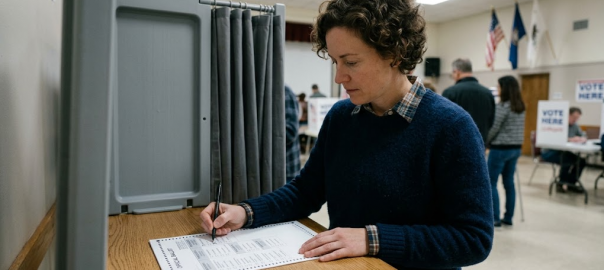
Fri, Aug 21 2026 /Mpelembe Media/ — On August 18, 2026, the Electoral Commission of Zambia (ECZ) declared the re-election of incumbent President Hakainde Hichilema (United Party for National Development – UPND) to a second five-year term. The official results indicated that Hichilema won 60.49% of the vote (2,965,326 votes), while his primary challenger, Brian Mundubile of the National Reconciliation Party for Unity and Prosperity (NRPUP)—representing the Tonse-Pamodzi Alliance—secured 37.87% (1,856,222 votes). The ECZ reported an official voter turnout of 57.23% out of 8,786,300 registered voters. Hichilema praised the electorate for their trust, pledging to focus on national unity and development, while the opposition immediately rejected the results, alleging systematic irregularities and promising legal challenges. Continue reading

20Aug/26

Zambia’s Landslide Victory and Opposition Crackdown

From Democratic Beacon to Shadow State — President Hichilema’s Co-option of the Judiciary and Post-Election Security Crackdowns

Thu, Aug 20 2026 /Mpelembe Media/ — Zambia’s standing as a historically resilient multiparty democracy in Southern Africa has been severely tested by the events surrounding the August 13, 2026, general election, which critics argue represent a systematic campaign by President Hakainde Hichilema’s administration to dismantle the country’s democratic framework. Although Hichilema came to power in 2021 on a reformist “New Dawn” platform pledging to restore the rule of law and depoliticize the civil service, his administration has increasingly co-opted state institutions to eliminate political opposition and consolidate executive hegemony, fueling fears of an engineered “life presidency”. The run-up to the election was marked by rising authoritarianism, including the weaponization of the Cyber Crimes Act of 2025 to arrest independent journalists like MacPherson Mukuka and Thomas Allan Zgambo, as well as a proposed Non-Governmental Organizations Bill designed to grant the government excessive control over civil society groups. Tensions escalated further following the death of former President Edgar Lungu in June 2025, which fragmented the opposition, and the Constitutional Court’s retroactive disqualification of Lungu from contesting the 2026 elections. Continue reading

20Aug/26

Military raids and treason in Zambia

Democracy in Peril: Military Raid, High-Profile Arrests, and Disputed Ballots Shackle Zambia’s Post-Election Landscape

Thu, Aug 20 2026 /Mpelembe Media/ — Zambia’s general election, held on August 13, 2026, resulted in the re-election of incumbent President Hakainde Hichilema for a second five-year term. According to the Electoral Commission of Zambia (ECZ), Hichilema secured 60.49% of the vote, defeating his primary challenger, Brian Mundubile of the National Reconciliation Party for Unity and Prosperity (NRPUP), who received 37.87%. While Hichilema expressed gratitude to voters and committed his second term to national unity, economic expansion, and debt recovery, the electoral process was instantly marred by major disruptions. On August 14, the ECZ temporarily suspended vote counting and results tabulation nationwide, citing localized violence against polling staff and the theft of marked ballots. Although the suspension was lifted the same day, international observer groups, including the European Union and the Southern African Development Community (SADC), voiced concerns over an uneven playing field, late constitutional and legal reforms, extended pauses in results tabulation, and reports of political intimidation. Continue reading

17Aug/26

The Jason Arday Scandal at Cambridge

The Weaponization of Integrity: Plagiarism Scandals, Diversity Initiatives, and the High Cost of Public Scrutiny

Mon, Aug 17 2026 /Mpelembe Media/ —  The academic discourse at the University of Cambridge has been deeply fractured by two overlapping controversies that forced a national reckoning over academic freedom, diversity, equity, and inclusion (DEI) initiatives, and professional misconduct. The tension began with Dr. Nathan Cofnas, an American philosophy postdoctoral researcher whose work historically challenged scientific consensus on race and intelligence. In February 2024, while holding a Leverhulme Fellowship at Cambridge, Cofnas published a Substack post advocating “race realism,” claiming that in a purely meritocratic system, Black representation among Harvard’s elite faculty would approach zero percent. This triggered intense student protests, resulting in Emmanuel College terminating his research associate status. Although a Cambridge University investigation cleared him of legal or regulatory violations, Cofnas resigned his fellowship amid severe social hostility. He subsequently launched a lawsuit with the Free Speech Union’s support; while the Peterborough County Court ruled that “hereditarianism” and “anti-woke” stances constitute protected philosophical beliefs under the Equality Act 2010, Cofnas ultimately lost the suit because the court found his highly provocative, confrontational delivery style had created a hostile student environment, making his dismissal a proportionate response. After relocating to Ghent University in Belgium, where he faced similar staff division and student protests, Cofnas shifted the focus of the culture wars by publicly targeting another prominent scholar. Continue reading

17Aug/26

Harriet Tubman led a Civil War raid

Reclaiming the Classroom: How Carter G. Woodson Fought the Violence of Miseducation

Mon, Aug 17 2026 /Mpelembe Media/ —  The foundational struggle for racial equality in America is deeply rooted in the preservation and legitimization of Black history as an active tool of resistance. Carter G. Woodson, recognized as the “Father of Black History,” dedicated his life to establishing separate institutional structures like the Association for the Study of Negro Life and History in 1915 and Negro History Week in 1926 to counter the “miseducation” of African Americans. Woodson argued in his landmark 1933 book, The Mis-Education of the Negro, that the American educational system culturally indoctrinated Black students to accept an inferior status by white-washing their contributions to world culture and history. He observed that controlling a population’s thinking eliminates the need to police their physical actions, as individuals conditioned to believe they are outcasts will naturally find their way to the “back door”. This early twentieth-century battle to reclaim the narrative highlights that systemic control begins in the classroom, a reality that echoes in modern debates over how race and history are taught in public schools. Continue reading

17Aug/26

Zambia’s 2026 Election and 22-Hour Blackouts

The Defining Moments of Zambia’s 2026 Election

Mon, Aug 17 2026 /Mpelembe Media/ —  These sources provide a comprehensive look at the 2026 Zambian general election, covering the candidates, legal reforms, and shifting political alliances. Incumbent Hakainde Hichilema sought a second term against a fractured opposition, with Brian Mundubile emerging as his primary challenger representing the Tonse Alliance. The reports detail significant constitutional amendments that expanded the National Assembly and introduced a mixed-member proportional representation system. Analysts highlight concerns regarding legislative maneuvering, economic grievances like the high cost of living, and accusations of gerrymandering. Despite reports of isolated violence and a temporary pause in vote counting, the data indicates a high voter turnout among the nearly nine million registered citizens. Ultimately, the records illustrate a tense political landscape defined by regional voting blocks and the ongoing test of Zambia’s democratic institutions. Continue reading

15Aug/26

Zambia’s 2026 Election in the Dark

Zambia Suspends Election Count Amid Violence, Then Resumes
Sat , Aug 15 2026 /Mpelembe Media/ — Zambia’s Electoral Commission halted result announcements on August 14 after attacks on staff and stolen ballots in some areas, an unprecedented step under the Electoral Process Act. Incumbent President Hakainde Hichilema called for peace amid encouraging early signs, while challenger Brian Mundubile declared victory from his party’s tallies and warned of potential interference. The suspension lasted hours; counting resumed that evening with extra security, and partial results on August 15 showed Hichilema leading in key spots like Southern Province.

Continue reading

04Aug/26

Bond Rallies and Blackouts in Zambia

Zambia’s 2026 Election: A High-Stakes Two-Horse Race Decided by Economic Squeeze and Drought

Tue , Aug 04 2026 /Mpelembe Media/ — Zambia’s general election on August 13, 2026, represents a pivotal, alliance-driven contest that will test the country’s democratic resilience and economic direction. Although fourteen presidential candidates are officially cleared to run, the election is fundamentally a two-horse race between incumbent President Hakainde Hichilema of the United Party for National Development (UPND) and opposition challenger Brian Mundubile. Hichilema enters the race backed by an expanded 15-party UPND Alliance, leveraging the power of incumbency. His challenger, Mundubile—a 55-year-old lawyer, accountant, and former government chief whip—is running under the National Reconciliation Party for Unity and Prosperity (NRPUP) banner after unifying a highly fractured opposition under the Tonse–Pamodzi Alliance. Continue reading

04Aug/26

Five Elders Guarding Africa’s Borderless Future

Institutionalizing Peace: The African Union, NEPAD, and the Future of Continental Governance

Tue , Aug 04 2026 /Mpelembe Media/ —The provided sources collectively chronicle Africa’s historical journey from colonial subjugation toward liberation, heavily emphasizing the enduring spirit of Pan-Africanism. A central figure in this narrative is Dr. Kenneth Kaunda, the first president of Zambia, who led his nation to independence in 1964 and became a patriarch of the continent’s anti-colonial struggles. Through his philosophical framework of Zambian Humanism and the unifying national slogan “One Zambia, One Nation,” Kaunda sought to build a cohesive, multi-ethnic society free from the exploitation of man by man. Internationally, he—alongside contemporaries like Julius Nyerere and Kwame Nkrumah—offered crucial support to regional liberation movements fighting against apartheid and minority rule in Southern Africa. While Kaunda’s legacy involves complex debates regarding his period of one-party rule and post-colonial economic challenges, his published works, such as the seminal 1962 autobiography “Zambia Shall Be Free,” remain foundational texts that articulate the ethical and political defense of African self-determination. Continue reading

03Aug/26

The Memoir of Dr. Kenneth Kaunda

A Wake-Up Call for the Diaspora and Economic Sovereignty Institutionalizing Peace:

Mon, Aug 03 2026 /Mpelembe Media/ — The provided sources collectively chronicle Africa’s historical journey from colonial subjugation toward liberation, heavily emphasizing the enduring spirit of Pan-Africanism. A central figure in this narrative is Dr. Kenneth Kaunda, the first president of Zambia, who led his nation to independence in 1964 and became a patriarch of the continent’s anti-colonial struggles. Through his philosophical framework of Zambian Humanism and the unifying national slogan “One Zambia, One Nation,” Kaunda sought to build a cohesive, multi-ethnic society free from the exploitation of man by man. Internationally, he—alongside contemporaries like Julius Nyerere and Kwame Nkrumah—offered crucial support to regional liberation movements fighting against apartheid and minority rule in Southern Africa. While Kaunda’s legacy involves complex debates regarding his period of one-party rule and post-colonial economic challenges, his published works, such as the seminal 1962 autobiography “Zambia Shall Be Free,” remain foundational texts that articulate the ethical and political defense of African self-determination. Continue reading