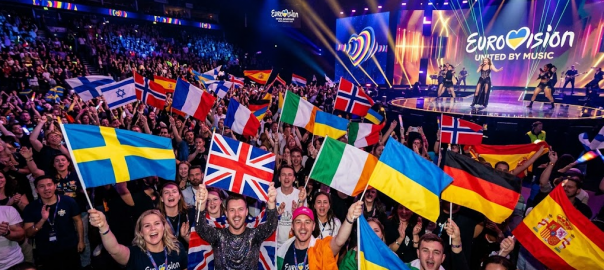
Sat, May 16 2026 /Mpelembe Media/ — The 70th edition of the Eurovision Song Contest is taking place in Vienna, Austria, following JJ’s victory for the country in 2025. While it marks a major milestone for the longest-running annual international televised music competition, the 2026 event is defined by profound geopolitical crises, sweeping rule changes, and intense musical competition. Continue reading
Tag Archives: Finland
NATO’s secret armies and modern hybrid warfare
Unmasking the Deep State: Cold War Subversion, the P2 Lodge, and Modern Whistleblowers
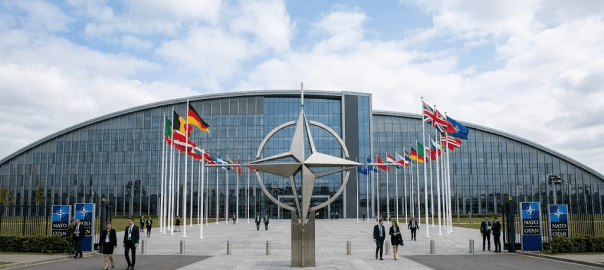
April 1, 2026 /Mpelembe Media/ — The historical sources detail the emergence of a covert “shadow government” architecture that originated during the Cold War. Initially organized by NATO, the CIA, and MI6 as clandestine “stay-behind” armies (such as Operation Gladio) to mount armed resistance in the event of a Soviet invasion, these networks frequently evolved into instruments of domestic political subversion. Across Western Europe and Turkey, right-wing paramilitary units employed a “strategy of tension,” staging false-flag terrorist attacks to spread public fear, discredit left-wing political movements, and justify authoritarian crackdowns. Prominent examples of this state-sponsored terror include the 1969 Piazza Fontana and 1980 Bologna massacres in Italy, as well as the Brabant massacres in Belgium.
Beyond the Hype: 7 Hard Truths About Securing the Modern Decentralized Stack
The 2026 Crypto Compliance Mandate: Navigating MiCA and the End of the Grandfathering Era
28 Feb. 2026 /Mpelembe Media/ — The July 2026 Deadline and “Passporting” The European Union is fundamentally restructuring its digital asset market through the Markets in Crypto-Assets Regulation (MiCA). By July 1, 2026, the transitional “grandfathering” phase will permanently close, meaning any Crypto-Asset Service Provider (CASP) operating without full MiCA authorization will be doing so illegally. While some member states, like the Netherlands and Sweden, opted for much shorter transition periods that have already expired, the July 2026 date is the absolute maximum limit across the EU. Securing this license grants firms EU-wide “passporting” rights, allowing them to serve clients across all 27 member states with a single authorization. Continue reading
AI-Assisted Nursing: A New Research Project
Jan. 23, 2025 /Mpelembe Media/ — A Finnish research project, part of the European ITEA PROFIT initiative, explores using artificial intelligence to alleviate the workload of nurses. The project aims to develop AI tools for tasks like patient registration and information review, freeing up nurses for direct patient care. Continue reading
Half the world will vote in 2024, but how many elections will be fair?
Toby James, University of East Anglia and Holly Ann Garnett, Royal Military College of Canada
This year has been widely proclaimed to be the year of elections, with national elections expected in at least 64 countries. This means that half of the world’s population will have the opportunity to change their government, choose their representatives and indirectly shape policy. It began as a year of hope – and the prospect of democratic empowerment.
2024: The year of democratic elections
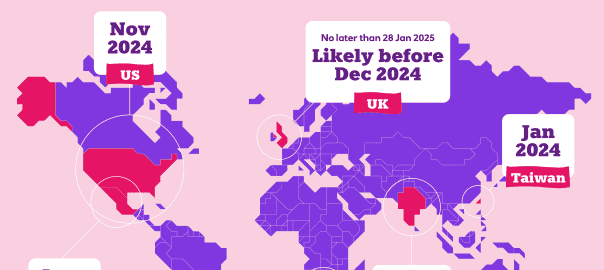
Jan. 2, 2024 /Politics/ — 2024 is shaping up to be a bumper year for elections! Here are some noteworthy examples beyond the UK and USA: Continue reading
Universal basic income trial in UK
June 5, 2023 /Finance/ — There is a universal basic income (UBI) trial being conducted in the UK. The trial is being led by the Welsh Government and is being funded by the UK government. The trial began in September 2021 and will run for three years.
The trial started in September 2021, and it is scheduled to run for three years. The trial is being conducted in two parts: Continue reading
The ‘gay world cup’: why LGBTQ+ audiences love Eurovision
Matt Weaver, University of Portsmouth
In 1956, seven European countries – Belgium, France, Italy, Luxembourg, the Netherlands, Switzerland and West Germany – gathered in Lugano, Switzerland for the first ever Eurovision Song Contest. The competition was only broadcast in select countries, meaning only a small number of viewers watched Swiss entry Lys Assia win the grand prize with the song Refrain.
happiness curve is wrong: many people do not get happier as they get older
David Bartram, University of Leicester
On average, happiness declines as we approach middle age, bottoming out in our 40s but then picking back up as we head into retirement, according to a number of studies. This so-called U-shaped curve of happiness is reassuring but, unfortunately, probably not true.