Category Archives: World

05Sep/26

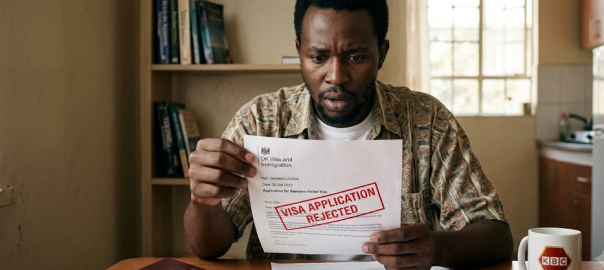
Emmanuel Mwamba from statecraft to sedition

Diplomacy, Dissidence, and Digital Resistance: The Life and Career of Emmanuel Mwamba

Sat Sep 05 2026 /Mpelembe Media/ — Emmanuel Mwamba was born on April 18, 1971, in the mining hub of Luanshya within the Copperbelt Province of Zambia. He completed his secondary education at Roan Antelope Secondary School and subsequently earned a Diploma in Journalism and Public Relations from Evelyn Hone College. He expanded his qualifications globally, obtaining a Master of Business Administration from Edith Cowan University in Australia and a Master in Peace Studies from the Institute of Peace & Security Studies at Addis Ababa University. After initial employment at the Zambia National Commercial Bank, he entered the political arena as the administrative secretary and spokesperson for Zambia’s second president, Frederick Chiluba. During this time, Mwamba aggressively defended Chiluba against state-directed corruption prosecutions. This loyalty caused friction with the administration of Levy Mwanawasa, resulting in the termination of Mwamba’s probationary contract in October 2004, though he continued serving Chiluba in a private capacity. Following the reconciliation of Chiluba and Michael Sata in 2005, Mwamba transitioned his allegiance to the Patriotic Front (PF). Continue reading

04Sep/26

The UN Vote to Correct the Map

The Map as a Mental Model

The core objective of this guide is to deconstruct the hegemonic visuality of the 16th-century world map—a navigation tool that has metastasized into a standard classroom fixture, inadvertently codifying a biased global worldview. As critical geographers, we recognize that a map is never a neutral reflection of reality; it is a mental model that dictates the “geopolitical imaginary” of students from their earliest years of schooling. By distorting the scale of continents, maps influence how the power, agency, and place of diverse civilizations are internalized.As the “Correct the Map” campaign articulates in its core philosophy:”A fair world begins with a fair map.”When our primary visual tools marginalize the Global South, they perpetuate a form of  cartographic silencing . To dismantle this bias, we must first analyze the technical “structural flaws” that transformed a revolutionary maritime aid into a pillar of Eurocentric hegemony. Continue reading

01Sep/26

Keffe D’s ego solved Tupac’s murder

Justice at Last: Duane “Keffe D” Davis Convicted of Tupac Shakur’s 1996 Murder

Tue Sep 01 2026 /Mpelembe Media/ — Nearly thirty years after the drive-by shooting that claimed the life of hip-hop icon Tupac Shakur, a Las Vegas jury has found former South Side Compton Crips leader Duane “Keffe D” Davis guilty of first-degree murder. Deliberating for less than three hours following a weeks-long trial, the panel of twelve jurors delivered the historic verdict in Clark County District Court under Judge Carli Kierny. While prosecutors did not allege that the 63-year-old Davis actually pulled the trigger, they successfully demonstrated that he acted as the “shot caller” who acquired the weapon, assembled the crew, and coordinated the fatal ambush. Under Nevada law, any individual who aids, abets, or orchestrates a murder shares equal criminal liability as the principal shooter. Continue reading

28Aug/26

Zambia’s Padlocked Courts and Treason Charges

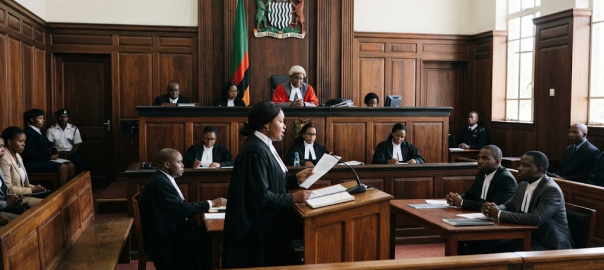
A Fragile Stability Shaken: Suspicious Raid, Court Blockade, and Treason Charges Roil Zambia

Fri Aug 27 2026 /Mpelembe Media/ — The 2026 Zambian general election, held on August 13, resulted in the re-election of incumbent President Hakainde Hichilema of the United Party for National Development (UPND) with 60.49% of the vote, defeating his primary challenger Brian Mundubile of the Tonse Alliance’s National Reconciliation Party for Unity and Prosperity (NRPUP), who received 37.87%. While the Electoral Commission of Zambia (ECZ) declared Hichilema the winner, the contest was conducted on a deeply uneven playing field due to late-stage constitutional and legislative overhauls that structurally favored the ruling party. These included the Constitutional Amendment Act No. 13 of 2025 and the subsequent Electoral Processes Act No. 12 of 2026, which were passed in May 2026 during the week parliament dissolved, just three months prior to the election. This late enactment, combined with an opaque boundary delimitation exercise completed on April 16, 2026, which added 70 new constituencies largely favoring rural areas traditionally leaning toward the UPND, left minimal time for public education and structurally altered the legislative balance. Furthermore, international and domestic observer missions, including the European Union and the Christian Churches Monitoring Group (CCMG), raised serious concerns over the misuse of state resources, selective enforcement of campaign schedules, and parallel vote count discrepancies suggesting vote inflation in several constituencies. Continue reading

27Aug/26

Rebuilding after the thirty-minute Himalayan flood

Beyond the Storm: Why Repeated Hazards Trigger Systemic Collapse and Compounded Human Tolls

Thu Aug 27 2026 /Mpelembe Media/ — The accelerating pace of human-caused climate change is compressing the temporal intervals between extreme meteorological and geophysical events, giving rise to a critical systemic challenge known as the recovery gap. This gap represents the temporal misalignment between the duration required for a community to fully restore its infrastructural, economic, and institutional capacities, and the actual interarrival time between consecutive damaging hazards. Traditional disaster risk management has historically evaluated disasters through a static lens, assuming that extreme events are discrete, isolated occurrences and that communities always return to a fully recovered baseline before the next event. In reality, a subsequent hazard rarely encounters the same community that existed before the first; instead, it strikes a system with less resilience, depleted financial reserves, struggling businesses, and weakened infrastructure. Because of these overlapping demands, the compounding damages of consecutive disasters are highly non-linear, often escalating long-term losses far beyond the simple sum of individual impacts. Continue reading

27Aug/26

Restructuring Trump’s Second-Term Immigration Policy

The High Cost of Silence: Tracing the Economic Fallout and Political Volatilities of America’s New Deportation Model

Thu Aug 27 2026 /Mpelembe Media/ — The second Trump administration initially launched its restrictive agenda with highly visible, militarized enforcement campaigns like “Operation Metro Surge” to project an uncompromising stance on domestic security. However, this overt, theatrical strategy hit an immediate crisis following a series of fatal enforcement errors, most notably the killing of Renée Nicole Macklin Good—an unarmed thirty-seven-year-old writer, poet, and U.S. citizen—by an ICE agent in Minneapolis on January 7, 2026. This tragedy, along with other fatal shootings, sparked nationwide protests, public outrage, and state-led lawsuits, inducing a major shift in public opinion. In response to this mounting political liability, the administration underwent a strategic restructuring: it replaced high-profile enforcers, removed Homeland Security Secretary Kristi Noem, and privately instructed congressional allies to drop the politically sensitive phrase “mass deportations” in favor of targeting violent criminals. Continue reading

27Aug/26

Trump’s Silverback Strategy and the Donroe Doctrine

A Weapon of Mass Disruption: Why the 2026 Iran War Exposed the Limits of American Might

Wed, Aug 26 2026 /Mpelembe Media/ — Donald Trump’s second term has transitioned into a highly volatile era characterized not by a passive “lame duck” status, but by what analysts call the “Silverback Presidency.” This statecraft style mirrors an aging mountain gorilla that, sensing its time is short and its dominance threatened, resorts to aggressive, unpredictable outbursts rather than yielding to institutional gridlock. Operating under a framework of personal grievance, vengeance, and an explicit rejection of the post-war rules-based order, Trump has openly asserted that his executive actions are limited only by his “own mind and morality”. Free from the perceived constraints of international law, the administration has launched high-stakes global maneuvers designed to forcefully project American power and secure a disruptive, nationalist legacy. Continue reading

24Aug/26

Zambia’s election petition hits a padlocked court

Separation of Powers Fractured: Armed Forces Lock Down Zambian Courts as Inauguration Looms

Mon, Aug 24 2026 /Mpelembe Media/ — The general election in Zambia on August 13, 2026, concluded with the Electoral Commission of Zambia declaring incumbent President Hakainde Hichilema of the United Party for National Development (UPND) the winner with 60.49% of the vote, securing a second term over his chief opponent, Brian Mundubile of the National Reconciliation Party for Unity and Prosperity (NRPUP), who received 37.87%. Mundubile immediately rejected these results, citing serious irregularities, vote fraud, and significant ballot count discrepancies, which were echoed by independent parallel vote tabulations and international observer reports. Concerns were heightened by a temporary suspension of vote counting on August 14 and subsequent heavy military deployment at tallying centers, which observers noted compromised the transparency of the results process. Continue reading

24Aug/26

How French conspiracy theories ignited Colombia

Architects of the Esoteric, Victims of the Myth: The Dual History of Jews and Freemasonry

Sun, Aug 23 2026 /Mpelembe Media/ — The historical intersection of Speculative Freemasonry, Jewish mysticism, and modern political conspiracism is defined by a deep tension between the actual integration of Hebrew iconography within early Masonic ritual and the weaponized conspiracy theories that arose to demonize both groups. When Speculative Freemasonry emerged in the early eighteenth century, its founders adopted the building of King Solomon’s Temple in Jerusalem as its central allegorical framework. This architectural focus was represented by designing the physical layout of lodges to mirror the Temple, utilizing the columns of Jachin and Boaz, and developing rituals centered on the legend of the master architect Hiram Abif. This symbolic integration was facilitated not by direct Jewish infiltration, but by the intellectual legacy of Renaissance humanism and Christian Kabbalism. During the fifteenth and sixteenth centuries, Christian scholars sought to integrate Jewish mystical texts, particularly the Zohar, into Christian theology as a divine science that prefigured Christian mysteries. Consequently, early Speculative Masonic innovators drew heavily upon this Christian Kabbalistic corpus, to the extent that figures like William Preston conceived of the lodge as a “Masonic University” of the “Cabala”. Continue reading

21Aug/26

The 2026 Super El Niño Time Machine

Double-Shock Inflation: How the Convergence of El Niño and the Middle East Fertilizer Crisis Threatens Global Food Security

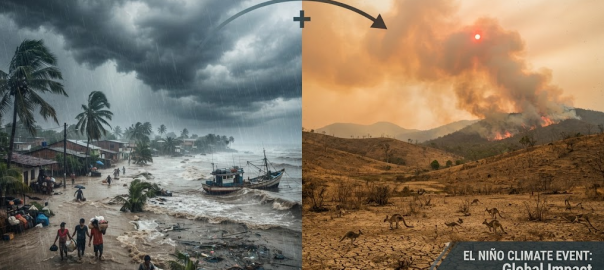
Fri, Aug 21 2026 /Mpelembe Media/ — The equatorial Pacific Ocean is currently experiencing a historic disruption in ocean-atmosphere dynamics as an exceptionally powerful El Niño event steadily intensifies. Measured by the Relative Oceanic Niño Index (RONI), which isolates localized ocean-atmosphere coupling from background thermodynamic warming to present a clearer picture of dynamical impacts, there is a 69% probability that the 2026–2027 cycle will rank as the most powerful El Niño on record since 1950. Leading seasonal forecast models show a remarkably consistent and intense warming signal, with sea surface temperature anomalies in the central-eastern equatorial Pacific’s Niño 3.4 region already running 2.6°C above the rolling average in August 2026 and projected to peak at an unprecedented 3.9°C anomaly in November. This extraordinary warmth far outpaces previous historical extreme events like the 1997–1998 and 2015–2016 episodes, with the UK Met Office declaring it a potentially “unprecedented” weather pattern that is likely the strongest in living memory.

Continue reading