
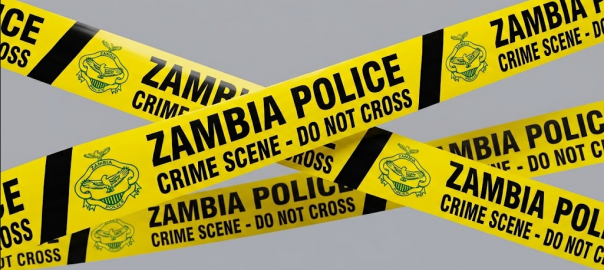
Separation of Powers Fractured: Armed Forces Lock Down Zambian Courts as Inauguration Looms
Mon, Aug 24 2026 /Mpelembe Media/ — The general election in Zambia on August 13, 2026, concluded with the Electoral Commission of Zambia declaring incumbent President Hakainde Hichilema of the United Party for National Development (UPND) the winner with 60.49% of the vote, securing a second term over his chief opponent, Brian Mundubile of the National Reconciliation Party for Unity and Prosperity (NRPUP), who received 37.87%. Mundubile immediately rejected these results, citing serious irregularities, vote fraud, and significant ballot count discrepancies, which were echoed by independent parallel vote tabulations and international observer reports. Concerns were heightened by a temporary suspension of vote counting on August 14 and subsequent heavy military deployment at tallying centers, which observers noted compromised the transparency of the results process.
Following the closing of the polls, the political climate deteriorated rapidly as state security forces initiated a severe clampdown on opposition figures. During a joint military and police raid on a residence where Mundubile was present on August 14, former works and transport minister and sitting lawmaker Mutotwe Kafwaya was shot and killed by security forces. Fearing immediate arrest and physical harm under allegations of plotting an armed insurrection, Mundubile and his vice-presidential running mate, Makebi Zulu, went into hiding and sought refuge at a United Nations agency headquarters in Lusaka. Police subsequently issued public summonses for the opposition candidates, accusing them of evading interrogation over threats to national security.
The post-election standoff reached a critical juncture on Monday, August 24, 2026, the absolute constitutional deadline for the opposition to file a formal challenge in the Constitutional Court, which would have automatically stayed Hichilema’s scheduled September 1 inauguration. Citing vague security concerns, the judiciary’s chief administrator issued an internal directive instructing staff not to report to work, while armed police and military forces physically barricaded the High, Supreme, and Constitutional Courts in Lusaka, wrapping them in police tape and declaring them “crime scenes”. Lawyers attempting to file the election petition were forcibly turned away by armed guards, drawing sharp condemnation from the Law Association of Zambia and human rights groups, who labeled the shutdown an unprecedented suppression of democratic due process and a severe threat to the country’s rule of law. In response to this domestic judicial blockade, legal experts have noted that opposition lawyers may seek regional recourse through the COMESA Court of Justice, utilizing a bilateral agreement signed between the regional court and the Law Association of Zambia in June 2026.
The New Dawn’s Long Twilight: Six Strategic Lessons from Zambia’s 2026 Election
The Hook: A Referendum on Resilience
When President Hakainde Hichilema swept into office in 2021, his “New Dawn” administration was heralded as a democratic masterclass for a continent in flux. By August 2026, however, that dawn was being treated less as a revolutionary awakening and more as a grueling stress test. While Lusaka’s technocrats campaigned on the cold logic of a sovereign debt-restructuring triumph and copper sector expansion, the electorate remained tethered to a more visceral reality: a staggering cost of living, systemic unemployment, and a power grid in perpetual crisis. The 2026 poll was less a democratic exercise and more a high-stakes referendum on whether a macroeconomic “recovery” that remains unfelt at the dinner table can ever sustain a political mandate.
Takeaway 1: The “Ghost” in the Election—Lungu’s Enduring Shadow
Though former President Edgar Lungu died in 2025, his presence haunted the 2026 campaign with a potency few living rivals could match. Strategically, the opposition’s path was cleared well before his passing; on December 10, 2024, the Constitutional Court ruled Lungu ineligible for a third term, forcing a shift in the Patriotic Front’s machinery. Brian Mundubile, navigating a fractured Tonse Alliance split between factions led by Given Lubinda and Dan Pule, eventually moved from a Forum for Democracy and Development (FDD) ticket to the National Reconciliation Party for Unity and Prosperity (NRPUP) to carry the torch. The campaign effectively weaponized a bitter dispute over Lungu’s burial site to paint Hichilema as a leader lacking in cultural and historical reverence.”At a campaign rally in Chinsali, Mundubile said that he and Makebi Zulu would give Lungu a dignified burial if elected.”Mundubile’s strategic reliance on this “ghost” candidacy sought to bridge the chasm between the alliance’s warring factions. By turning the ballot into a proxy battle over a dead man’s legacy, the opposition successfully exploited the nostalgic grievances of a base that felt excluded from the UPND’s vision.
Takeaway 2: A Quiet Revolution in Representation
The 2026 cycle saw the first deployment of the 2025 Constitutional Amendment, a significant architectural shift from a first-past-the-post model to a mixed-member majoritarian system. This reform fixed the National Assembly at a total of 278 seats: 224 elected in constituencies, 40 allocated via proportional representation (PR) based on the presidential vote, and 14 appointed members. The PR seats were surgically reserved to ensure demographic diversity, providing 20 seats for women, 15 for youth, and 5 for persons with disabilities.While the systemic change was touted as a win for inclusivity, it functioned as a force multiplier for the incumbent. The UPND secured 160 total seats (including 24 PR seats), while the NRPUP followed with 76 (including 16 PR seats). This proportional boost helped solidify the ruling party’s majority, demonstrating how “inclusive” reforms can be engineered to bolster the executive’s legislative grip.
Takeaway 3: The Kabulonga “Militia” Raid and Judicial Theater
Security and politics collided violently on the night of August 13, 2026, in what the government characterized as a strike against a nascent insurrection. Secretary to the Cabinet Patrick Kangwa announced that a joint security operation in Lusaka’s Kabulonga area had recovered high-grade military weapons and ammunition. The raid resulted in the arrest of 11 people, including high-profile figures such as George Chisanga and Dr. Bishop Trevor Mwamba.The operation took a lethal turn on August 14, when former minister Mutotwe Kafwaya and his bodyguard, Richard Banda, were killed during an exchange of gunfire with law enforcement. While the administration framed the raid as a preventative strike against a shadow militia, the NRPUP dismissed the findings as “total fabrications” designed to paralyze the opposition during the critical counting phase.
Takeaway 4: The “Tanzanian Tactics” Allegation
In a moment that underscored the fragility of regional diplomatic trust, Brian Mundubile alleged that the UPND had imported Tanzanian nationals to interfere with the vote tally, demanding their immediate expulsion. He dubbed this supposed manipulation “Tanzanian tactics,” a charge that briefly threatened to derail the SADC-led regional consensus. The Tanzanian government was forced into a swift rebuttal, clarifying that its citizens in Zambia were accredited members of the SADC observer mission.This friction highlighted a deep-seated suspicion regarding the regional “club” of incumbents. The fact that a standard observer mission could be reframed as a foreign intervention illustrates the asymmetric playing field where every regional actor is viewed through the lens of a zero-sum game.
Takeaway 5: The August 24th Blackout—Judicial Review as a Security Threat
Zambian democracy faced a literal lockout on August 24, 2026—the final day of the seven-day window to file election petitions. Citing “security reasons,” the Judiciary physically shuttered the Supreme and Constitutional Courts, advising staff to stay home. This judicial paralysis occurred precisely as Mundubile’s window to challenge Hichilema’s victory was expiring, effectively sealing the results through administrative fiat.The Law Association of Zambia (LAZ) issued a scathing reaction to this closure, highlighting several systemic failures:
- The immediate erosion of constitutional rights and access to justice for election petitioners.
The Judiciary’s failure to provide alternative filing mechanisms during a time-sensitive window.
The dangerous precedent of using “security” as a justification for compromising legal deadlines.
Takeaway 6: The Participation Paradox
Despite the existential tone of the campaign, voter enthusiasm cratered. The 2026 turnout fell to 57.23%, a 13.38 percentage point drop that suggests a growing “democratic fatigue” among the populace.
Total Registered Voters: 8,786,300
Total Ballots Cast: 5,028,606
Hichilema’s Margin: 1,109,109 votes
The Counting Discrepancy: A “red flag” analysis by The Africa Report noted that in several constituencies, significantly more votes were cast for the presidency than for parliamentary seats.In the world of political strategy, such discrepancies often point toward “ballot stuffing” in the primary race rather than a general trend. This data anomaly supports the European Union’s assessment that while the count itself may have appeared transparent, the overall playing field was decidedly unfair.
The Forward-Looking Summary
Zambia’s 2026 election leaves behind a chilling blueprint for the “refined” semi-authoritarian state. The European Union’s preliminary verdict—characterizing the count as “transparent” but the environment as “unfair”—perfectly captures the paradox of the New Dawn. While Hichilema has secured five more years to pursue his macroeconomic vision, the physical closure of the courts on the petition deadline suggests a government willing to achieve stability at the cost of the rule of law. Does the August 24th judicial blackout set a new, dangerous precedent for the SADC region, where the legal path to challenge an election is simply locked from the inside?
Chronological Record of Zambia’s 2026 Electoral and Constitutional Crisis
1. Phase I: Legislative Reconfiguration and Pre-Election Milestones (Nov 2024 – Aug 12, 2026)
The 2026 Zambian general election was not merely a contest of popular will, but the culmination of a systematic procedural delegitimization that began years prior. The landscape was fundamentally altered by the removal of the only political figure capable of challenging the ruling United Party for National Development’s (UPND) legislative overhaul: former President Edgar Lungu. His death in 2025 created a vacuum that allowed the incumbent administration to fast-track Constitutional Amendment Act No. 13 of 2025. This amendment was strategically designed to consolidate executive power through the legislature, replacing the first-past-the-post system with a “mixed-member majoritarian representation” (MMM) model. This shift served as a pivot point, reshaping the parliamentary “math” in favor of the presidency long before the first ballot was cast.
- November 2024: Establishment of the Tonse Alliance (Chair: Edgar Lungu). Opposition forces attempted to consolidate under Lungu’s chairmanship to leverage his Patriotic Front (PF) infrastructure against the UPND.
- December 10, 2024: Constitutional Court Ruling on Edgar Lungu’s Ineligibility. The court formally barred Lungu from the 2026 race, ruling he had already served the maximum two terms. This decision decapitated the opposition’s primary leadership structure.
- 2025 Legislative Shift: The Constitutional Amendment Act No. 13. The introduction of the Mixed-Member Majoritarian system expanded constituency seats from 156 to 226 and introduced 40 Proportional Representation (PR) seats.
- June 5, 2025: The Death of Edgar Lungu and Burial Dispute. Lungu’s passing removed the UPND’s most significant historical rival. The subsequent dispute over burial arrangements between the Lungu family and the state became a flashpoint for opposition mobilization, framing the government as disrespectful of the national legacy.
- January 2026: Selection of Brian Mundubile as the Tonse Alliance Candidate. Mundubile, an accountant and lawyer, was selected to lead the alliance, eventually filing under the National Reconciliation Party for Unity and Prosperity (NRPUP) banner after the PF faced continued legal blockades.
- May 2026: Fast-tracking of the Electoral Processes Act. The government accelerated new electoral regulations while rejecting the Public Gatherings Bill, effectively constraining the opposition’s ability to organize while granting the state broader control over campaign conduct.
- June 23, 2026: Regional COMESA-LAZ MoU. A Memorandum of Understanding between the Law Association of Zambia and regional observers signaled growing international concern over the technical integrity of the upcoming vote.
- August 9, 2026: Police Raid on the Opposition Media Center. The raid signaled a transition toward the securitization of the election, targeting the opposition’s capacity to monitor tallying.
- August 12, 2026: ECZ Exclusion of Xavier Franklin Chungu. On the eve of the vote, the Electoral Commission of Zambia (ECZ) invalidated the candidacy of the former intelligence chief, narrowing the opposition field and fueling suppression claims.The strategic reconfiguration of the National Assembly fundamentally altered the electoral calculus. By increasing constituency seats to 226 and adding 40 PR seats—which the 2025 amendment mandated be allocated based strictly on the presidential vote—the government created a “winner-take-all” gravitational pull. This ensured that the party winning the presidency would effectively colonize the legislature, as the presidential victor’s tally would directly determine the distribution of seats for women, youth, and persons with disabilities. This legislative maneuvering ensured that the battle for legitimacy would inevitably transition from the floor of the National Assembly to the volatile security operations of Polling Day.
2. Phase II: Polling Day Operations and Initial Security Fallout (Aug 13 – Aug 14, 2026)
On August 13, 2026, the atmospheric shift from a “mostly peaceful” voting day to a high-stakes security crisis occurred with startling velocity. Within 24 hours, the government’s narrative transitioned to a “national security” footing, centered on the “Kabulonga Operation.” This raid was presented as a preemptive strike against an insurrection, but functionally served to paralyze the opposition’s parallel vote tabulation (PVT) efforts and decapitate its leadership during the critical count.Minute-by-Minute Operational Summary: August 13–14
- Aug 13, 06:00 – 18:00: Polls open with a registered voter turnout of 57.23%. Despite an overall peaceful veneer, violence erupted in Matero, where polling agent Lovemore Chishima was fatally assaulted, and in Kalomo, where a shooting was reported.
- Aug 13, 23:30 – 01:00: Joint security forces, acting on “intelligence-led” directives, launched a raid on a residence in Kabulonga. Secretary to the Cabinet Patrick Kangwa later claimed the recovery of high-grade military weapons and ammunition.
- Aug 14, 01:30 – 04:00: During the Kabulonga raid, eleven “persons of interest” were apprehended, including George Chisanga, Dr. Bishop Trevor Mwamba, Simon Phiri, and Francis Mulenga.
- Aug 14, 04:15: Gunfire at the Kabulonga site resulted in the shooting of MP Mutotwe Kafwaya and his bodyguard, Richard Banda. Initial reports of their status were withheld, contributing to a climate of fear.
- Aug 14, 09:00: Citing “attacks and threats” against staff and the alleged theft of ballots, the ECZ suspended the vote count.
- Aug 14, 18:00: Following intense domestic pressure and civil society protests, the ECZ resumed the count, though the suspension had already introduced significant uncertainty regarding the chain of custody for ballots.The “Kabulonga Operation” decimated opposition morale. The government’s framing of an “insurrection plot” involving high-grade weaponry provided the state with the necessary pretext to use lethal force and detain the NRPUP leadership. Brian Mundubile, however, characterized the raid as a targeted “assassination attempt” against his legal and technical team. From a constitutional perspective, the arrest of a presidential candidate while the vote count was active paralyzed the democratic process, creating an environment where security mandates superseded electoral law. This physical security operation set the stage for the atmospheric uncertainty that would define the eventual verification process.
3. Phase III: The Disputed Declaration and Statistical Discrepancies (Aug 15 – Aug 18, 2026)
| Official ECZ Results (Aug 18, 3:00 AM) | Red Flags & Statistical Discrepancies |
|---|---|
| Hichilema Declared Winner:
Incumbent Hichilema declared victor with 60.49% (2,965,326 votes). |
The Africa Report Analysis:
Identified “substantial discrepancies” where presidential totals significantly exceeded parliamentary totals in the same constituencies. |
| EU Preliminary Assessment:
Labeled the election “competitive” but noted an “uneven playing field” due to state resource misuse. |
Statistical Improbability:
Fides News Agency reported that because presidential and parliamentary votes occurred simultaneously, the massive turnout gaps in specific wards were statistically improbable. |
| Tanzanian “Tacit” Denial:
Tanzania denied interference, claiming its nationals were part of official SADC observer missions. |
NRPUP Claims:
Mundubile alleged “Tanzanian tactics” (e.g., ballot handling irregularities and handling discrepancies) influenced the 1.1 million-vote margin. |
The “Legislative-Presidential Discrepancy” remains the most damning proxy for identifying potential manipulation. In a standard general election where voters are issued both ballots simultaneously, the totals should correlate closely. Independent analyses identified hundreds of thousands of “ghost” presidential votes that appeared in constituencies without corresponding parliamentary ballots. Following the 3:00 AM declaration, Mundubile and vice-presidential candidate Makebi Zulu sought asylum at a United Nations agency in Lusaka, citing the “insurrection plot” allegations as a catalyst for a total breakdown in state protection. The battle for legitimacy then moved from the streets into the final, blocked judicial arena.
4. Phase IV: The Judicial Blockade and Shutdown of Constitutional Recourse (Aug 21 – Aug 24, 2026)
The final phase of the crisis centered on the neutralization of Article 103 of the Zambian Constitution. This article provides a critical “constitutional safety valve”—a 7-day window for candidates to file a petition challenging presidential results. By August 24, the government moved to weld this valve shut through the physical securitization of the judiciary.Chronological Breakdown of the Judicial Shutdown
- August 21-23: Police issued summons for several opposition leaders as Mundubile, from hiding, accused the state of blocking his legal team from accessing files required to meet the 7-day filing deadline.
- August 24 (Morning): On the final day of the petition window, a memorandum from the Judiciary advised all court staff not to report for work, citing “security reasons.”
- August 24 (The Blockade): Military and police personnel established physical barricades at the Supreme and Constitutional Court premises in Lusaka, effectively closing the registry.
- August 24 (Expiration): At the close of the business day, the 7-day window for filing under Article 103 expired. Mundubile’s legal team was physically prevented from filing their challenge.Stakeholder Response: Law Association of Zambia (LAZ) LAZ President Arnold Kaluba issued a stern objection, outlining three critical concerns:
- Denial of Access to Justice: The closure of the courts on the statutory deadline day effectively prevented the exercise of a fundamental constitutional right.
- Protection of Filing Deadlines: LAZ argued that the lack of alternative filing arrangements constituted a legal blockade by the state.
- Infringement of Judicial Independence: The use of “security concerns” to shutter the judiciary suggests a subordinate role for the courts under the executive’s security mandates.The security-led closure of the courts represents a de facto suspension of the Constitution. By Neutralizing Article 103, the executive branch moved beyond electoral competition into a state of “securitized governance.” As of August 24, 2026, Zambia remains in a profound constitutional crisis; the legal path to challenging the election has been extinguished, not by a court of law, but by a military barricade, signaling a significant period of democratic backsliding.