
Architects of the Esoteric, Victims of the Myth: The Dual History of Jews and Freemasonry
Sun, Aug 23 2026 /Mpelembe Media/ — The historical intersection of Speculative Freemasonry, Jewish mysticism, and modern political conspiracism is defined by a deep tension between the actual integration of Hebrew iconography within early Masonic ritual and the weaponized conspiracy theories that arose to demonize both groups. When Speculative Freemasonry emerged in the early eighteenth century, its founders adopted the building of King Solomon’s Temple in Jerusalem as its central allegorical framework. This architectural focus was represented by designing the physical layout of lodges to mirror the Temple, utilizing the columns of Jachin and Boaz, and developing rituals centered on the legend of the master architect Hiram Abif. This symbolic integration was facilitated not by direct Jewish infiltration, but by the intellectual legacy of Renaissance humanism and Christian Kabbalism. During the fifteenth and sixteenth centuries, Christian scholars sought to integrate Jewish mystical texts, particularly the Zohar, into Christian theology as a divine science that prefigured Christian mysteries. Consequently, early Speculative Masonic innovators drew heavily upon this Christian Kabbalistic corpus, to the extent that figures like William Preston conceived of the lodge as a “Masonic University” of the “Cabala”.
As Masonic rituals developed, they incorporated diverse Old Testament narratives, Hebrew vocabulary, Bezalel’s divine architecture of the Tabernacle, and gnostic or mystical concepts like the Merkabah. In some high-degree systems, such as eighteenth-century Russian Rosicrucianism, Freemasons blended Kabbalistic doctrines of the infinite divine essence (Ein-Soph), the divine emanations (Sephiroth), and the primordial cosmic man (Adam Kadmon) with Neoplatonist emanation theory and alchemical philosophy. Within this esoteric framework, Masonic tools were assigned deep metaphysical meanings, such as equating the compass with the union of the divine attributes of Hesed (Charity) and Gevurah (Justice). During the nineteenth century, Jewish Freemasons and rabbis actively engaged with these shared biblical and esoteric symbols to navigate their own social integration and advocate for civic respect. Rabbi David Rosenberg, for example, designed an elaborate 1841 lithograph titled Aperçu de l’Origine du Culte Hébraïque as a Kabbalistic Mizrach table, and subsequently published a companion guide reinterpreting the work to show that Freemasonry originated in the ancient Hebrew priesthood. Rosenberg utilized this Kabbalistic-Masonic synthesis as an intellectual tool to secure high-status recognition and social assimilation within elite, culturally exclusive European lodges. Similarly, Rabbi Isaac Mayer Wise argued that Freemasonry was a Jewish institution to highlight that Jewish ethics were fundamentally compatible with the democratic values and civic life of the United States.
However, this rich history of syncretic borrowing was subsequently decontextualized and weaponized by counter-revolutionary and nationalist thinkers who were deeply anxious about the rise of secularism, liberalism, and the collapse of the traditional feudal order. This counter-reaction birthed the modern Judeo-Masonic conspiracy theory following the French Revolution, which had dismantled the Catholic social order and granted civic rights to Jewish populations. The foundational structural template of this myth was established in 1797 by the French Jesuit priest Augustin Barruel, who blamed the French Revolution on a clandestine alliance of Freemasons, Philosophes, and the Illuminati, though he did not initially accuse the Jews. This anti-Masonic framework was permanently fused with anti-Semitism in 1806 when Barruel received and circulated a fabricated letter from an officer named Giovanni Battista Simonini. Simonini claimed that he had infiltrated a Jewish community in Piedmont and discovered that Jews had founded both the Freemasons and the Illuminati as front organizations to destroy Christian civilization and prepare for the reign of the Antichrist. Although Barruel did not publish the letter openly to avoid inciting violence, he circulated it privately, laying the groundwork for a persistent and adaptable conspiracy myth.
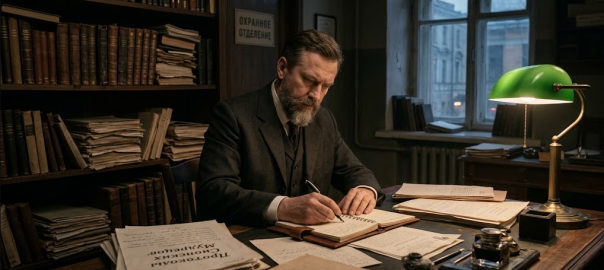
During the late nineteenth century, this anti-liberal conspiracy myth gained widespread traction through the deliberate decontextualization of Masonic writings and statements by Jewish leaders, which conspiracy theorists treated as literal confessions of a global plot. In 1869, the French author Roger Gougenot des Mousseaux published Le Juif, le judaïsme et la judaïsation des peuples chrétiens, asserting that a satanic cabal of Kabbalistic Jews directed Freemasonry to subvert Christian nations. Despite receiving papal commendation, des Mousseaux’s work relied heavily on the writings of the prominent occultist Éliphas Lévi, who was not actually Jewish but a defrocked French Catholic named Alphonse-Louis Constant. Concurrently in the Russian Empire, this Western anti-liberal theory merged with Jacob Brafman’s “Kahal” conspiracy theory, which claimed that local Jewish communal organizations acted as a deceptive shadow government. This cross-pollination between Western anti-Masonic and Russian anti-Jewish narratives culminated in the early twentieth-century Tsarist fabrication The Protocols of the Elders of Zion, which detailed how Jewish leaders allegedly infiltrated and manipulated speculative lodges to achieve world conquest.
The geopolitical diffusion of this combined myth had devastating real-world consequences as it transitioned from fringe literature into an instrument of state-sanctioned persecution. In Weimar Germany, far-right nationalists and Nazi ideologues like Alfred Rosenberg and Erich Ludendorff disseminated anti-Masonic and anti-Semitic propaganda, falsely claiming that Jews and Freemasons had conspired to provoke and prolong World War I to install Jewish dominance. Upon taking power in 1933, the Nazi regime banned all Freemasonry, declared the lodges hostile to the state, and confiscated their assets. In Latin America, the myth filtered through conservative political networks, particularly in Colombia, where Conservative politicians like Laureano Gómez branded the ruling Liberal Party as a puppet of an international anti-Christian cabal, directly motivating armed bands to target and eliminate “red masons” (rojos masones) during La Violencia. In the Middle East, the translation of Western conspiracist tracts merged with Nazi propaganda, culminating in the post-1948 systematic suppression of local Masonic lodges as part of broader anti-Zionist state campaigns. Ultimately, the historical record exposes the tragic irony of the Judeo-Masonic conspiracy myth: far from operating as an elite global cabal, both Jews and Freemasons were among the very first and most severely targeted victims of twentieth-century totalitarian states.
🎨 We could take a closer look at Rabbi David Rosenberg’s intricate 1841 lithograph and examine how he visually mapped specific Masonic officer roles onto the Kabbalistic sephirot.
The Ghost in the Machine: 5 Surprising Truths Behind Colombia’s Most Dangerous Conspiracy Theory
In the mid-20th century, Colombia was a nation haunted by an invisible enemy. To walk the streets of Bogotá or the rural trails of Boyacá was to inhabit a landscape where political rivalry had transcended mere policy debates and entered the realm of the existential. It was an era of high stakes and deep paranoia, where the “other” wasn’t just a neighbor with a different ballot—they were a cog in a global machine designed to dismantle the very soul of the country.At the heart of this tension was the “Judeo-Masonic Conspiracy Theory.” This European export posited that liberal freethinking and moral relativism were merely the first steps toward social chaos, ultimately paving the way for an international cabal to seize control. But this myth did not land in a vacuum; it grafted itself onto the mística —the visceral, nationalistic fervor of the traditional parties—to create a discursive framework that fueled “La Violencia,” a period of eliminationist bloodshed that scarred the nation for generations.To understand how a rumor burned a nation, we must look past the shadows and examine the mechanics of the myth.
1. Conspiracy as a Status Symbol
It is easy to dismiss conspiracy theories as the refuge of the uneducated. However, in Colombia, the Judeo-Masonic myth was championed by the professionalized elite. These were politicians and intellectuals who had lived and studied in Europe, returning with a desire to elevate local politics above what they saw as “provincial” squabbles.For these elites, adopting grand, international narratives was a way to signal their own intellectual “modernity.” By framing their struggle against the Liberal Party as a battle against a worldwide anti-Christian cabal, they were attempting to prove that Colombian political life was as sophisticated and “European” as that of Paris or Madrid. The irony was profound: a paranoid myth was used as a badge of cosmopolitanism.”They wished to raise Colombia’s politics above its provinciality to prove to themselves that their political concerns were modern and European and not simply the result of the patron-client relationships of the vertically-organized parties.”
2. The Prayer-to-Politics Pipeline
The myth did not just travel through political manifestos; it moved through the pews. The primary delivery system for these ideas was the Mensajero del Sagrado Corazón de Jesús (Sacred Heart Messenger), a Jesuit magazine that reached the heart of Colombian family life.In July 1922, a monthly prayer intention for the “conversion of the Jews” served as a conduit for the Protocols of the Elders of Zion —the notorious anti-Semitic forgery. This religious network was chillingly efficient. While the magazine’s circulation hovered between 5,000 and 12,000 copies, its reach was multiplied by parish priests and prayer group leaders who shared its contents with hundreds of thousands of followers during Sunday congregations. By 1932, the magazine was reviewing the Protocols with the gravity of a prophetic document.”No one can deny the frightening veracity that the Protocols entail due to the portentous exactitude, almost prophetic, that saturates all of its pages.”
3. The Absurdity of Moral Panic
To move the rural, religious “rank and file” of the Conservative Party, the propaganda turned away from abstract geopolitics and toward the sanctity of the home. It targeted the “moral” fabric of society, using extreme, prurient imagery to incite a defense of the family.A sensationalist pamphlet by an author known as “J.B.M.” claimed to have uncovered “diabolic instructions” to pervert Colombian women, supposedly sourced from a fictional publication called the “Revista Judío Masónico” (Masonic Jew Magazine). The propaganda warned that gymnastics and “short pants” would lead to the “animalization” of girls to serve the communist cause. Fears of “coed baths” and the loss of traditional “shame” were presented as part of a calculated plan.This was psychological warfare designed to be as ubiquitous and authoritative as religious instruction—a “Catechism in the home.” It transformed political opposition into a literal defense of one’s daughters, making the conflict visceral for those far removed from the halls of power.
4. Laureano Gómez and the “Knowing Glance”
For the top echelons of leadership, the conspiracy was often less a deeply held belief and more a tactical tool. Laureano Gómez, the master director of the Conservative Party, weaponized these theories specifically to reunite a party fractured by the 1942 candidacy of Carlos Arango Vélez .Gómez was under fire, with the Liberal press portraying him as “mentally unstable.” To regain control, he summoned the ghost of the conspiracy. He frequently shared a tactical anecdote about witnessing a “knowing glance” between President Eduardo Santos and Carlos Lozano y Lozano when the topic of freemasonry was raised—a classic trope used to imply a secret, shared agenda.The ethical vacuum of this strategy is revealed by Gómez’s own history: when it was politically convenient, he had no qualms about allying with prominent Masons like Alfonso Romero Aguirre . For Gómez, the “invisible enemy” was a strategic haunting, a specter he could summon to discipline his party and dismiss once the electoral deal was struck.
5. The Global Echo of the Spanish Civil War
The Judeo-Masonic threat felt immediate because of the trauma unfolding in Spain. Reports of 7,000 murdered religious figures and burned churches provided a terrifying “preview” of what might happen in Colombia. The local fear became a mirror of the global conflict.This “it-can-happen-here” attitude led to extreme displays of alignment. Dominicans gave Falangist salutes, and seminarians in Tunja went so far as to ring bells every time an Allied ship was sunk, viewing the Axis powers as a bulwark against the “Judeo-Masonic-Bolshevik” threat. In a 1942 mass commemorating the foundation of Bogotá, Friar Mora Díaz captured this siege mentality:”…dark machinations intent on undermining the sacred treasure of our Catholic traditions.”
Conclusion: The Legacy of a Lethal Fantasy
The Judeo-Masonic conspiracy theory was never just about secret handshakes. It was a discursive framework that allowed neighbors to see one another as agents of an anti-Christian cabal. Once the Liberal neighbor was redefined as a “rojo masón” (red mason), the massacres of “La Violencia” became justifiable—even holy—in the minds of the perpetrators.The ghosts in the machine were fantasies, but the blood they spilled was real.In an era of hyper-connected information, are we more or less susceptible to the “imported” political myths that once burned through the 20th century?