
A Fragile Stability Shaken: Suspicious Raid, Court Blockade, and Treason Charges Roil Zambia
Fri Aug 27 2026 /Mpelembe Media/ — The 2026 Zambian general election, held on August 13, resulted in the re-election of incumbent President Hakainde Hichilema of the United Party for National Development (UPND) with 60.49% of the vote, defeating his primary challenger Brian Mundubile of the Tonse Alliance’s National Reconciliation Party for Unity and Prosperity (NRPUP), who received 37.87%. While the Electoral Commission of Zambia (ECZ) declared Hichilema the winner, the contest was conducted on a deeply uneven playing field due to late-stage constitutional and legislative overhauls that structurally favored the ruling party. These included the Constitutional Amendment Act No. 13 of 2025 and the subsequent Electoral Processes Act No. 12 of 2026, which were passed in May 2026 during the week parliament dissolved, just three months prior to the election. This late enactment, combined with an opaque boundary delimitation exercise completed on April 16, 2026, which added 70 new constituencies largely favoring rural areas traditionally leaning toward the UPND, left minimal time for public education and structurally altered the legislative balance. Furthermore, international and domestic observer missions, including the European Union and the Christian Churches Monitoring Group (CCMG), raised serious concerns over the misuse of state resources, selective enforcement of campaign schedules, and parallel vote count discrepancies suggesting vote inflation in several constituencies.
Political tensions escalated rapidly after the polls when a heavily armed joint security task force conducted a raid on a Lusaka residence linked to Mundubile on the night of August 14. During this operation, Mutotwe Kafwaya, a sitting Member of Parliament for Lunte and former Minister of Transport and Works under President Edgar Lungu, was shot and killed. The circumstances surrounding his death are highly contested; state authorities asserted that Kafwaya was fatally wounded in a shootout with security forces who encountered armed resistance from a suspected militia, whereas Mundubile and his allies dismissed this as a complete fabrication, claiming Kafwaya was shot unprovoked at close range inside a bedroom. The state’s five-day delay in officially confirming Kafwaya’s death, along with the arrest of 11 other political and civic figures and the disappearance of several members of Mundubile’s security detail, provoked sharp condemnation and demands for an independent investigation from organizations like Amnesty International and the United Nations.
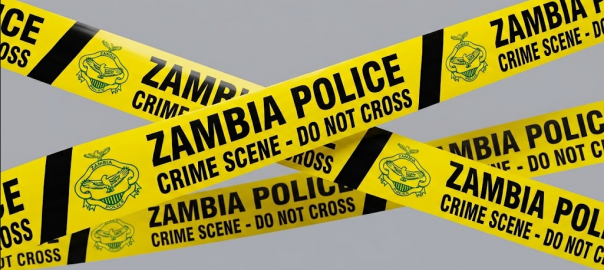
The political crisis deepened on August 24, the final day of the seven-day constitutional window for the opposition to legally challenge the presidential results, when the Zambian government abruptly closed the country’s top judicial bodies, including the Supreme and Constitutional Courts in Lusaka as well as High Court branches in Ndola. Citing unspecified “security reasons,” a memorandum from the judiciary’s chief administrator advised all staff not to report for work, and court premises were cordoned off with yellow tape and guarded by police, physically preventing Mundubile’s legal team from filing their prepared petition. This lockdown drew fierce criticism from legal and civil groups, including the Law Association of Zambia (LAZ) and Human Rights Watch, who described the shutdown as a severe blow to due process and judicial independence. To bypass this physical blockade, a member of the public submitted a petition directly to Chief Justice Mumba Malila’s private email address, which was subsequently forwarded to the Constitutional Court for review.
Fearing for their safety, Mundubile and his running mate, Makebi Zulu, went into hiding and sought temporary refuge at a United Nations agency building in Lusaka. After receiving government assurances regarding their safety and due process rights, both leaders surrendered to police on August 27 and were immediately placed in custody under treason charges—a non-bailable offense in Zambia carrying severe penalties. Analysts and human rights advocates have expressed deep concern over this development, pointing to a troubling historical symmetry with the 2017 arrest of Hichilema himself on treason charges under then-President Edgar Lungu. The current administration’s reliance on highly restrictive measures, including the application of the Cybersecurity and Cybercrime Act of 2025 to silence critics, has raised concerns over democratic backsliding and damaged Zambia’s long-held regional reputation as a stable beacon of peaceful electoral transitions.
Beyond the Ballot: 5 Surprising Realities of Zambia’s 2026 “New Dawn” Election
Zambia has long been the gold standard for democratic stability in Southern Africa, a nation defined by its proud history of peaceful power transfers. Yet, the 2026 General Election has cast a long, complicated shadow over this reputation. While the surface showed high citizen engagement and a 57.23% voter turnout, the 48 hours surrounding the vote were defined by a jarring paradox: high-grade military raids, the death of a former minister, and the unprecedented closure of the nation’s highest courts.How can a process that appeared so transparent in the polling booths face allegations of “insurrection” and physically barred courtrooms within days? To understand the systemic tensions of President Hakainde Hichilema’s “New Dawn” administration, we must look at the five surprising realities that redefined the Zambian democratic narrative.
1. Inclusion on Paper, Exclusion by Systemic Design
On the surface, the 2025 Constitutional Amendment appeared to be a progressive leap forward. It introduced a Mixed Member Majoritarian (MMM) system, expanding the National Assembly to 226 constituencies (including 70 newly created seats) and adding 40 proportional representation (PR) seats reserved for women, youth, and persons with disabilities.However, a closer look reveals a systemic “Inclusion Paradox.” Because these PR seats were tied strictly to the national presidential vote, the system inherently disadvantaged smaller parties and independent candidates who commanded strong local support but lacked a top-ticket presidential heavy-hitter. Furthermore, by enacting the Electoral Processes Act in May 2026—just three months before the election and in the same week Parliament was dissolved—the government left no room for civic education or administrative readiness.The most visible casualty of this rushed schedule was female representation. In a bitter irony, female nominations for the National Assembly plummeted from 21% in 2021 to a mere 12.5% in 2026. Political parties, operating under the assumption that women would be “covered” by the new PR seats, largely ceased issuing adoption certificates to women for constituency contests, effectively narrowing their path to direct power.
2. When a Political Legacy Becomes a Campaign Battleground
Although he passed away in 2025, the “ghost” of former President Edgar Lungu became the most potent weapon in the opposition’s arsenal. The Hichilema administration, by engaging in a protracted and very public feud with Lungu’s family over burial arrangements, handed a significant “political gift” to the Tonse Alliance.Led by Brian Mundubile, the opposition successfully pivoted the election away from Hichilema’s economic record and toward a referendum on “political respect.” This narrative was further heightened by explosive allegations of foreign interference. Mundubile publicly accused the government of employing “Tanzanian tactics”—alleging that the ruling UPND had hired Tanzanian nationals to manipulate the outcome. While the Tanzanian government denied these claims, the narrative of a “democracy under siege” from both within and without galvanized the opposition’s base.”The disagreement was used by opposition figures to accuse the government of disrespecting Lungu and his family… helping turn the election into a contest not only over Hichilema’s record, but also over Lungu’s political legacy.” — 2026 Election Analysis
3. From Ballots to Bullets: The Kabulonga Raid
The most dramatic rupture in the “peaceful” election narrative occurred not after the results, but during the final hours of voting. On the night of August 13, 2026, while the nation was still processing ballots, a high-stakes joint security operation unfolded in the Kabulonga area of Lusaka.The government described the raid as an “intelligence-led” strike on a suspected militia planning an armed insurrection. The operation resulted in the arrest of 11 people, including opposition leader Brian Mundubile and key figures such as Simon Phiri, Francis Mulenga, George Chisanga, and Dr. Bishop Trevor Mwamba. Tragically, the exchange of gunfire claimed the life of former minister Mutotwe Kafwaya.This raid transformed the election atmosphere overnight. It created an immediate sense of national crisis, ensuring that when the results tabulation finally began, it was conducted under the heavy presence of security forces and a cloud of “insurrection” allegations.
4. The Moment the Lights Dimmed: The Results Suspension
The transition from a “generally peaceful” election day—observed as orderly in 98.6% of stations—to a state of paralysis occurred on August 14. Citing “security concerns” that were undeniably linked to the fallout of the Kabulonga raid and Mundubile’s arrest, the Electoral Commission of Zambia (ECZ) abruptly suspended the counting and tabulation of results.This suspension created a dangerous information vacuum. Into this silence, Mundubile (prior to his detention) and his spokesperson George Chisanga projected a Parallel Vote Tabulation (PVT) that claimed victory for the Tonse Alliance. The ensuing tension highlighted a critical vulnerability in the Zambian process: the fragility of public trust when the official mechanism for truth goes dark.”The Mission underscores that the integrity of the results management process depends on strict adherence to the legal framework… and restraint by all political actors from making premature declarations. Ensuring that only the ECZ announces official election results remains essential.” — AU-COMESA Preliminary Statement
5. The Mystery of the Closed Court Doors
The final and perhaps most troubling reality occurred on August 24, 2026—the legal deadline for filing petitions to challenge the presidential results. In an unprecedented move, the Supreme and Constitutional Courts in Lusaka were physically shuttered.Armed police were deployed to the premises, and a judicial memorandum advised staff to stay home, citing “security reasons.” The conflict of narratives was stark: the government defended the move as part of “intelligence-led preventive operations” to protect state institutions, while the opposition labeled it a calculated act of judicial obstruction.The Law Association of Zambia (LAZ) was swift to condemn the move. LAZ President Arnold Kaluba warned that the physical barring of the courts had “dire implications for access to justice,” specifically during the narrow 14-day window allowed for electoral petitions. It remains a chilling precedent: a legal system that is technically independent but physically inaccessible.
Conclusion: A Democracy in Tension
The 2026 election concluded with Hakainde Hichilema securing 60.49% of the vote, yet the victory is inseparable from the systemic fractures it exposed. Zambia has demonstrated that high voter turnout and progressive-looking laws are insufficient if the infrastructure of “Electoral Justice” can be neutralized by security mandates.As the “New Dawn” administration enters its second term, the nation is left to grapple with a fundamental systemic question: Can a democracy be considered truly free and transparent if the legal path to challenge it is physically barred? Zambia’s journey continues, but the events of 2026 suggest that the path to a resilient democracy requires more than just a ballot—it requires an open door to the halls of justice.