
Beyond the Storm: Why Repeated Hazards Trigger Systemic Collapse and Compounded Human Tolls
Thu Aug 27 2026 /Mpelembe Media/ — The accelerating pace of human-caused climate change is compressing the temporal intervals between extreme meteorological and geophysical events, giving rise to a critical systemic challenge known as the recovery gap. This gap represents the temporal misalignment between the duration required for a community to fully restore its infrastructural, economic, and institutional capacities, and the actual interarrival time between consecutive damaging hazards. Traditional disaster risk management has historically evaluated disasters through a static lens, assuming that extreme events are discrete, isolated occurrences and that communities always return to a fully recovered baseline before the next event. In reality, a subsequent hazard rarely encounters the same community that existed before the first; instead, it strikes a system with less resilience, depleted financial reserves, struggling businesses, and weakened infrastructure. Because of these overlapping demands, the compounding damages of consecutive disasters are highly non-linear, often escalating long-term losses far beyond the simple sum of individual impacts.
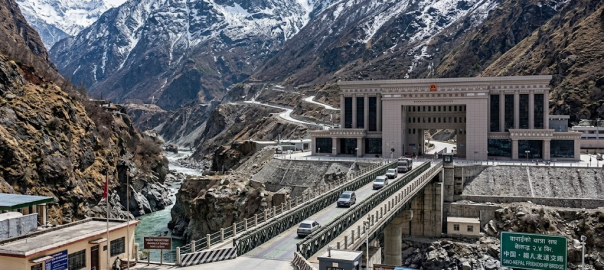
The catastrophic potential of these overlapping recovery timelines is starkly illustrated by transboundary flood chains in the high-altitude Hindu Kush Himalayan region. In July 2025, a sudden, non-rain-fed transboundary flood—triggered by merging glacial lakes on the Purepu Cangbu glacier in Tibet—unleashed a massive debris flow that destroyed the international Friendship Bridge at the Rasuwagadhi-Kerung border crossing, halting critical cross-border trade. Before regional authorities could transition from immediate relief to constructing a permanent replacement bridge, a second disaster struck on August 26, 2026, when a massive glacial ice collapse on the Nepalese side of the border triggered an enormous landslide. The resulting debris flow temporarily dammed the Lhende Khola river before breaching, sending a devastating flood wave of mud, ice, and boulders downstream through the Bhotekoshi and Trishuli river systems. Because the regional transportation infrastructure was still weakened from the 2025 flood, the secondary surge easily washed away temporary bypasses and nineteen bridges, completely isolating mountain districts, claiming the lives of at least 160 people in Nepal, and leaving hundreds of tourists and pilgrims missing.
A parallel monsoonal landslide and food crisis unfolded in Sri Lanka, where Cyclone Ditwah made landfall in late November 2025, triggering devastating floods and landslides that killed 643 people and caused $4.1 billion in direct physical damage. While the nation was transitioning to a reconstruction phase, persistent monsoonal rains in January 2026 saturated the mountainous highlands and triggered widespread secondary landslides across multiple districts. Striking communities that had little time to recover, these subsequent landslides washed out newly restored transport routes, damaged hundreds of rural water schemes, and deposited thick silt over 100,000 hectares of cropland. This compounded agricultural shock delayed the replanting cycle, destroyed critical drainage networks, and created severe multi-season crop losses. The agricultural collapse triggered severe food and nutritional insecurity, particularly in economically vulnerable districts like Badulla, where more than two-thirds of the population already struggled to afford a nutritious diet prior to the cyclone.
To manage these compounding vulnerabilities, researchers are developing empirical tools like the Recovery Gap Index (RGI) to systematically evaluate national-level post-event response and recovery capacities. Rather than treating risk as static, the RGI aggregates data across five critical dimensions—sociodemographic, infrastructure and resources, government and policy, technological capacity, and economic resilience. The RGI utilizes a geometric mean to calculate overall scores, a deliberate methodological choice that penalizes a disproportionately low score in any single category and highlights that recovery dimensions are deeply interdependent and non-substitutable. Complementing national-level indices, remote sensing frameworks like the Recovery-Activity Index (RAI) use Google Earth Engine to track post-disaster trajectories by integrating nighttime lights and built-up anomalies, demonstrating that surges in human and reconstruction activity typically precede physical rebuilding by about two months. Finally, economists emphasize that conventional disaster risk metrics focusing solely on direct asset losses obscure the true human cost of disasters, prompting a shift toward modeling household welfare and well-being losses to better target social protection and build socioeconomic resilience.
📊 I could create a visual comparison of how different countries perform across the five Recovery Gap Index dimensions to illustrate global disparities in resilience.
Beyond the Storm: 4 Surprising Truths About the Future of Disaster Recovery
In August 2026, the fragile border between Nepal and China provided a grim laboratory for the “new normal” of environmental volatility. An ice rock avalanche from a glacier slammed into the Lhende Khola—a tributary of the Bhotekoshi—triggering a flash flood that buried entire communities under mud the color of wet cement. This followed less than a year after Cyclone Ditwah tore through 22 districts in Sri Lanka on November 28, 2025, dismantling vital irrigation networks and paralyzing transport. These are no longer “tail-risk” events; they are the visceral reality of a warming planet.For decades, the standard operating procedure for disaster recovery has been linear: an event occurs, infrastructure breaks, and we “fix” it to restore the status quo. However, the data emerging from recent crises suggests that this approach is a dangerous relic. The recovery phase is not merely a logistical tail to a catastrophe; it is the most critical window we possess for systemic future-proofing. To simply rebuild what was lost is to engage in the recreation of vulnerability.As global development shifts from reactive aid to strategic resilience, we must look beyond the headlines of immediate relief. By synthesizing macroeconomic shifts, such as the Asian Development Bank’s (ADB) latest recovery loans, with micro-level human outcomes in places like Sichuan and Sumatra, we can identify four fundamental truths that are redefining the future of international development.
Truth 1: Early Warning is Dead in a Warming Himalaya
The flash floods of August 2026 served as a terrifying case study in the velocity of modern environmental events. In the “warming Himalaya,” where ice loss rates have doubled since 2000, traditional early warning systems are becoming functionally obsolete. During the flood, hydrological observations recorded the Trishuli River rising by a staggering nine meters (27 feet) in just 30 minutes.This level of speed renders hours-long evacuation windows a thing of the past. When a glacier-borne surge can transform a dry valley into a tomb in the time it takes to eat lunch, “readiness” must be structural rather than just communicative. As noted by the International Centre for Integrated Mountain Development, the “exceptional speed and magnitude” of these waves mean that resilience must be embedded into the landscape itself through climate-resilient engineering, rather than relying on a warning that may arrive at the same time as the water.”Hydrological observations indicate the exceptional speed and magnitude of the flood wave.”
Truth 2: Infrastructure is a Mental Health Intervention
The fiscal architecture of recovery is beginning to reflect a more holistic philosophy. When the ADB approved a $200 million emergency package for Sri Lanka following Cyclone Ditwah, the structure was telling: a $100 million regular loan paired with a $100 million concessional loan. This strategic layering of debt wasn’t just for concrete; it funded “owner-driven housing” and irrigation rehabilitation.There is a deep psychological footprint in this type of infrastructure. By moving away from top-down construction toward owner-driven housing, recovery agencies empower survivors—such as the “re-combined families” seen after the 2008 Sichuan earthquake—giving them agency over their physical environment. This reduces the sense of helplessness that fuels long-term trauma. To support this, the Disaster Mental Health Programme for Communities in Asia utilizes a three-tiered objective structure to ensure social infrastructure matches physical progress:
- Level 1: Leadership Development: Training regional officials to translate high-level policy into actual care delivery processes, ensuring the “mental” is never siloed from the “medical.”
- Level 2: Training-of-Trainers: Creating multidisciplinary teams (psychiatrists, nurses, and community leaders) who understand local social systems and act as master trainers.
- Level 3: Community Training: Equipping the front lines—teachers and volunteers—to provide emotional resilience education directly to the public.
Truth 3: The Recovery Bottleneck is Invisible
While the “acute phase” of a disaster—the delivery of food and tents—is often efficient, the “recovery phase” is where resilience usually stalls. According to the Building Back Better manual, the long-term mental health impact of a disaster is often “far greater than the physical challenges” victims face. Post-traumatic stress and psychological distress are the silent killers of economic productivity.The strategic solution is the “Community of Practice” (CoP) model, as seen in Thailand’s Mental Health Crisis Assessment and Treatment Team (MCATT) and Indonesia’s RSCM. By building a live network of professionals who interact regularly, these nations ensure that mental health expertise remains in the community long after international aid agencies have departed.”Short-term interest in a population’s mental health can be converted into sustainable, long-term systemic improvements for building resilience.”Sustainable recovery treats mental health reform as a systemic improvement that reduces the risk of long-term emotional complications, allowing a population to return to normalcy—and the workforce—faster.
Truth 4: Resilience is Culturally Specific, Not Scalable
Successful recovery is driven by factors unique to each community, not by one-size-fits-all loans. In China’s Sichuan province, recovery workers in the township of Beichuan—which was entirely buried by two mountains that collapsed one on top of the other during the 2008 earthquake—faced challenges that no standard manual could solve.They encountered “re-combined families”: new domestic units formed by survivors who had lost their original spouses and children. In these rural areas, the “migrant parent” phenomenon meant that children were often raised by aging grandparents while parents worked in coastal cities. For the Qiang people, recovery required a tailored approach that respected cultural traditions and recognized that the primary caregivers were often elderly relatives struggling with their own trauma. Financial aid can rebuild a house, but it cannot navigate the complex social fabric of a grieving village without local, context-specific expertise.
Conclusion: A Cyclical Future
The era of “linear” recovery is over. We are moving toward a cyclical model where resilience is a continuous loop: strengthening the community before the storm to mitigate impact, and using the aftermath as a window for systemic policy reform.As we face a future of accelerating glacial melts and intensified weather events, the central question for global strategists is no longer about the volume of concrete we can pour, but the quality of the systems we build around it. Are we willing to fund the “invisible” work of community mental health and local tradition with the same urgency as “visible” infrastructure?The Chinese characters for crisis, wēijī , remind us that danger and opportunity are inseparable. If we embrace this duality, we can move from mere practice to lasting policy, ensuring that the tragedies of today provide the foundations for a more resilient tomorrow.