Tag Archives: Lagos

10Sep/26

How African Filmmakers Reclaimed the Screen

Beyond the Colonial Shadow: The Financial Risk and Cultural Triumph of Love Brewed in the African Pot

From Objects to Authors: The Evolution of African Cinema

1. The Paternalistic Era: Cinema as a Colonial Tool (1900–1950s)

The history of cinema in Africa began not as an indigenous art form, but as a colonial novelty. In 1900, a French circus group projected the Lumière brothers’  L’arroseur arrosé  in a Dakar marketplace, a moment that marked the arrival of a medium that would be used for decades to document Europe’s “Other.” Early European cinema focused on newsreels and ethnographic studies that prioritized colonial solidarity, often erasing indigenous tensions to present a sanitized view of the continent.To control the African “gaze,” colonial administrations established dedicated film units. While their methods overlapped, their underlying motivations were distinct: Continue reading

08Sep/26

African Payment Pitfalls and $25,000 Tax Traps

The Three Pillars of African Payments

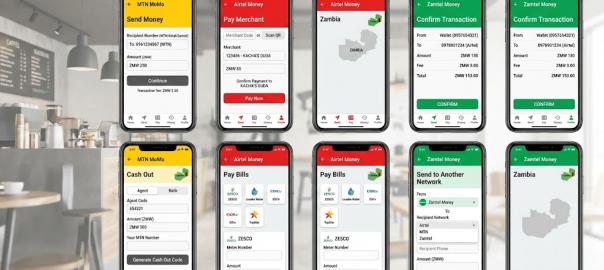
Tue Sep 08 2026 /Mpelembe Media/ — For a student entering the world of fintech, the African payment landscape can initially seem overwhelming. Unlike Western markets where credit cards are the standard, the African ecosystem is built on a “Hybrid Imperative.” In markets like Zambia, global tools like Stripe are often used for international billing, but they lack localized settlement and struggle with poor conversion rates due to bank-side fraud rules. To reach the actual local consumer, businesses must tap into the infrastructure that people already use: mobile money.The ecosystem is supported by three primary players:

  1. Mobile Network Operators (MNOs):  The foundational infrastructure providers that issue digital wallets and manage the movement of local currency.
  2. Payment Gateways:  Intermediaries that bridge the gap between global standards and local methods across multiple countries.
  3. Payment Aggregators:  Specialized “simplifiers” that bundle multiple mobile money connections into a single, developer-friendly interface.Learning Insight: The “So What?”  While credit and debit cards are the global gold standard for SaaS, they represent only a minor fraction of transactional volume in many African nations. In the retail ecosystem of Southern Africa, mobile money is the dominant force. Understanding how to connect to these networks is the key to unlocking the market.While these three pillars work together, the journey starts at the foundational “source”: the MNOs.

Continue reading

24Aug/26

Why joblessness and diamonds fuel civil war

The Dual Private Sector Dilemma: Why IMF Market-Led Growth Models Fail to Create Jobs in Fragmented African Economies

Mon, Aug 24 2026 /Mpelembe Media/ — The economic relationship between sub-Saharan Africa and the International Monetary Fund (IMF) has its roots in the 1944 Bretton Woods Conference, where the few developing nations present failed to secure explicit references to their development financing needs in the Articles of Agreement. From its inception, the IMF maintained a rigid, short-term balance-of-payments focus, famously denying Ethiopia’s first request for financial assistance on the grounds that its needs were neither immediate nor temporary. By the 1980s and 1990s, this short-term framework was formalized into neoliberal Structural Adjustment Programs (SAPs), which mandated strict conditionalities such as market deregulation, extensive privatization of state-owned enterprises, and rapid trade opening. Although promoted as pathways to long-term macroeconomic stability, these interventions frequently triggered severe adverse social consequences, including declining real wages, heightened poverty, and the systematic deterioration of basic health and social welfare systems. In response to widespread critique in the late 1990s, the IMF purported to shift its operational model, replacing traditional SAPs with the Enhanced Structural Adjustment Facility (ESAF) and, subsequently, various credit facilities under the Poverty Reduction and Growth Trust (PRGT). However, empirical evidence indicates that these contemporary programs represent “SAPs in disguise,” with loan conditionalities and stringency steadily rising, and core prescriptions of fiscal consolidation and state retrenchment remaining largely unchanged. Continue reading

22Jan/26

Temi Coker: Weaving Nigerian Heritage into Modern Home Decor

Jan. 21, 2026 /Mpelembe Media/ — Multidisciplinary artist Temi Coker is launching an exclusive home decor collection at Walmart that blends his Nigerian heritage with modern design. This eighteen-piece series features textured vases and woven patterns inspired by Black culture and traditional African textiles. By partnering with a major retailer, Coker intends to make these culturally significant heirlooms both affordable and accessible to a wide audience. The items, which include 3D-printed pieces made in the United States, serve as a bridge between his childhood in Lagos and his current life in Dallas. Ultimately, the collaboration aims to democratise style by offering high-quality, meaningful art for the everyday living room. Continue reading

11Apr/23

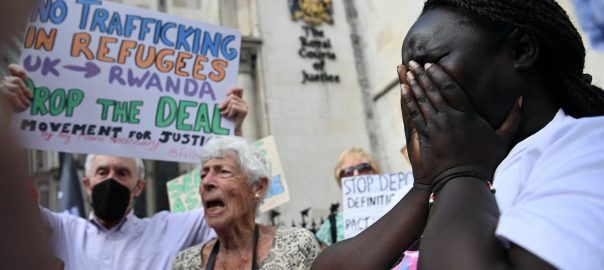
‘It’s like you’re a criminal, but I am not a criminal.’ First-hand accounts of the trauma of being stuck in the UK asylum system

Steve Taylor, Leeds Beckett University

Warning: this story contains graphic descriptions of violence. Pseudonyms are used to protect the interviewees’ identities.

Angela had already been in the UK as an asylum seeker for nine years and four months when we interviewed her. She was still in a state of limbo, unsure whether asylum would be granted, and her story was disturbing to hear.

Continue reading

04Mar/23

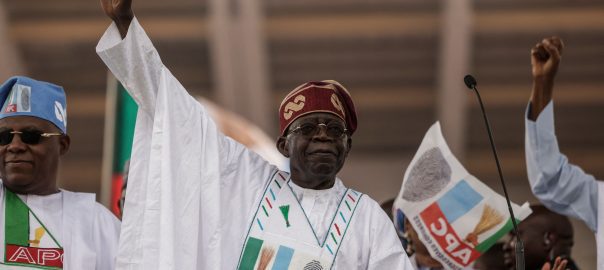
Bola Ahmed Tinubu: The kingmaker is now Nigeria’s president-elect

Olayinka Oyegbile, Trinity University, Lagos

Bola Ahmed Tinubu, of the ruling All Progressives Congress in Nigeria, has been declared winner of the country’s keenly contested presidential election.

Continue reading

03Mar/23

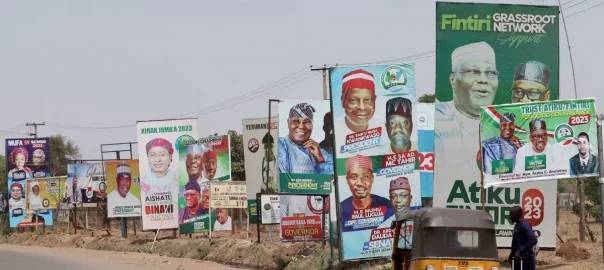
ID of 93 million Nigerians at risk in landmark election

  • Facial recognition and fingerprints needed to cast votes
  • Privacy experts fear mass breach of Nigerians’ identity
  • Aim is to root out widespread electoral fraud

LAGOS – Africa’s biggest electorate votes on Saturday in a poll that experts fear could unleash a mass breach of privacy as Nigerians relinquish reams of personal data to cast their vote.
Continue reading

01Dec/22

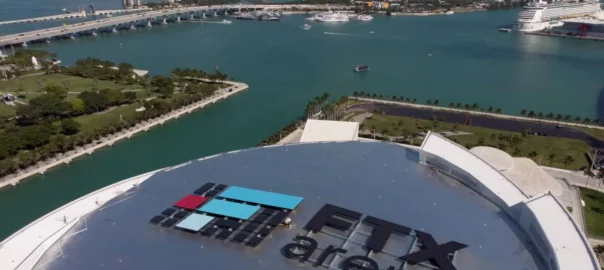
FTX collapse crushes crypto dreams in Africa and beyond

  • FTX’s bankruptcy hurts small investors across the world
  • Young African crypto backers fret about damage to sector
  • Regulators repeat warnings about risks of crypto dealing

LAGOS/BANGKOK – Days before his FTX cryptocurrency exchange collapsed, co-founder Sam Bankman-Fried tweeted “Hello, West Africa!” – his latest nod to a region where a growing number of kitchen table investors had put their faith, and savings, in FTX.
Continue reading

25Oct/22

Stagwell’s (STGW) National Research Group Launches Annual ‘Capstone Series,’ First-of-its-Kind Exploration into the Culture, Content and Technology Driving Emerging Markets


National Research Group (NRG), a global insights leader at the intersection of technology, content and culture, launched its “Capstone Series,” a first-of-its-kind exploration into the culture, content and technology driving leading-edge global growth markets. NRG is part of Stagwell (NASDAQ: STGW), the challenger network built to transform marketing. In partnership with SBI Media, a Lagos, Nigeria-based media agency and part of Stagwell’s Global Affiliate Network, NRG kicked off the series with “Exploring Nigeria,” a future-leaning view into the technology, culture and entertainment trends shaping the Nigerian landscape. Continue reading

01Sep/22

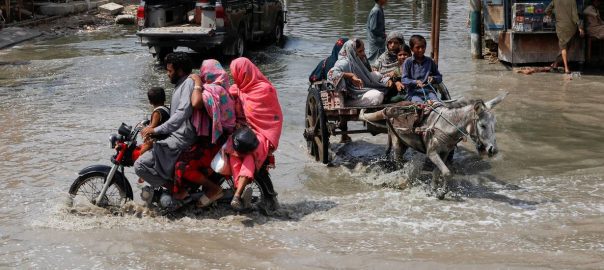
Will Pakistan floods spur better climate disaster planning?

  • Disasters globally worsened by lack of planning
  • Cash shortages, lack of political will contribute to risks
  • Disasters often share causes, pointing to ideas for action

By Laurie Goering

LONDON, Aug 31 (Thomson Reuters Foundation) – A third of Pakistan is underwater, with at least 1,100 people dead – including 380 children – but monsoon rains “on steroids”, likely fuelled by climate change, are not the only cause of the nation’s misery.
Continue reading