Tag Archives: Physical geography

23Oct/26

The Rothschild Weather Control Conspiracy

From STORMFURY to HAARP: Unpacking the Physical Limits of Geoengineering and the Spread of Weather Disinformation

Fri Oct. 23, 2026 /Mpelembe Media/ — The viral “THRONE CLIMATE” narrative functions as a grand super-conspiracy, falsely alleging that a secretive elite connected to the Rothschild family operated a worldwide network of 22 weather modification stations for 47 years to manufacture catastrophes like Hurricane Katrina and the 2010 Haiti earthquake. This online legend adapts 19th-century antisemitic tropes regarding Jewish financial control to modern anxieties about emerging geoengineering technologies, echoing recurring claims made by political figures regarding atmospheric manipulation and space-based weapons. To create false plausibility, the narrative relies on capability substitution—taking bounded, real-world technologies like localized cloud seeding and misrepresenting them as total atmospheric command—alongside pseudo-technical jargon and institutional scapegoating to offer simplistic explanations for complex global market and weather events. Continue reading →
14Mar/23

Climate ‘danger zone’

By Megan Rowling | Just Transition Editor

Climate scientists and government officials are gathered in Switzerland this week to agree the final summary for policymakers in the latest blockbuster series of reports from the Intergovernmental Panel on Climate Change (IPCC) on global warming and how to keep it in check.

Coming before an important review of global progress on climate goals at the end of this year, it doesn’t take a PhD to work out that the key message will be along the lines of “must do better”.
Continue reading →

04Nov/22

How a quest for mathematical truth and complex models can lead to useless scientific predictions – new research

Arnald Puy, University of Birmingham

A dominant view in science is that there is a mathematical truth structuring the universe. It is assumed that the scientist’s job is to decipher these mathematical relations: once understood, they can be translated into mathematical models. Running the resulting “silicon reality” in a computer may then provide us with useful insights into how the world works.

Continue reading →

06Oct/22

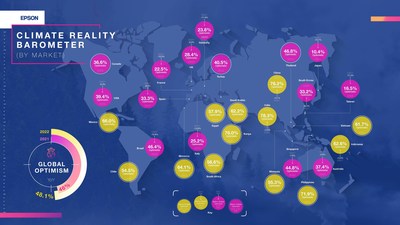
Epson Survey Shows Global Attention Focused on Climate Change – Despite Conflicts and Economic Woes – as People Act to Avert Disaster

Across the world, people are stepping up personal efforts to avert climate change, according to the latest findings from Epson’s second Climate Reality Barometer. Research from the global technology leader suggests that while the world economy proves to be a distraction from efforts to address climate challenges, climate change remains a primary concern for many. Continue reading

19Sep/22

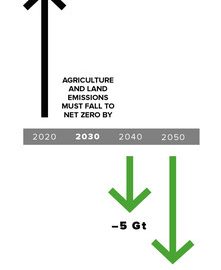
Land Sector Can – and Must – Reach Net Zero Annual Emissions by 2030. Where, What and How Food is Grown is Critical

To avoid catastrophic climate change, the land sector – including agriculture, forestry and natural land protection and restoration – must reach net zero emissions by 2030, according to new research from Conservation International. Continue reading

01Sep/22

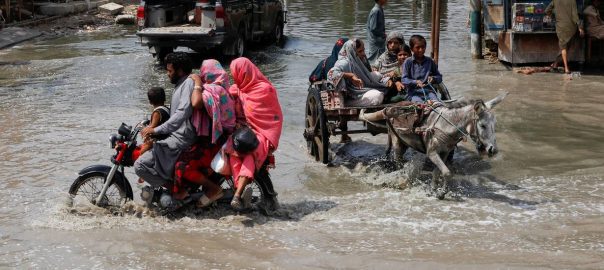
Will Pakistan floods spur better climate disaster planning?

  • Disasters globally worsened by lack of planning
  • Cash shortages, lack of political will contribute to risks
  • Disasters often share causes, pointing to ideas for action

By Laurie Goering

LONDON, Aug 31 (Thomson Reuters Foundation) – A third of Pakistan is underwater, with at least 1,100 people dead – including 380 children – but monsoon rains “on steroids”, likely fuelled by climate change, are not the only cause of the nation’s misery.
Continue reading →

18Jul/22

OPINION: Why is it so hot? Climate change is here

Bob Ward is policy and communications director at the Grantham Research Institute on Climate Change and the Environment at the London School of Economics and Political Science

Heatwaves are growing in frequency and intensity around the world due to climate change.

Scientists have been warning for some time that the rise in global average temperature, as greenhouse gas levels mount in the atmosphere, is causing an increase in the risks of hot weather.
Continue reading →