
Tag Archives: Webhook

08Sep/26

African Payment Pitfalls and $25,000 Tax Traps

The Three Pillars of African Payments

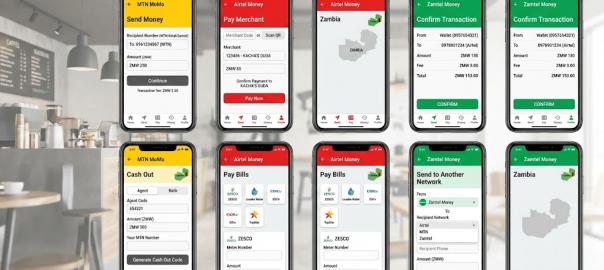
Tue Sep 08 2026 /Mpelembe Media/ — For a student entering the world of fintech, the African payment landscape can initially seem overwhelming. Unlike Western markets where credit cards are the standard, the African ecosystem is built on a “Hybrid Imperative.” In markets like Zambia, global tools like Stripe are often used for international billing, but they lack localized settlement and struggle with poor conversion rates due to bank-side fraud rules. To reach the actual local consumer, businesses must tap into the infrastructure that people already use: mobile money.The ecosystem is supported by three primary players:

  1. Mobile Network Operators (MNOs):  The foundational infrastructure providers that issue digital wallets and manage the movement of local currency.
  2. Payment Gateways:  Intermediaries that bridge the gap between global standards and local methods across multiple countries.
  3. Payment Aggregators:  Specialized “simplifiers” that bundle multiple mobile money connections into a single, developer-friendly interface.Learning Insight: The “So What?”  While credit and debit cards are the global gold standard for SaaS, they represent only a minor fraction of transactional volume in many African nations. In the retail ecosystem of Southern Africa, mobile money is the dominant force. Understanding how to connect to these networks is the key to unlocking the market.While these three pillars work together, the journey starts at the foundational “source”: the MNOs.


Continue reading

25Aug/26

Profitable Gemini AI Architecture with Stripe

The Idempotent Webhook: Securing Asynchronous Payment Ingestion with Stripe

Tue, Aug 25 2026 /Mpelembe Media/ — Transitioning to direct-to-consumer (DTC) web-based gaming allows developers to completely bypass Apple and Google’s restrictive 15% to 30% storefront commissions, enabling studios to retain up to 96% of checkout volume. By moving the registration and payment portals to the browser, developers establish a web-first onboarding strategy where credentials and purchased credit balances are consumed across cross-platform application wrappers. In this hybrid layout, a rendering engine such as Phaser manages the canvas, WebGL states, and low-level game inputs, while React manages HTML-native interface overlays, localized text, and transaction dialogs. Keeping the UI in React offers responsive CSS scaling, dynamic localization, and automated testability. Crucially, to prevent transactional manipulation, payment intent generation is decoupled from the client, forcing the React UI to dispatch authenticated requests to secure backend routes rather than declaring transactional costs directly to Stripe. Continue reading

28Feb/26

Beyond the Hype: 7 Hard Truths About Securing the Modern Decentralized Stack

The 2026 Crypto Compliance Mandate: Navigating MiCA and the End of the Grandfathering Era

28 Feb. 2026 /Mpelembe Media/ —  The July 2026 Deadline and “Passporting” The European Union is fundamentally restructuring its digital asset market through the Markets in Crypto-Assets Regulation (MiCA). By July 1, 2026, the transitional “grandfathering” phase will permanently close, meaning any Crypto-Asset Service Provider (CASP) operating without full MiCA authorization will be doing so illegally. While some member states, like the Netherlands and Sweden, opted for much shorter transition periods that have already expired, the July 2026 date is the absolute maximum limit across the EU. Securing this license grants firms EU-wide “passporting” rights, allowing them to serve clients across all 27 member states with a single authorization. Continue reading