

Tag Archives: Stripe, Inc.

03Sep/26

The Pulse of the Silicon Boardroom: Lord Silicon and machine settled finance

Docker, Databases, and Lord Silicon: How the 2026 Sandbox is Programmed

Thu Sep 03 2026 /Mpelembe Media/ — The Asynchronous Backend Engine The backend execution of the AI Apprentice simulation is powered by FastAPI, an asynchronous framework selected specifically for its minimal latency and exceptional high-performance routing capabilities. This asynchronous environment is crucial because it allows the system to concurrently run autonomous trading agent routines without bottlenecks. These agents, possessing distinct financial personalities, depend on the backend’s speed to execute real on-chain transactions—such as flipping digital collectibles or domains—within the competitive 24-hour sandbox. Continue reading
How AI agents spend real money

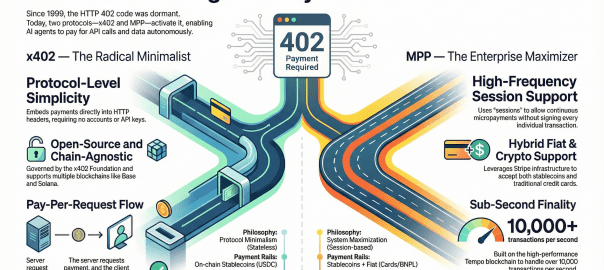
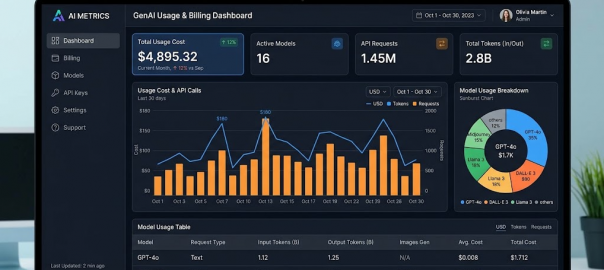
Mon Aug 31 2026 /Mpelembe Media/ — Stripe has positioned itself as the economic infrastructure layer for the artificial intelligence era, building a comprehensive suite of products designed to handle both the expense and income sides of autonomous agent commerce.

Rather than forcing developers to choose strictly between crypto-native or legacy card networks, Stripe bridges both systems. The core of Stripe’s production-ready agentic framework operates across several key pillars: Continue reading

Building bulletproof billing for AI

The Webhook and Metering Playbook: Scaling Gemini Applications with Resilient Stripe Architecture

Fri Aug 27 2026 /Mpelembe Media/ — Integrating Stripe into generative AI applications powered by Google Gemini requires a strict architectural separation between user-facing interfaces and backend payment pipelines to protect sensitive keys and prevent exploitation.

Storing Stripe secret keys, Gemini API credentials, or performing payment orchestrations directly on the client side introduces critical security vulnerabilities, allowing malicious actors to manipulate price details, bypass paywalls, or run unauthorized, high-volume model executions. To build a resilient defense, developers must funnel all checkout, subscription, and credential-heavy actions through a server-side intermediary, such as a FastAPI backend or a serverless environment like Firebase Cloud Functions. This intermediary securely handles Stripe Checkout Session creation with server-side price validation, returning a hosted, pre-built payment URL to redirect the customer safely. Continue reading

25Aug/26

Profitable Gemini AI Architecture with Stripe

The Idempotent Webhook: Securing Asynchronous Payment Ingestion with Stripe

Tue, Aug 25 2026 /Mpelembe Media/ — Transitioning to direct-to-consumer (DTC) web-based gaming allows developers to completely bypass Apple and Google’s restrictive 15% to 30% storefront commissions, enabling studios to retain up to 96% of checkout volume. By moving the registration and payment portals to the browser, developers establish a web-first onboarding strategy where credentials and purchased credit balances are consumed across cross-platform application wrappers. In this hybrid layout, a rendering engine such as Phaser manages the canvas, WebGL states, and low-level game inputs, while React manages HTML-native interface overlays, localized text, and transaction dialogs. Keeping the UI in React offers responsive CSS scaling, dynamic localization, and automated testability. Crucially, to prevent transactional manipulation, payment intent generation is decoupled from the client, forcing the React UI to dispatch authenticated requests to secure backend routes rather than declaring transactional costs directly to Stripe. Continue reading

21Aug/26

The hidden plumbing of AI commerce

From Payments to Intelligence: Inside Stripe’s Bold Move to Own the AI Token Economy

Fri, Aug 21 2026 /Mpelembe Media/ — Stripe has officially agreed to acquire OpenRouter, a premier AI model marketplace and gateway, in a landmark transaction that positions the fintech giant at the center of the fast-growing token routing sector. While the companies did not publicly disclose the purchase price, multiple reports value the deal at approximately $7.5 billion, representing a massive premium over the startup’s $1.3 billion private valuation set just months earlier. Under the reported terms of the agreement, $1.5 billion will be distributed to OpenRouter’s founders and key staff, with the remaining $6 billion going to its venture capital and seed-stage investors. OpenRouter, which facilitates access to over 400 AI models and handles more than 10 trillion tokens daily for over 10 million developers, will continue to operate under its existing brand, name, and product roadmap. Through this acquisition, Stripe aims to help enterprise clients dynamically evaluate and route requests to the most cost-efficient models in real time, turning the management of volatile AI token costs into a core part of its programmable financial services platform. Continue reading

30May/26

Beyond the “Buy” Button: Preparing Your Infrastructure for Autonomous Agent Payments

Verifiable Intent: How Cryptography is Securing the Future of AI-Driven Payments

Sat, May 30 2026 /Mpelembe Media/ — The Rise of Agentic Commerce The digital economy is undergoing a massive shift from human-centric, “click-to-buy” interactions to autonomous “agentic commerce”. AI agents are no longer just conversational assistants; they can now discover products, negotiate prices, manage subscriptions, and execute transactions on a user’s behalf. However, traditional payment rails break down when a human is not present to click a checkout button. This creates a crisis of trust around three core issues: verifying the user’s authorization, ensuring the authenticity of the agent’s actions (guarding against AI hallucinations), and determining accountability in case of disputes. Continue reading

27Mar/26

Crypto, Fiat, and the AI Web: A Deep Dive into L402, x402, and Stripe’s MPP

March 26, 2026 /Mpelembe Media/ —  Agentic payment protocols like x402, MPP, and L402 are fundamentally reshaping the internet economy by enabling machines to transact seamlessly without human intervention, user accounts, or traditional subscriptions. By allowing software to autonomously negotiate and settle micro-transactions, a wide variety of real-world use cases have emerged across several distinct categories: Continue reading