
Tag Archives: PAYPAL

03Jun/26

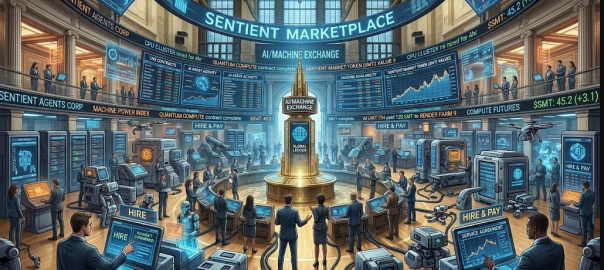
The “Sentient” Marketplace: How AI Agents Hire and pay Machines

The Mpelembe Agent Architect (also referred to as the Silicon-Native Agent Architect) is a comprehensive technical blueprint and decentralized infrastructure platform designed to securely deploy and govern autonomous AI agents

Wed, Jun 03 2026 /Mpelembe Media/ — The Sentient Economy (also referred to as the “Agentic” or “Machine Economy”) represents a fundamental shift from a human-operated digital environment to a decentralized network driven by autonomous, “silicon-native” AI agents. Unlike traditional chatbots that passively wait for human instructions, these autonomous agents proactively reason, allocate capital, and collaborate across organizational boundaries to execute complex, revenue-generating workflows. By 2030, this machine-to-machine economy is projected to mediate between $3 trillion and $5 trillion in global commerce. Continue reading

Vibe Code Your Life: The Rise of Low-Stakes, High-Speed Software Building

The Era of Vibe Coding: How Plain English Became the Hottest Programming Language

Mon, Jun 01 2026 /Mpelembe Media/ — Vibe coding is an AI-assisted software development practice where creators use natural language prompts to describe their desired applications, and large language models (LLMs) autonomously generate the source code. Coined in early 2025 by computer scientist Andrej Karpathy, the approach shifts the human role from manually writing syntax to acting as a director who oversees, evaluates, and iteratively refines AI-generated outputs. Continue reading

30May/26

Beyond the “Buy” Button: Preparing Your Infrastructure for Autonomous Agent Payments

Verifiable Intent: How Cryptography is Securing the Future of AI-Driven Payments

Sat, May 30 2026 /Mpelembe Media/ — The Rise of Agentic Commerce The digital economy is undergoing a massive shift from human-centric, “click-to-buy” interactions to autonomous “agentic commerce”. AI agents are no longer just conversational assistants; they can now discover products, negotiate prices, manage subscriptions, and execute transactions on a user’s behalf. However, traditional payment rails break down when a human is not present to click a checkout button. This creates a crisis of trust around three core issues: verifying the user’s authorization, ensuring the authenticity of the agent’s actions (guarding against AI hallucinations), and determining accountability in case of disputes. Continue reading

14May/26

Your AI is now an autonomous coworker

Meet Your New Digital Coworker: 15 AI Workflows Redefining Small Business Operations

Thur, May 14 2026 /Mpelembe Media/ — Anthropic has officially launched Claude for Small Business, an intelligent operating layer built into its desktop agent, Claude Cowork, designed to automate complex, multi-step administrative tasks for SMBs. Moving beyond a traditional chatbot interface, this package embeds directly into the software stack small businesses already rely on, connecting to platforms like Intuit QuickBooks, PayPal, HubSpot, Canva, Docusign, Google Workspace, Microsoft 365, and Slack. Continue reading

12Mar/26

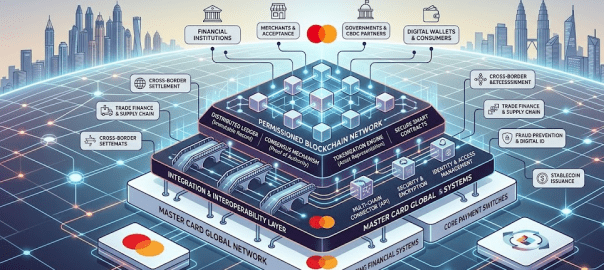
Visa vs. Mastercard: The High-Stakes Battle for the Future of Programmable Money

Defending the Rails: How Mastercard’s Multi-Token Network is Countering the $27 Trillion Stablecoin Threat

March 12, 2026 /Mpelembe Media/ — Mastercard has officially launched its Crypto Partner Program, an initiative uniting over 85 digital asset firms, traditional banks, and fintechs—including Binance, Ripple, PayPal, and Circle—to seamlessly integrate blockchain technology into the global financial system. The program aims to transition cryptocurrencies from speculative investments into practical utilities, focusing specifically on accelerating cross-border remittances, business-to-business (B2B) money transfers, and global payout infrastructure.

Continue reading

25Nov/25

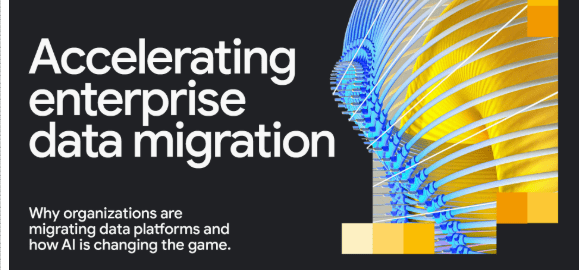
Accelerating Enterprise Data Migration with AI

Nov. 25, 2025 /Mpelembe Media/ — The document, titled “Accelerating enterprise data migration,” is a Google Cloud resource promoting the migration of corporate data platforms to their cloud environment, primarily using BigQuery and Vertex AI. The central argument is that legacy systems are inadequate for modern AI-driven success, while cloud migration provides substantial benefits like faster insights, cost efficiency, and AI readiness. Multiple case studies from diverse industries, including financial services (PayPal, DBS Bank, Intesa Sanpaolo), logistics (J.B. Hunt), and healthcare (Quest Diagnostics), illustrate how major companies modernised their infrastructure from systems like Teradata, Oracle Exadata, Hadoop, and Snowflake. These examples highlight key migration learnings, such as the importance of FinOps for cost control, strategic data cleanup, and full organizational alignment, demonstrating that Google Cloud offers an AI-enabled migration solution that simplifies and accelerates the transformation process. Continue reading

22Jun/23

How scammers use psychology to create some of the most convincing internet cons – and what to watch out for

Stacey Wood, Scripps College and Yaniv Hanoch, University of Southampton

Online fraud is today’s most common crime. Victims are often told they are foolish for falling for it, but fraudsters use psychological mechanisms to infiltrate the defences of their targets, regardless of how intelligent they are.

So it’s important to keep up with the latest scams and understand how they work.

Continue reading

08Sep/22

Digital nomads have rejected the office and now want to replace the nation state. But there is a darker side to this quest for global freedom

Dave Cook, UCL

A ‘network state’ is ideologically aligned but geographically decentralised. The people are spread around the world in clusters of varying size, but their hearts are in one place.

In June 2022 Balaji Srinivasan, former chief technology officer of the Coinbase cryptocurrency exchange, published an ebook entitled The Network State: How To Start a New Country. It is the latest in a flurry of utopian visions by self-styled digital visionaries, crypto believers and web 3.0 evangelists who are lining up to declare the death of the traditional concept of countries and nationhood.

Continue reading