Tag Archives: Netflix

19Oct/26

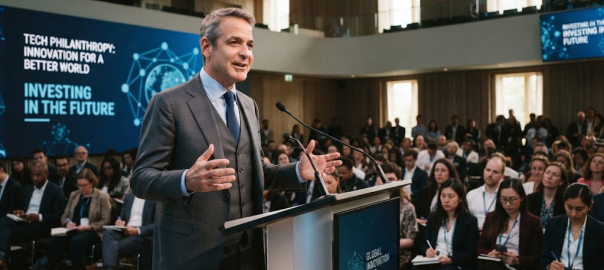
How Billionaires Turn Philanthropy Into Power

Technocratic Capital vs. Traditional Charity: The Billionaire Battle Over Philanthropy

Mon Oct. 19, 2026 /Mpelembe Media/ — Prominent Silicon Valley leaders, most notably Elon Musk and Coinbase CEO Brian Armstrong, have spearheaded a systematic ideological shift away from traditional billionaire philanthropy. Armstrong and Musk argue that conventional non-profit grantmaking and large private foundations are inefficient, prone to administrative bloat, and routinely “captured by ideology,” rendering many charitable endeavors a net negative for society. Rooted in capitalist techno-determinism and Effective Accelerationism (e/acc), this perspective holds that civilizational advancement is best achieved not through non-profit redistribution, but by aggressively deploying private capital into high-risk, engineering-driven for-profit enterprises—such as electric vehicles, space exploration, and digital infrastructure. Consequently, leaders subscribing to this philosophy prioritize market innovation and founder-controlled capital allocation over legacy grantmaking models exemplified by Bill Gates or Warren Buffett. Continue reading →
18Oct/26

Zambian Tribal Governance on Google Cloud

From London to Chief Magodi: The Synthesis of Cloud Engineering and Traditional Heritage

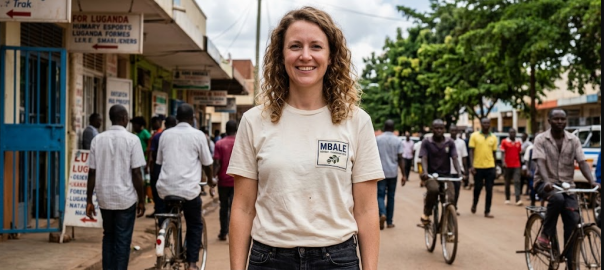
Sun Oct. 18, 2026 /Mpelembe Media/ — Contemporary African diaspora families operating between Western metropoles and indigenous homelands are re-engineering traditional cultural governance into cloud-based ecosystems. As demonstrated by the multi-generational trajectory of the Mbale family in London, individuals maintain social mobility in sectors such as digital media, private corporate enterprise, and secondary education, while remaining formally anchored to their ancestral Tumbuka lineage. Central to this arrangement is the technological leadership of software engineer Sam Mbale, who utilizes Google Cloud infrastructure to power the Mpelembe Network. By systematically archiving family milestones alongside artificial intelligence initiatives and socio-cultural commentaries, the platform establishes a digital node that connects UK-based youth directly to the Chief Magodi traditional establishment in Eastern Zambia. This cloud framework enables diaspora members to maintain recognized tribal membership, clan solidarity, and royal heritage stakeholdership without requiring continuous physical residency.
Continue reading →

19Sep/26

Diljit Dosanjh and the Punjabi Invasion

The Turbaned Tide: How Diljit Dosanjh Rewrote Global Pop History at Wembley Stadium

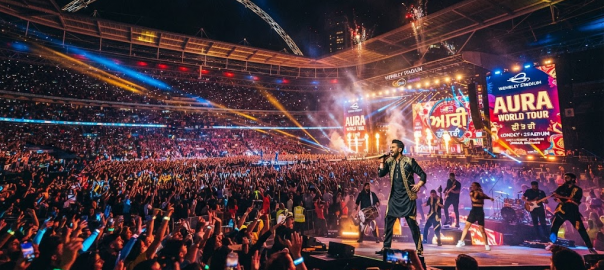
Sat Sep 19 2026 /Mpelembe Media/ — On September 12, 2026, Diljit Dosanjh made history as the first Punjabi artist to headline London’s iconic Wembley Stadium, bringing his global AURA World Tour to a sold-out crowd of over 90,000 fans. The performance represented a major cultural watershed, placing Punjabi music squarely on a premier international stage historically occupied by legendary acts like Michael Jackson, Prince, and Queen. Rather than diluting his artistic presentation or assimilating to meet Western crossover expectations, Dosanjh championed Punjabi language, attire, and identity throughout the show, opening with his signature exclamation “Punjabi Aa Gaye Wembley Oye!” and offering complimentary turban-tying for venue attendees. Continue reading →

15Sep/26

Krapopolis: Politics is show business for ugly people

The “Krapopolis” Experiment: 5 Reasons Why Dan Harmon’s Ancient Greece is Rewriting the TV Rulebook

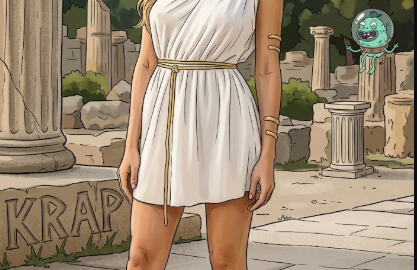
In the carnage of the modern streaming wars, where promising freshman series are often axed before their first cliffhanger, Fox’s  Krapopolis  has emerged as a fascinating case study in asymmetric risk. While most networks scramble for scraps of audience attention, Dan Harmon—the mind behind  Rick and Morty  and  Community —has been given the keys to a kingdom that looks less like a standard broadcast sitcom and more like a long-term infrastructure project.Produced by the powerhouse Bento Box Entertainment,  Krapopolis  follows a dysfunctional family of humans, gods, and monsters attempting to pilot the world’s first city out of a “savage wilderness.” But for industry observers, the real story isn’t the togas; it’s the unprecedented series of pivots in production, distribution, and fan engagement. As we navigate the fall 2026 television season, it is clear that  Krapopolis  isn’t just a show—it’s a disruptive experiment rewriting the rulebook. Continue reading →

10Sep/26

The hidden cost of The Bear finale

Beyond the Pass: Character Growth, Kitchen Politics, and Technical Craftsmanship in The Bear

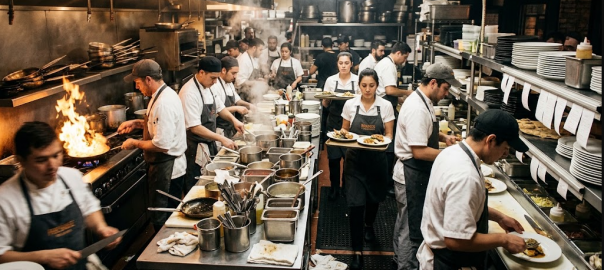
Wed Sep 09 2026 /Mpelembe Media/ — The Bear is confirmed to end with its fifth season. While FX and Hulu set an official premiere date for the final installment on June 25, the fourth season is highlighted as a critical return to form that balanced emotional depth with much-needed humor. Key narrative milestones include a significant wedding episode titled “Bears,” which utilized complex audio techniques to capture a pivotal group scene under a table. Audience reactions are mixed, with some viewers praising the character growth and performances while others feel the show has become repetitive or overly dramatic for its genre. Additionally, broader industry changes are noted, such as Disney+ implementing new terms to strictly prohibit password sharing outside of primary households. Continue reading →

23Aug/26

AI Ethics Dumping and 2Africa Cables

Countering AI Ethics Dumping: African Nations Mobilize for True Digital Autonomy

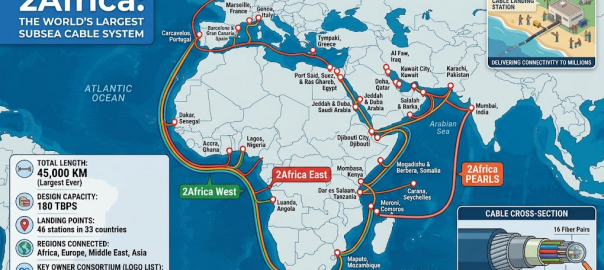
Sun, Aug 23 2026 /Mpelembe Media/ — Africa is undergoing a profound digital infrastructure revolution, shifting from historical neglect where international communications bypassed its coastlines to becoming a key hub of global data transit. This physical transformation is anchored by massive subsea cable projects driven by global technology giants. Foremost among these is Meta’s 2Africa cable system, the longest undersea telecommunications cable in the world at 45,000 kilometers, connecting 46 landing stations in 33 countries across Africa, Asia, and Europe. Boasting a design capacity of up to 180 Terabits per second, this project is expected to boost Africa’s cumulative GDP by $36.9 billion in its first few years of operation. Simultaneously, Google’s privately-funded Equiano cable runs along the western seaboard from Portugal to South South Africa, integrating space-division multiplexing to deliver 20 times the network capacity of previous regional cables. The economic impact of Equiano is massive, with projected GDP increases of $11.1 billion in Nigeria, $5.8 billion in South South Africa, and $290 million in Namibia. Continue reading →

01Aug/26

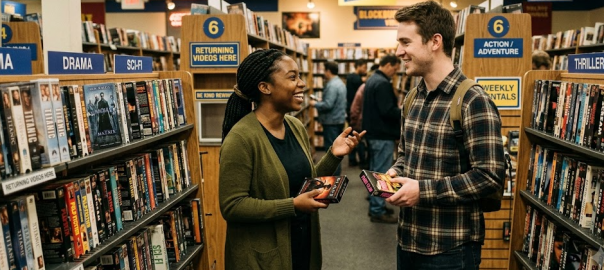
How video stores fix streaming fatigue

Algorithms vs. Humanity: Why Social Curation and Video Stores Still Matter

Sat, Aug 01 2026 /Mpelembe Media/ — The shift from physical media to digital streaming has fundamentally altered how we consume culture, trading the community-driven discovery of local video stores for the convenience of algorithms. While platforms like Netflix offer an unprecedented abundance of content, this infinite selection has triggered a psychological phenomenon known as “Netflix Syndrome” or the “Paradox of Choice.” In this state, users experience cognitive fatigue, stress, and a tendency to endlessly delay their viewing decisions because they are overwhelmed by the options. To combat this digital burnout and the isolation of private consumption, there is a growing movement to reclaim human-centric curation and revitalize “third places” like independent video rental stores. These spaces foster meaningful social connections, interpersonal trust, and shared cultural experiences that algorithmic curation simply cannot replicate. Continue reading →

15Jul/26

The 2026 World Cup breaks traditional TV

The Death of the Living Room: How CazéTV and YouTube’s 21-Million-Device Milestone Just Ended Linear TV’s Monopoly

The 2026 FIFA World Cup has arrived as a definitive inflection point in media history, signaling a massive disruption in how global sporting events are distributed and monetized. While the tournament’s expansion to 48 teams has provided a gargantuan spectacle on the pitch, the real story is the tectonic shift in consumption habits. We are witnessing the final transition from the “old way” of sports—passive viewing via traditional linear TV—to the era of the “Connected Fan,” defined by mobile-first interaction and creator-led broadcasting.While 6.25 million fans (99.7% occupancy) have packed physical stadiums, these numbers pale in comparison to the digital milestones being set. For strategists and analysts, 2026 isn’t just another World Cup; it is the moment digital platforms effectively decapitated the traditional broadcasting monopoly.
Continue reading →

01Jun/26

Vibe Code Your Life: The Rise of Low-Stakes, High-Speed Software Building

The Era of Vibe Coding: How Plain English Became the Hottest Programming Language

Mon, Jun 01 2026 /Mpelembe Media/ — Vibe coding is an AI-assisted software development practice where creators use natural language prompts to describe their desired applications, and large language models (LLMs) autonomously generate the source code. Coined in early 2025 by computer scientist Andrej Karpathy, the approach shifts the human role from manually writing syntax to acting as a director who oversees, evaluates, and iteratively refines AI-generated outputs. Continue reading →

28May/26

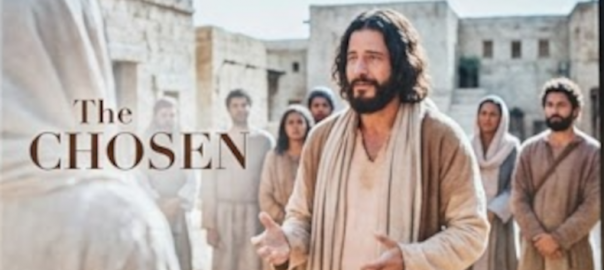
How “The Chosen” bypassed the Hollywood machine

Faith, Finances, and Franchise: How ‘The Chosen’ is Redefining Christian Media

Thur, May 28 2026 /Mpelembe Media/ — A New Era for Faith-Based Media The Chosen has fundamentally disrupted the faith-based entertainment industry by shifting away from the traditionally stiff and heavily polished biblical epics toward high-quality, deeply human storytelling. Utilizing a creative method called “plausible fiction,” the writers flesh out the historical and cultural gaps in the Gospels to give the characters relatable flaws, psychological depth, and complex backstories. This commitment to humanizing the narrative includes the intentional depiction of marginalized figures, such as portraying the apostle Matthew with autism and Little James with a physical disability. This approachable portrayal of Jesus and his followers has resonated on a massive scale, drawing over 280 million viewers worldwide, a third of whom are reportedly non-religious. Continue reading →