
Tag Archives: Matthias Grünewald

28May/26

How “The Chosen” bypassed the Hollywood machine

Faith, Finances, and Franchise: How ‘The Chosen’ is Redefining Christian Media

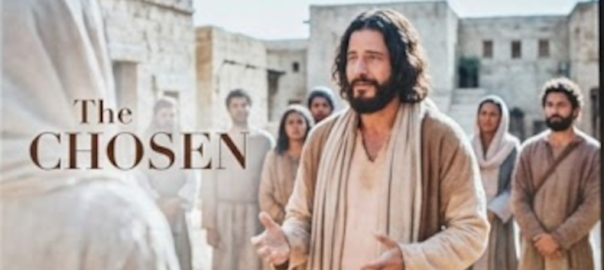
A New Era for Faith-Based Media The Chosen has fundamentally disrupted the faith-based entertainment industry by shifting away from the traditionally stiff and heavily polished biblical epics toward high-quality, deeply human storytelling. Utilizing a creative method called “plausible fiction,” the writers flesh out the historical and cultural gaps in the Gospels to give the characters relatable flaws, psychological depth, and complex backstories. This commitment to humanizing the narrative includes the intentional depiction of marginalized figures, such as portraying the apostle Matthew with autism and Little James with a physical disability. This approachable portrayal of Jesus and his followers has resonated on a massive scale, drawing over 280 million viewers worldwide, a third of whom are reportedly non-religious.

Expanding into a “Biblical Universe” To capitalize on this success and build a self-sustaining media ecosystem, creator Dallas Jenkins launched a new independent production company called 5&2 Studios. This studio is actively expanding the franchise into a shared “Biblical Universe” that will continue long after the main series finishes its planned seven-season run. Upcoming spinoffs include an animated children’s series (The Chosen Adventures), a wilderness survival reality show (The Chosen in the Wild with Bear Grylls), a direct sequel based on the Acts of the Apostles (The Way of the Chosen), and Old Testament epics focusing on Moses and Joseph.

Financial Evolution and Distribution Deals The show originally made history as the largest crowdfunded media project ever, raising initial capital through equity crowdfunding and funding subsequent episodes via viewer donations in a “pay-it-forward” model. However, the show’s financial infrastructure has rapidly evolved. The production partnered with the nonprofit Come and See Foundation to manage tax-deductible donations, fund massive production complexes, and translate the show into 600 languages. Furthermore, The Chosen recently transitioned away from its original distributor, Angel Studios, and signed a massive sub-licensing deal with Amazon MGM Studios. This deal dictates that new seasons will premiere in theaters, followed by a 90-day exclusive streaming window on Amazon Prime Video, before becoming available for free on The Chosen app.

Controversies and Growing Pains The show’s massive growth has not been without friction. Theologically, the show’s creative liberties—such as showing Jesus rehearsing a sermon or using sarcastic humor—have drawn criticism from some viewers who feel these choices diminish His divine nature. On the business side, fans have heavily debated the show’s aggressive fundraising tactics; some critics feel it is disingenuous to solicit donations while the series simultaneously generates hundreds of millions of dollars in revenue, builds multi-million dollar sets, and signs lucrative deals with Amazon. The franchise has also weathered a breach-of-contract legal dispute with Angel Studios that delayed streaming releases, as well as backlash over a deceptive marketing stunt where the PR team intentionally defaced their own billboards.

The ‘Chosen’ Effect: How a Crowdfunded Series is Rewriting the Rules of Modern Television

1. THE HOOK: A MIRACLE IN THE ERA OF PEAK TV

In the current landscape of “Peak TV,” production budgets have become a form of industrial warfare. Amazon reportedly funneled $715 million into the first season of  The Lord of the Rings: The Rings of Power , while Netflix’s final season of  Stranger Things  commanded $30 million per episode. Amidst this era of nine-figure corporate spending, the most disruptive force in modern media emerged from an unlikely place: a friend’s farm in Marengo, Illinois.”The Chosen,” a historical drama centered on 1st-century Judea, began with “The Shepherd”—a short film shot on a shoestring budget for a local church service. From that modest proof-of-concept, creator Dallas Jenkins launched a crowdfunding campaign that defied industry logic, raising $11 million for its first season from over 16,000 equity-holding investors. Today, with an estimated 280 million viewers and over 120 million in theatrical gross, the series is no longer a niche religious project. It is a strategic case study in community-funded scaling, humanized narrative architecture, and an aggressive pivot toward a decentralized franchise model.

2. TAKEAWAY 1: THE HUMANITY OF THE “JOKE”

“The Chosen” represents a radical departure from the “waxy buildup” of somber, detached religious art that has dominated the genre for centuries. Historically, faith-based media has suffered from depicting Jesus and his disciples as what head writer Ryan Swanson calls “plot bots”—flat, saintly figures moving through scripted events without psychological depth or human motivation.By contrast, the series utilizes a “theology of humor” to strip away this sterility. This approach has sparked controversy, specifically regarding the hyper-humanization of the divine. Critics pointed to the “Wedding at Cana” episode, where Jesus is seen dancing, and a subsequent scene where he playfully teases Andrew’s poor dancing, remarking, “Some things even I cannot do.” While hyper-sensitive critics interpreted this as a denial of omnipotence, the show’s writers argue that the scene utilizes the genre of the “joke”—a literary form consistent with the rhetorical style of 1st-century rabbis.The script further leans into this domestic realism, depicting Jesus brushing his teeth, performing chores, and engaging in sharp banter. Whether Jesus is telling a newly healed leper, “Green is definitely your color,” or instructing a disciple to “remove the tarantula from your own eye,” the humor serves a strategic narrative purpose: it presents a Savior who is magnetizing and approachable rather than sterile and detached.”Typically, jokes rely on exaggeration (an unlikely over-statement) or hyperbole (an impossible over-statement) to drive home a point in a way that’s funny and memorable… the joke usually isn’t actually attempting to say anything about the Point of Comparison itself.”

3. TAKEAWAY 2: THE BEAUTY OF THE “BROKEN” DISCIPLE

Central to the show’s relatability is its rejection of the “able-bodied Hollywood” ensemble. The narrative intentionally elevates neurodivergence and physical disability as central pillars of the “Chosen” experience. The portrayal of Matthew as being on the autism spectrum has become a hallmark of the show’s “plausible fiction” approach, allowing viewers to see 1st-century events through a neuroatypical lens.Similarly, the casting of Jordan Walker Ross as Little James utilizes the actor’s real-life scoliosis and cerebral palsy rather than hiding it behind clever blocking. This choice allows the series to explore the sophisticated theological tension of why Jesus heals some but asks others to carry their burdens. This “path of gold” offers a profound connection for a modern audience that feels increasingly alienated by the pursuit of physical and psychological perfection.”My limp isn’t a weakness… it’s something I can use to inspire others and to stand out as an actor.” — Jordan Walker Ross

4. TAKEAWAY 3: DEFYING THE STUDIO SYSTEM WITH “IMPOSSIBLE MATH”

The economic trajectory of “The Chosen” is characterized by what Jenkins calls “God’s impossible math”—a model that shifted from pure crowdfunding to a sophisticated hybrid of theatrical windowing and corporate sub-licensing.

  • Industrial Scaling:  The budget has expanded from $10 million for Season 1 to a projected $64 million for Season 7, illustrating the massive growth in production complexity.
  • Theatrical Juggernaut:  Despite its “free-to-watch” mission, the series has grossed over $120 million in theatrical releases, utilizing Fathom Events to turn a television show into a box-office competitor.
  • The Hybrid Shift:  While the original crowdfunding model became “unsustainable” for later seasons, the series pivoted to a corporate-hybrid strategy. This includes a deal with Amazon MGM Studios for a 90-day exclusivity window on Prime Video before episodes move to the show’s free app.Further complicating this “community-funded” claim is a sophisticated financial structure involving the Come and See Foundation. This non-profit provided a $150 million loan to The Chosen LLC to produce the series—a debt that was eventually forgiven in a massive asset transfer. This move, combined with the “Pay-it-Forward” (PIF) model, has allowed the series to maintain its mission of global accessibility while operating with the capital of a major studio.

5. TAKEAWAY 4: THE RISE OF THE “BIBLICAL CINEMATIC UNIVERSE”

What began as a single series is now a burgeoning “Biblical Cinematic Universe” (BCU). This expansion was accelerated by a strategic move toward independence following a high-profile legal dispute. In 2024, a breach-of-contract arbitration concluded the partnership between The Chosen LLC and Angel Studios, the show’s original distributor.The result was the launch of  5&2 Studios , a production house designed to decentralize the franchise. This new slate of content signals a transition from a single narrative to a broad media ecosystem:

  • The Chosen Adventures  :  An animated series for children featuring the original cast.
  • The Chosen in the Wild  :  A six-episode wilderness reality series with Bear Grylls.
  • Future Expansions:  Series focusing on the lives of Moses and Joseph, alongside a direct continuation into the Acts of the Apostles.

6. TAKEAWAY 5: AUTHENTICITY OVER AESTHETICS

“The Chosen” differentiates itself from traditional biblical epics by prioritizing aesthetic authenticity over the “White Jesus” tropes of the past. The casting specifically avoids “big stars” in favor of ethnic and historical realism, reflecting the diverse backgrounds of a 1st-century trade route like Capernaum.The show draws intellectual weight from the “Suffering Servant” context of Isaiah 53, which describes a figure “marred beyond human likeness.” To justify the casting of a “less than handsome” Savior, the writers look to the historical tradition of a “leprous Jesus”—a concept famously captured in Matthias Grünewald’s  Isenheim Altarpiece  and Jerome’s Latin Vulgate translation of “stricken” as  leprosum .This commitment to grit is bolstered by genuine production prowess. The show utilizes handheld camera work to create a sense of documentary-style immediacy and high-frame-rate slow motion to simulate psychological depth during key moments of internal conflict. Perhaps most impressively, Season 2 features a 15-minute continuous take, a technical feat that signals the show’s intent to compete on a cinematic level with the very best of prestige television.”The more we look at the stories, there’s such a consistency of human behavior over thousands of years. That’s why people relate to the show… they can see their own challenges.” — Tyler Thompson, Co-Writer

THE WRAP-UP: BEYOND THE SCREEN

The legacy of “The Chosen” is not merely as a religious phenomenon, but as a proof-of-concept for the future of independent media. It has demonstrated that a niche community can bypass traditional gatekeepers to build a global franchise that rivals the technical and economic output of the studio system.By proving that viewers will pay for content they can already watch for free, “The Chosen” has rewritten the rules of consumer loyalty and distribution. In an age where the algorithm usually dictates what we watch, this series offers a provocative alternative:  Could the next great media revolution come from a community of viewers who refuse to let the corporate system define the stories that matter to them?