Tag Archives: Anthropology

17Oct/26

Why America Is Losing Global Talent

America’s Gendered Exit: Why 40% of Young Women Want to Leave the U.S.

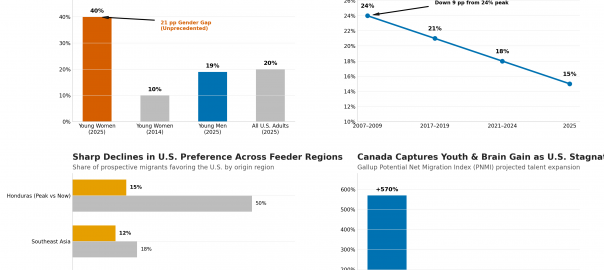
Sat Oct. 16, 2026 /Mpelembe Media/ — Global migration aspirations have entered a period of structural recalibration, as the proportion of adults worldwide desiring to relocate permanently dipped to 15% in 2025 after sustaining a record peak of 16% between 2021 and 2024. Although the United States remains the single most desired destination globally, its attraction has fallen to a nearly two-decade low of 15% in 2025, down from 24% in the 2007–2009 period. This cooling demand is particularly striking in traditional feeder corridors such as Latin America and the Caribbean (dropping from 33% to 28%) and Southeast Asia (falling from 18% to 12%), with Honduras recording a dramatic 35-percentage-point collapse in U.S. preference. Instead of defaulting to North America, potential migrants are turning toward multipolar regional networks—favoring Japan in Southeast Asia, Germany in the Middle East, and Spain in Europe—while Canada solidly maintains its position as the second most preferred global destination at 9% (representing ~85 million adults). Continue reading →
18Apr/26

Rewriting the internet with ancestral blueprints

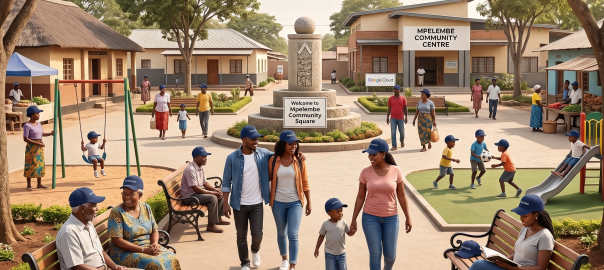
April 18, 2026 /Mpelembe Media/ — The Mpelembe Network Strategy focuses on developing online environments that foster enduring human connections through intentional design. By prioritizing community strength over disruptive algorithms, the initiative seeks to merge localized cultural values with expansive global networks. They utilize decentralized technology to ensure that shared identities remain the foundation for sustained cooperation among participants. This approach integrates traditional social structures into contemporary digital frameworks to create stable, thriving human ecosystems. Ultimately, the strategy aims to turn fragmented digital interactions into resilient public squares built for lasting kinship.

Continue reading →

16Mar/26

The coefficient of relationship

Beyond the Family Tree: 5 Surprising Truths About How We’re Actually Related

March 15, 2026 /Mpelembe Media/ — If you have ever stood at a family reunion, plate of potato salad in hand, while a well-meaning relative attempted to explain how their daughter is your “second cousin twice removed,” you have entered a linguistic labyrinth that has frustrated family historians for centuries. To the uninitiated, the branches of a family tree look less like a neat diagram and more like a tangled thicket of confusing jargon.However, beneath this terminology lies a hidden logic—a fascinating intersection of ancient social strategy, mathematical probability, and cultural “glitches.” As both an anthropologist and a genetic genealogist, I see these relationships not as mere labels, but as a complex map designed to ensure both biological survival and social continuity. Here are five truths that reveal the underlying architecture of human connection. Continue reading →

18May/23

Juvenile male delinquency

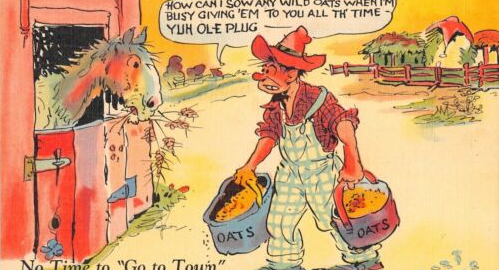
May 18, 2023 /Lifestyle/ –The phrase “sowing wild oats” is thought to have originated in the 16th century. It is a metaphor for engaging in reckless or promiscuous behavior, especially during youth. The phrase is often used to excuse or explain such behavior, as if it were a natural part of growing up. Continue reading →

08Sep/22

Digital nomads have rejected the office and now want to replace the nation state. But there is a darker side to this quest for global freedom

Dave Cook, UCL

A ‘network state’ is ideologically aligned but geographically decentralised. The people are spread around the world in clusters of varying size, but their hearts are in one place.

In June 2022 Balaji Srinivasan, former chief technology officer of the Coinbase cryptocurrency exchange, published an ebook entitled The Network State: How To Start a New Country. It is the latest in a flurry of utopian visions by self-styled digital visionaries, crypto believers and web 3.0 evangelists who are lining up to declare the death of the traditional concept of countries and nationhood.

Continue reading →