
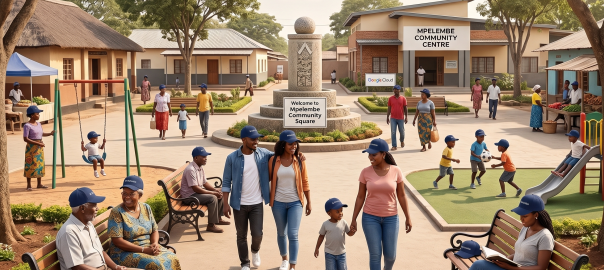
April 18, 2026 /Mpelembe Media/ — The Mpelembe Network Strategy focuses on developing online environments that foster enduring human connections through intentional design. By prioritizing community strength over disruptive algorithms, the initiative seeks to merge localized cultural values with expansive global networks. They utilize decentralized technology to ensure that shared identities remain the foundation for sustained cooperation among participants. This approach integrates traditional social structures into contemporary digital frameworks to create stable, thriving human ecosystems. Ultimately, the strategy aims to turn fragmented digital interactions into resilient public squares built for lasting kinship.
Beyond the Algorithm: How Mpelembe is Reimagining the Digital Public Square
Our digital public squares are currently on fire, fueled by the very algorithms meant to connect us. Most social architectures are optimized for atomization, treating human beings as extractive data points to be manipulated rather than stewards of a shared digital commons. To resolve this systemic failure, we must pivot from the “engagement” trap and investigate what occurs when we prioritize human kinship through rigorous, intentional design.
Building for Resilience, Not Just Clicks
In the prevailing attention economy, “friction” is not a bug; it is a lucrative feature. Platforms intentionally manufacture emotional volatility to ensure high-frequency interaction, viewing communal health as an acceptable casualty of ad revenue. The Mpelembe Network identifies this as a catastrophic design flaw and proposes a counter-intuitive shift: prioritizing communal resilience. This model focuses on the network’s ability to withstand external social stressors and internal volatility without fracturing.We scale the Mpelembe Network by architecting digital public squares that prioritize communal resilience over algorithmic friction.By treating resilience as the primary technical metric, we move away from the fragility of the “viral moment” toward a sustainable social foundation. This transition demands that we stop architecting for temporary attention and start building for the long-term endurance of the collective.
Ancestral Social Blueprints: The New Codebase
To move beyond the limitations of contemporary social software, the Mpelembe strategy involves “embedding ancestral social blueprints into modern code.” From the perspective of a digital ethicist, this is an act of technical reclamation. These blueprints are not mere nostalgia; they represent proven human protocols—such as reciprocity, council-based governance, and intergenerational trust—that have sustained civilizations for millennia.By encoding these high-trust rules of engagement into the codebase itself, we transform “isolated nodes”—users stripped of context and history—into “enduring human ecosystems.” This is a technical-social pivot where code serves as a container for non-linear social hierarchies, ensuring that digital interactions mirror the depth and accountability found in the physical world.
Bridging the Gap Between the Local and the Global
We are currently caught in the “Hyper-Local/Global Connectivity Paradox.” Modern digital tools often achieve global scale by diluting the specific, high-trust nuances of local kinship, leading to a homogenized and often toxic global culture. The Mpelembe Network resolves this by engineering decentralized infrastructure that maintains the integrity of the local while facilitating global reach.The strategic anchor of this infrastructure is “Shared Identity.” Rather than a superficial label, shared identity functions as a cultural protocol—a verification layer that allows trust to scale across vast distances. By transitioning from a collection of isolated nodes to a unified ecosystem, the network allows users to remain rooted in their local kinship structures while participating in a global cooperative framework that is built to last.
Conclusion: Toward a New Digital Human Ecosystem
The Mpelembe Network represents a fundamental shift in digital stewardship. It is a call for technologists to move away from extractive architectures and toward an intentional design that fosters lasting human kinship. By synthesizing ancestral wisdom with decentralized infrastructure, we are not just building a platform; we are cultivating a digital ecosystem capable of sustaining the human spirit.As we evaluate the future of our digital civilization, we must confront a critical question: Are our current digital tools designed for lasting kinship, or merely for temporary attention?