Tag Archives: Sam Altman

28Oct/26

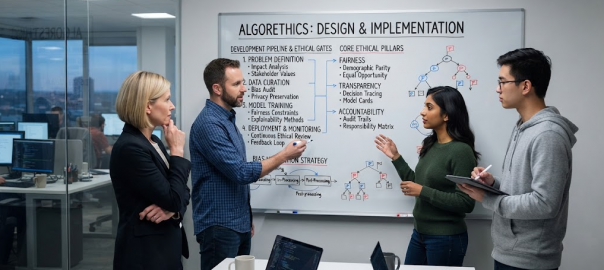
Why AI Ethics Needs Ancient Theology

Faith, Human Dignity, and Governance: Why AI Ethics Demands Moral Depth Over Statistical Consensus

Wed, July 28 2026 /Mpelembe Media/ — The Limits of Preference Aggregation and the Rise of Algorithmic Pluralism Leading technology executives have proposed aligning artificial intelligence with human values by calculating a “weighted average” or statistical consensus through techniques such as Reinforcement Learning from Human Feedback (RLHF). However, social choice theory demonstrates that there is no unique voting protocol capable of universally aggregating individual preferences without generating logical contradictions or violating private ethical values. Theological and philosophical scholars emphasize that religious traditions cannot be reduced to modular, extractable rulebooks to be averaged in machine learning models. Attempting to compute a universal moral consensus flattens culturally rich worldviews, suppresses minority perspectives, and risks codifying dominant, secular-rational norms at the expense of global faith communities. Continue reading →

26Oct/26

How Startups Weaponize Cult Tactics

Navigating Disaffiliation: Legal Protections, Administrative Mechanics, and Psychological Recovery

Legal Autonomy and the Constitutional Right to Disassociate

Mon, July 26 2026 /Mpelembe Media/ — Under constitutional jurisprudence and associational law, individuals possess an absolute negative right to disassociate from private, fraternal, or high-control religious organizations. In the landmark decision Guinn v. Church of Christ of Collinsville, the Supreme Court of Oklahoma established that while internal religious discipline of active members is constitutionally protected under the Free Exercise Clause, an individual’s clear written resignation immediately revokes the organization’s jurisdiction over them. Once written notice is delivered, the entity loses its constitutional shield, leaving any subsequent public disclosure of private facts, shunning, or disciplinary measures subject to secular tort liability, including invasion of privacy and intentional infliction of emotional distress. Organizations cannot enforce mandatory lifelong membership or unilateral restrictions on exit unless they can demonstrate an explicit, knowing, and intelligent waiver of constitutional rights prior to the onset of disciplinary proceedings. Continue reading →

09Sep/26

GPT-6 Astra takes the steering wheel

“AGI Has Arrived”: Industry Declarations, Benchmark Discrepancies, and the Launch of GPT-6 Astra

Wed Sep 09 2026 /Mpelembe Media/ — The public discussion surrounding artificial general intelligence reached a pivotal moment following the rollout of OpenAI’s GPT-6 Astra in September 2026. Nvidia CEO Jensen Huang declared on social media that “AGI has arrived,” highlighting Astra’s training on more than 100,000 Grace Blackwell NVLink72 GPUs and noting that another 400,000 GPUs are scheduled to come online. This definitive stance represented a sudden shift from Huang’s statements during Nvidia’s Q2 FY2027 earnings call just days prior, where he described traditional AGI milestones as “senseless” and emphasized that the industry should focus on practical utility, useful work, and generating “profitable tokens”. Over the preceding two years, Huang’s public timeline for AGI shifted from passing every human test within five years to defining it as an AI capable of creating a temporary viral application, while acknowledging that AI agents remained incapable of replicating the complex work of running Nvidia itself. Analysts note that by framing Astra’s rollout as the literal arrival of AGI, Huang reinforced the market narrative that massive hardware investments directly drive corporate revenue. Continue reading →

30Aug/26

Silicon Valley is rebranding eugenics

Scientific Racism’s Secret Backers: How Tech Wealth and Stolen Bio-Data Fuel a Discredited Pseudoscience

Sat Aug 29 2026 /Mpelembe Media/ — The contemporary landscape of reproductive medicine is witnessing the rapid commercialization of polygenic embryo screening (PES), a controversial technology that allows prospective parents to genotypically analyze and prioritize IVF-created embryos based on polygenic risk scores (PRSs). Driven by several well-funded US-based startups, this emerging industry offers to estimate the likelihood of chronic disease liabilities as well as quantitative, non-disease traits like eye color, height, and predicted intelligence. For instance, Orchid Biosciences markets whole-genome embryo sequencing at $2,500 per embryo to assess genetic predispositions to multi-gene health conditions like schizophrenia and cardiovascular diseases. In parallel, Nucleus Genomics has heavily marketed a $30,000 “IVF+” package to screen for over 2,000 traits, leveraging a high-profile New York City subway advertising campaign featuring slogans like “Have Your Best Baby” and “IQ is 50% Genetic”. The most controversial player in this market, Heliospect Genomics, charges wealthy couples up to $50,000 to screen up to 100 embryos for predicted intelligence and other behavioral traits using specialized algorithms. Continue reading →

03Jun/26

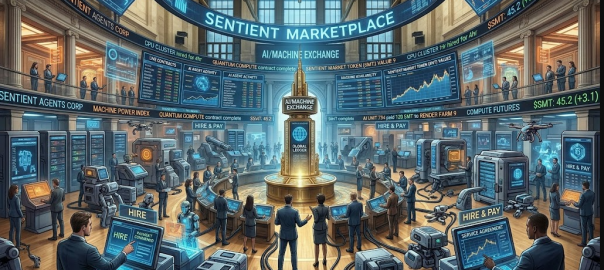
The “Sentient” Marketplace: How AI Agents Hire and pay Machines

The Mpelembe Agent Architect (also referred to as the Silicon-Native Agent Architect) is a comprehensive technical blueprint and decentralized infrastructure platform designed to securely deploy and govern autonomous AI agents

Wed, Jun 03 2026 /Mpelembe Media/ — The Sentient Economy (also referred to as the “Agentic” or “Machine Economy”) represents a fundamental shift from a human-operated digital environment to a decentralized network driven by autonomous, “silicon-native” AI agents. Unlike traditional chatbots that passively wait for human instructions, these autonomous agents proactively reason, allocate capital, and collaborate across organizational boundaries to execute complex, revenue-generating workflows. By 2030, this machine-to-machine economy is projected to mediate between $3 trillion and $5 trillion in global commerce. Continue reading →

22Mar/26

The Death of the Prompt and the Rise of the Solo Unicorn

Rise of the One-Person Unicorn: How Solo Founders are Leveraging AI Agents to Achieve Billion-Dollar Scale
March 23, 2026 /Mpelembe Media/ — By early 2026, the relatable curiosity of 2024’s chatbot experiments has curdled into a high-stakes operational necessity. We have crossed the “inflection point” where AI transitioned from a probabilistic engine—something we play with—to an operational workforce that performs revenue-generating labor.The numbers tell a story of total market saturation. The agentic AI sector has exploded from a $5.25 billion valuation in 2024 to a projected $52.6 billion by 2030. In 2024, Sam Altman’s prediction of a one-person billion-dollar company sounded like Silicon Valley hyperbole; today, it is the new baseline for capital efficiency. As institutions face the “math cliff” of 2026—a convergence of labor shortages and regulatory pressure—the shift from interactive tools to autonomous “digital colleagues” is no longer optional. It is the only way to stay solvent in a world where AI doesn’t just answer questions; it executes objectives.

Continue reading →

10Mar/26

Anthropic Sues Pentagon Over “Unlawful” Blacklist in Major AI Ethics Showdown

The $200 Million Red Line: 5 Surprising Truths Behind the Anthropic-Pentagon War

March 10, 2026 /Mpelembe Media/ —  The conflict between artificial intelligence company Anthropic and the U.S. government escalated into a major legal and public battle after the company refused to allow its Claude AI model to be used for mass domestic surveillance or fully autonomous lethal weapons. The Pentagon demanded an unrestricted “any lawful use” clause, and when Anthropic refused to yield, the Trump administration retaliated aggressively.

Continue reading →

27Feb/26

Trump Bans Anthropic for Refusing Lethality

27 Feb. 2026 /Mpelembe Media/ —  President Donald Trump has officially issued an order prohibiting all federal agencies from utilizing technology developed by the artificial intelligence firm Anthropic. This executive action follows a tense confrontation regarding safety guardrails, as the company refused to remove restrictions that prevented its software from being used for domestic surveillance or autonomous weaponry. While government officials argue that private entities should not dictate military policy, Anthropic maintains that such applications exceed the current safety capabilities of AI. The administration labeled the company a supply chain risk, initiating a six-month period to phase out its services entirely. This conflict highlights a growing divide between Silicon Valley ethics and government demands, especially as other industry leaders like OpenAI express similar concerns regarding military “red lines.” The ban arrives at a critical juncture for Anthropic, which is currently navigating a high-profile initial public offering. Continue reading →

24Feb/26

From Companions to Liabilities: Suicides Linked to AI Chatbots Spark a Legal and Regulatory Reckoning

The 2026 AI Reckoning: 5 Takeaways That Are Redefining the Future of the Internet

Feb. 24, 2026 /Mpelembe Media/ – This report details how OpenAI internally questioned whether to alert authorities regarding the disturbing chat logs of a teenager who later committed a mass shooting in Tumbler Ridge, Canada. Although the suspect’s account was terminated months before the attack due to violent content, the company ultimately decided her behavior did not meet the specific threshold for an emergency police referral at that time. Beyond her interactions with artificial intelligence, the perpetrator had established a concerning digital history through violent simulations on Roblox and firearms-related posts on social media. The situation has reignited a broader debate concerning the ethical responsibilities of tech companies in monitoring user data to prevent real-world tragedies. Currently, the organization is cooperating with the Royal Canadian Mounted Police as investigators review the digital warning signs that preceded the event. Continue reading →

01Dec/25

World Finance: AI, Geopolitics, and Financial Award Winners

World News Media announced the release of the World Finance Winter 2025–26 edition. The central focus of the new magazine issue is the state of global financial markets, particularly examining the instability caused by rapid technological change and shifting geopolitical dynamics. A prominent feature focuses on the unparalleled impact of OpenAI CEO Sam Altman on the artificial intelligence sector, addressing concerns around ethics and investment bubbles. Further comprehensive reports analyse topics such as the record surge in gold prices, the new EU agency established to combat money laundering (AMLA), and the lengthy path of economic recovery for Greece. The text concludes by listing the multiple categories of World Finance awards presented in this edition, celebrating achievement across digital banking, investment management, and sustainable finance. Continue reading